President of Estonia refuses to sign law banning the Estonian Church
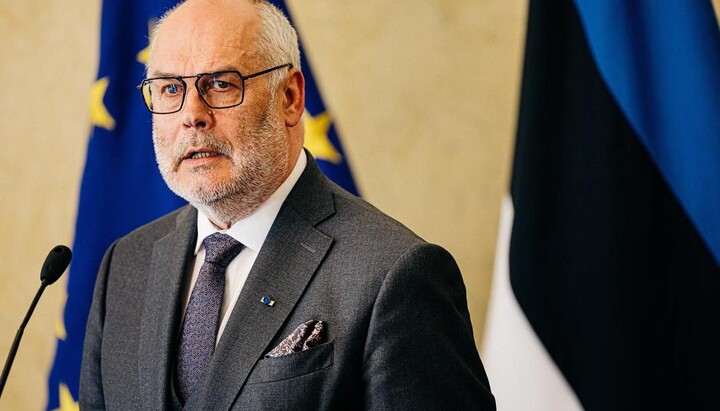
The President of Estonia believes the Church ban contradicts the Constitution. Photo: rus.err
Estonian President Alar Karis has refused to sign a law passed by the parliament that sought to amend the Law on Churches and Congregations, directly affecting the interests of the Estonian Church of the Moscow Patriarchate. The president declared that the proposed amendments contradict the Estonian Constitution.
“While the Moscow Patriarchate undermines the sovereignty and democracy of states, the current version of this amendment contradicts Articles 40, 48, and 11 of the Constitution, disproportionately restricting freedom of association and religion,” the president stated in an official press release.
In Karis's view, “an ambiguous ban on foreign connections will lead to legal disputes and could create a situation where freedoms of all associations, including political parties, may also be restricted.”
The head of state stressed that existing legislation already provides adequate legal tools to monitor religious associations. “The issue is not a lack of legal means, but how they are used. If necessary, existing instruments should be applied more actively,” the president noted.
Karis reminded the public that the country’s Criminal Code defines treason as a crime, which includes hostile influence and spreading disinformation in support of a foreign organization.
“The Constitution should be interpreted to mean that a mere designation of 'foreign leadership' is not sufficient grounds to ban an association. Such a ban, due to its vagueness alone, would have an inappropriate chilling effect on democratic society,” the president said.
As a result, the bill will be returned to the Estonian parliament for revision and alignment with the Constitution.
Despite the president’s decision, Minister of the Interior Igor Taro stated that the issue of limiting “hostile foreign influence” on churches will remain on the agenda. “In any case, we cannot allow religious communities in Estonia to be led by hostile regimes and organizations that support aggression,” the minister emphasized.
As a reminder, the Estonian parliament had previously passed amendments aimed at restricting the activities of religious organizations affiliated with the Moscow Patriarchate. President Karis’s decision has temporarily delayed the enforcement of these changes.
Read also
Upper Lavra court hearing postponed
The next court hearing in the Upper Lavra case has been scheduled for November 3.
UOC priest blesses ambulances at Kamianske medical center
A UOC priest in Kamianske blessed ambulances for a medical facility and wished its doctors God's help in their work.
Dumenko to German ambassador: Law targeting UOC also applies to other groups
Epifaniy Dumenko sought to defend Ukraine’s law restricting religious organizations during a meeting with the German ambassador.
Activists bused to court hearings in UOC cases, media say
A minibus has been spotted transporting protesters to and from courthouses where UOC cases are being heard.
Firefighters save historic UOC church from fire in Zakarpattia
A fire broke out at a UOC church in the Tiachiv district, damaging the altar and church furnishings.
Volyn Eparchy faithful collect six tons of aid for Sviatohirsk Lavra
Believers in Volyn collected food and warm clothing for people displaced by the war who have found shelter at Sviatohirsk Lavra.