The Church celebrates Antipascha
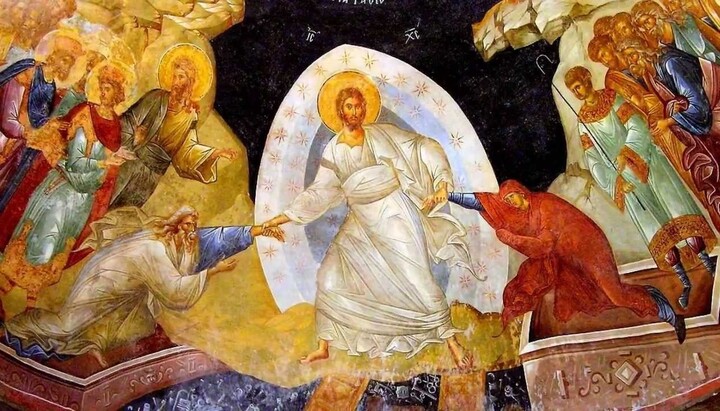
The Descent into Hades Icon. Photo: Open sources
On the first Sunday after Pascha, Orthodox Christians around the world celebrate the feast of Antipascha, also known as Thomas Sunday. This day concludes Bright Week and holds deep theological significance in the Church’s tradition.
The name Antipascha comes from the Greek word meaning "instead of Pascha," and it does not indicate a contrast to the main feast, but rather its renewal and continuation. While on Pascha the Church celebrates the event of Christ’s Resurrection itself, Antipascha is dedicated to affirming the truth of this event through the appearance of the risen Savior to the apostles, and especially to Thomas.
Metropolitan Anthony of Sourozh wrote about this day: "Antipascha is not a ‘second Pascha,’ nor ‘against Pascha,’ but ‘instead of Pascha’ or ‘facing Pascha.’ It is a repetition of Pascha, a turning back to Pascha... For an entire week we live in the radiance of Pascha, and now we return to that day to experience it more deeply."
Antipascha remains an important reminder that faith can include periods of doubt and searching, but it is essential that such doubts lead to a deeper knowledge of the truth, just as it happened with the Apostle Thomas. Moreover, this feast underscores the reality of Christ’s bodily resurrection and reminds us of the coming universal resurrection of the dead – the central hope of Christianity.
The central event commemorated on this feast is the appearance of the risen Christ to the Apostle Thomas. Thomas, also called Didymus (which means "twin"), was not present when Jesus first appeared to the disciples after His Resurrection. When he heard the news of the Teacher’s Resurrection from the other apostles, Thomas famously said: "Unless I see in His hands the print of the nails, and put my finger into the print of the nails, and put my hand into His side, I will not believe" (John 20:25).
Eight days after His Resurrection, Christ appeared again to the disciples when Thomas was with them and spoke directly to him: "Reach your finger here, and look at My hands; and reach your hand here, and put it into My side. Do not be unbelieving, but believing" (John 20:27).
Overwhelmed to the depths of his soul, Thomas made a confession of faith that became one of the most powerful testimonies to the Divinity of Christ:
"My Lord and my God!" (John 20:28).
This episode holds special significance for the Christian faith because through Thomas’s physical touching of Christ’s wounds, an irrefutable witness to the reality of Jesus' bodily Resurrection was given. Moreover, the figure of Thomas shows that the path to true faith can pass through sincere doubt and the search for truth.
According to Church tradition, after the descent of the Holy Spirit, the Apostle Thomas became a fervent preacher of the Gospel. He carried the Christian message to Parthia, Persia, and Media, and traveled as far as India, where he founded Christian communities that exist to this day. In the Indian city of Mylapore (modern Chennai), the Apostle Thomas suffered martyrdom for his faith – he was pierced with spears for converting the wife and son of a local ruler to Christianity.
Read also
Catholic media outraged by forcible conscription of Uniate cleric
The Vatican’s Apostolic Nunciature has demanded the return of a forcibly mobilized Greek Catholic cleric.
Rivne court fines man for criticizing parish's "transfer" to OCU
A resident of the Rivne region was convicted over Facebook posts criticizing the “transfer” of a religious community in the village of Butove to the OCU.
Novynskyi: I quoted the Gospel to Zelensky on first day of war
The former Ukrainian MP said he advised Davyd Arakhamia to begin negotiations with Russia in the first days of the full-scale war and later spoke with Volodymyr Zelensky.
Sumy Eparchy venerates miraculous Korsun-Shpylivka Theotokos Icon
Celebrations honoring the Mother of God’s icon known as the “Restorer of Sight” were held at Sumy Cathedral and concluded with a car procession around the city.
Receding Dniester in Khmelnytskyi region exposes foundation of flooded church
The foundation of St. John the Theologian Church, submerged during the construction of a hydroelectric power plant, has resurfaced for the first time in 45 years.
Medieval сhurch сrumbles as Culture Ministry сites missing agreement
The 14th–15th-century St. Nicholas Church in Chesnyky, Ivano-Frankivsk Region, is falling into disrepair.