Trash and weeds: What the site of demolished Tithe Church looks like now
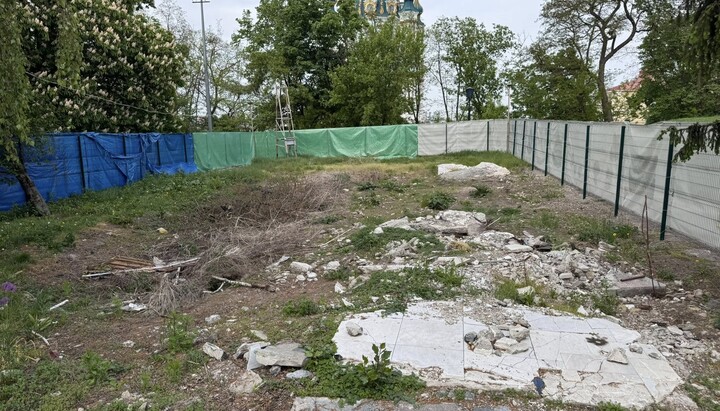
Site where the UOC’s Tithe Church once stood. Photo: Viktor Kushnir
Photos circulating online show the current state of the grounds where the Tithe Church stood before being demolished by the authorities on May 17, 2024. The images reveal scattered rubble, broken bricks, and untamed weeds. The area is surrounded by a worn-out fence.
"The Nativity of the Most Holy Theotokos Tithe Monastery. That was its history. They said the church didn’t fit the architecture and ruined the view. Now there are weeds and garbage. Much better this way. Does the pillar of Perun, 50 meters to the left, not bother anyone?" wrote Viktor Kushnir on Facebook. He also shared a comparison photo showing the Desiatynnyi Church with its well-maintained grounds a year earlier.
As a reminder, the authorities demolished the UOC’s Tithe Church during the night of May 16–17, 2024.
Read also
Metropolitan Onuphry calls for prayers to Mother of God for peace in Ukraine
On the feast day of the “She Who Is Quick to Hear” icon, the UOC Primate spoke of the Mother of God’s maternal care and urged the faithful to live by the laws of holiness and love.
OCU holds evening of wedding rituals at seized Cherkasy cathedral
An event featuring participants dressing in traditional wedding attire and reenacting folk rituals to bandura accompaniment was held at St. Michael’s Cathedral in Cherkasy.
Volodymyr-Volynskyi Eparchy marks 30 years since restoration
The Pantanassa Icon and relics of Prince Volodymyr have arrived in Kovel and will visit churches across the Volodymyr-Volynskyi Eparchy to mark the 30th anniversary of the restoration of the episcopal see.
Bukovyna faithful bring humanitarian aid to Kherson region residents
The UOC’s Chernivtsi Eparchy delivered food to Holy Spirit Cathedral in Kherson.
Ukraine must have its own faith: Poroshenko's party lays out peace terms
Poroshenko’s party European Solidarity described church policy as a matter of national sovereignty and said there can be no compromises in this area.
432 UOC churches damaged in Ukraine during war, report says
According to the Religion on Fire project, 807 religious buildings in Ukraine have been damaged or destroyed as a result of hostilities.