Church commemorates the healing of the born-blind man by the Savior
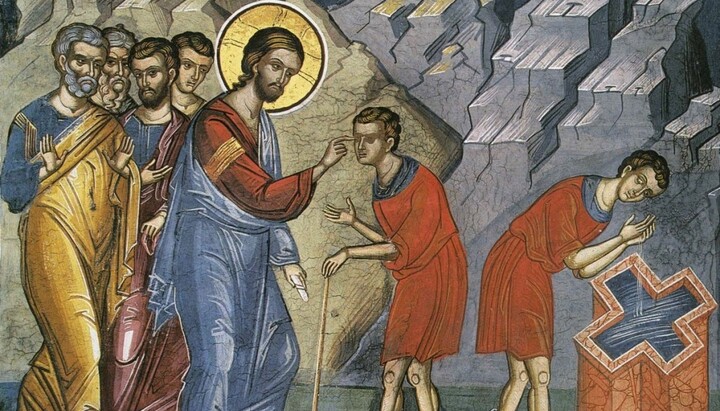
Christ healing the blind man born blind. Photo: open sources
On the sixth week after Easter, the Church celebrates the day of remembrance of one of Christ’s greatest miracles — the healing of a man born blind, as recounted in the Gospel of John.
According to the Gospel account, Jesus Christ met a man who had been blind from birth. The disciples asked the Teacher who had sinned — the man himself or his parents — that he was born blind. The Savior replied that it was not because of sin, but so that the works of God might be revealed in him.
Christ spat on the ground, made mud from the spit, and anointed the blind man's eyes, saying, "Go, wash yourself in the pool of Siloam." The man went, washed, and began to see. This miracle astonished not only the healed man but also everyone around him, including the Pharisees, who questioned both the man who had gained sight and his parents.
A special significance in the Gospel narrative is given to the reaction of the Pharisees to the performed miracle. Upon learning about the healing, they brought the former blind man for questioning. Their main objection was that Christ had performed the healing on the Sabbath, which, in their opinion, violated the law of Sabbath rest.
“Then some of the Pharisees said, ‘This man is not from God, because he does not keep the Sabbath,’” we read in the Gospel. However, the healed man boldly answered them, “Whether he is a sinner, I do not know; one thing I do know, that though I was blind, now I see.”
When the Pharisees continued to insist that Jesus was a sinner, the man replied with even greater determination: “If he were a sinner, would he be able to perform such miracles?” Eventually, unable to withstand the force of the truth, the Pharisees cast him out of the synagogue, saying, “You were born entirely in sins, and are you teaching us?”
The Church Fathers see a deep spiritual meaning in the healing of the blind man. The healing of physical blindness symbolizes the enlightenment of the human soul by the light of Christ’s truth. The man born blind not only gained physical sight but also came to believe in Christ as the Son of God.
On this day, many believers especially pray for healing from various ailments, both physical and spiritual, remembering the omnipotence of God’s grace.
Read also
Upper Lavra court hearing postponed
The next court hearing in the Upper Lavra case has been scheduled for November 3.
UOC priest blesses ambulances at Kamianske medical center
A UOC priest in Kamianske blessed ambulances for a medical facility and wished its doctors God's help in their work.
Dumenko to German ambassador: Law targeting UOC also applies to other groups
Epifaniy Dumenko sought to defend Ukraine’s law restricting religious organizations during a meeting with the German ambassador.
Activists bused to court hearings in UOC cases, media say
A minibus has been spotted transporting protesters to and from courthouses where UOC cases are being heard.
Firefighters save historic UOC church from fire in Zakarpattia
A fire broke out at a UOC church in the Tiachiv district, damaging the altar and church furnishings.
Volyn Eparchy faithful collect six tons of aid for Sviatohirsk Lavra
Believers in Volyn collected food and warm clothing for people displaced by the war who have found shelter at Sviatohirsk Lavra.