Synod of ROCOR condemns Russia's trends to rehabilitation of USSR ideology
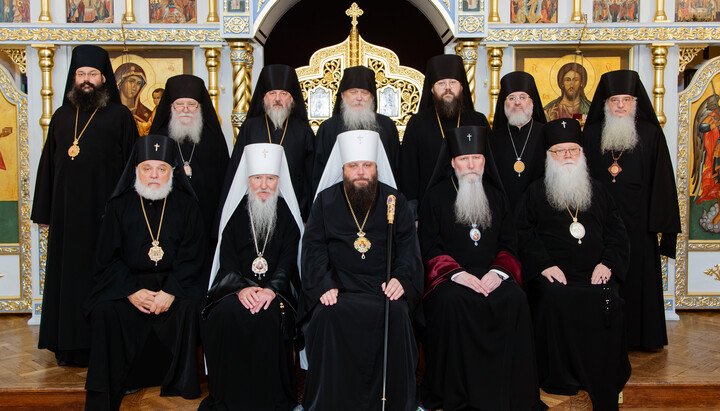
The ROCOR Council of Bishops. Photo: ROCOR website
The Synod of Bishops of the Russian Orthodox Church Outside of Russia (ROCOR) issued a strong statement expressing "deep concern over the return of ideological approaches of the 20th century in Russia". The document contains strong criticism of contemporary Russian memory politics and warns of the dangers of rehabilitating Soviet ideology.
Key accusations by ROCOR
In the statement, ROCOR points to several alarming trends in modern Russia:
Revision of the concept of repressions. The Synod criticizes the 2024 revision of the "State Policy Concept for Perpetuating the Memory of the Victims of Political Repression". According to ROCOR hierarchs, the new version of the document contains "an obvious tendency to whitewash the crimes of the godless authorities of the 20th century".
Installation of monuments. ROCOR calls the installation of monuments to Stalin and Dzerzhinsky in Moscow "horrifying", characterizing them as monuments to individuals whose "inhumane and anti-Christian atrocities can be counted among the gravest of the twentieth century".
Plans to restore the mausoleum. The Synod condemns statements about the restoration of the "idolatrous mausoleum on Red Square."
De-rehabilitation of the repressed. ROCOR is particularly concerned about the cancellation of the rehabilitation of individuals unjustly convicted under the communists. According to the Church, this concerns thousands of cases, including clergy members.
Criticism of the attitude towards the royal family
ROCOR also criticizes the appearance in Russian media of statements justifying the execution of the royal family. The document quotes Professor Yuri Viazemsky’s words: "I would have shot him [Nicholas II] myself," which the Synod calls "sinister" in the context of the Yekaterinburg murder.
Church hierarchs express regret that the Moscow Patriarchate "still has not been able to determine" the authenticity of the royal family's relics.
ROCOR declares its readiness to "offer assistance and prayerful support in opposing these trends". The Synod urges Orthodox Christians to "unequivocally reject the darkness of the past and not participate in its revival and glorification".
The document concludes by emphasizing that the task of the Church Outside of Russia is to "remain in this world free from ties with any state, any party, or secular ideology".
Earlier, the UOJ reported that ROCOR previously called the adoption of law 3894 by the Rada a violation of the Constitution and lawlessness.
Read also
Medieval сhurch сrumbles as Culture Ministry сites missing agreement
The 14th–15th-century St. Nicholas Church in Chesnyky, Ivano-Frankivsk Region, is falling into disrepair.
Poland сondemns Lviv Regional Council's decision to declare 2007 year of UPA
Polish Prime Minister Donald Tusk says the Lviv Regional Council's decision to dedicate 2027 to the UPA and Roman Shukhevych is harmful to Ukraine.
OCU seeks court recognition of ownership of seized Cherkasy cathedral
The Cherkasy Regional Commercial Court will hear an OCU lawsuit seeking ownership of St. Michael's Cathedral, which was seized from UOC believers.
Lithuanian bishop: Ukraine is no model for believers' rights
Vicar of Vilnius Diocese voices concern over attempts to import Ukraine's religious conflict into Lithuania.
Hundreds of believers honor St. Alexis of Carpatho-Russia in Khust Eparchy
At the St. Nicholas Monastery in the village of Iza-Karputlash, Metropolitan Mark of Khust led a festive liturgy, concelebrated by six metropolitans, five archbishops and three bishops.
Court upholds UOC parish appeal in Voloshky over OCU switch dispute
The Northern Commercial Court of Appeal has upheld the appeal of the St. Nicholas parish of the UOC in the village of Voloshky, Volyn region, in a dispute over a transfer to the OCU.