Estonian authorities pass anti-Church amendments
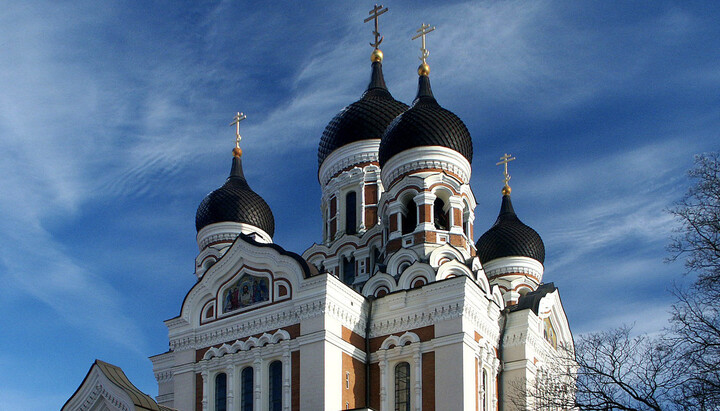
A cathedral of the EPHC in Tallinn.
On June 18, 2025, the Estonian Parliament (Riigikogu) passed amendments to the law on churches and parishes in the third reading. The bill, which previously caused a wide public resonance, was adopted after revision taking into account the president's remarks.
Opposition parties EKRE and the Centre Party (Eesti Keskerakond, EK) voted against, insisting that despite the changes, the law still violates the Constitution.
The bill was supported by 68 deputies, with 17 voting against. Among those who voted against were representatives of EKRE, the Centre Party, Isamaa deputy Priit Sibul, as well as non-factional members Kalle Grünthal and Jaak Valge. Five deputies did not participate in the voting.
One of the key amendments is the extension of the period for making changes to the statutes of religious organizations: instead of two months, six months are now provided.
This was done, as emphasized by the chairman of the Riigikogu Legal Committee Madis Timpson (Reform Party), to avoid pressure during the summer period and to bring the law in line with the practice of 1993:
"If we had not changed this, it would have been about the summer months. We considered that this was too little... We followed the example of 1993 when the period was six months."
The Parliament removed the wording that prohibited leadership by "a person located in a foreign country and having significant influence," which the president had previously described as too vague.
Instead, a provision was added that religious associations cannot be economically linked to foreign centers if they "...pose a threat to Estonia, in particular - incite, support, or finance activities aimed at forcibly changing the independence, territorial integrity, or constitutional order of Estonia".
The requirements for the statutes of religious associations were also clarified: it was defined who can be a clergyman and a board member, and a mechanism was prescribed for parishes and monasteries to exit the church structure if it does not meet the new requirements. For this, the statute can be adopted without the approval of the highest church authority if obtaining such approval is impossible.
Representatives of EKRE and centrists stated that the changes are merely cosmetic, and the law still contradicts the Constitution.
"These changes... are merely superficial, cosmetic in nature. And in reality, the contradictions with the Constitution have not been eliminated," said Varro Vooglaid (EKRE).
"The Constitution is not an empty phrase that can be respected only when convenient... The principle of the rule of law means that no political ambitions should be pushed through if they contradict the Constitution," he added, and said that if the law is signed by the president, the opposition will appeal to Chancellor of Justice Ülle Madise to initiate constitutional review in the Supreme Court.
Earlier, the UOJ wrote that the President of Estonia refused to sign the law banning the Estonian Church.
Read also
Upper Lavra court hearing postponed
The next court hearing in the Upper Lavra case has been scheduled for November 3.
UOC priest blesses ambulances at Kamianske medical center
A UOC priest in Kamianske blessed ambulances for a medical facility and wished its doctors God's help in their work.
Dumenko to German ambassador: Law targeting UOC also applies to other groups
Epifaniy Dumenko sought to defend Ukraine’s law restricting religious organizations during a meeting with the German ambassador.
Activists bused to court hearings in UOC cases, media say
A minibus has been spotted transporting protesters to and from courthouses where UOC cases are being heard.
Firefighters save historic UOC church from fire in Zakarpattia
A fire broke out at a UOC church in the Tiachiv district, damaging the altar and church furnishings.
Volyn Eparchy faithful collect six tons of aid for Sviatohirsk Lavra
Believers in Volyn collected food and warm clothing for people displaced by the war who have found shelter at Sviatohirsk Lavra.