Estonian Church: New law fails to eliminate violations of religious freedom
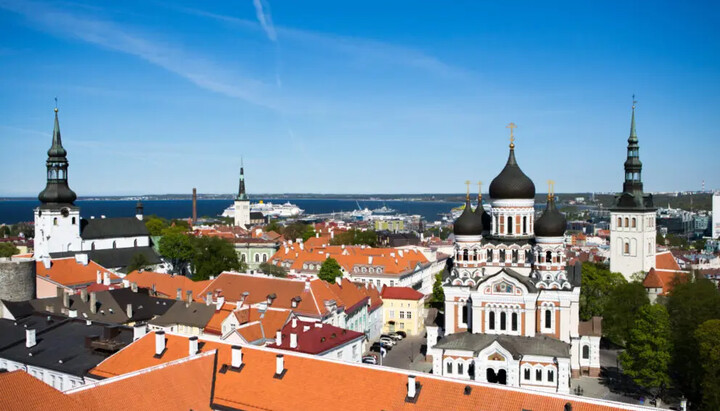
Cathedral in Tallinn, Estonia. Photo: orthodoxianewsagency
The Estonian Orthodox Christian Church (EOCC), formerly known as the Estonian Orthodox Church of the Moscow Patriarchate, has issued a statement regarding the recently adopted revised law on churches and parishes passed by the Riigikogu (Estonian Parliament). The statement was published on the official website of the EOCC on June 19, 2025.
The EOCC expressed regret that the updated text of the law retains the same problematic provisions previously criticized by the President of Estonia.
"We regret to state that the law still violates the Constitution," the statement reads. "It interferes in the internal life of religious organizations and forces them to make choices that contradict their conscience and canonical law."
The EOCC recalled that President Alar Karis had already rejected the law back in April, pointing out that it restricts freedom of religion. However, the Parliament made only minor amendments before passing it again.
"The law remains just as dangerous. The President pointed out serious issues, and the Parliament failed to address them," the EOCC emphasized.
The EOCC also responded to a recent interview by Metropolitan Stephanos, head of the Constantinople jurisdiction in Estonia. On June 18, in an interview with ERR, he voiced support for the new law and proposed creating a special “vicariate” for the EOCC – a structure which, he claimed, would allow the Church to preserve its canonical status without being under Moscow’s authority.
"My proposal is an outstretched hand of help. I want them to preserve their ecclesiastical identity," said Metropolitan Stephanos. "I ask nothing in return, except one thing: that EOCC priests commemorate my name during the Divine Liturgy as a sign of communion."
He also acknowledged that the new law may result in legal and social consequences for priests who remain with the EOCC.
"Obviously, no one has the right to jeopardize state security. The law is the law," the hierarch stated.
The EOCC responded that such proposals cannot be considered under conditions of pressure and uncertainty.
"Questions of canonical affiliation cannot be resolved in the midst of political conflict. These are serious spiritual matters and must be settled according to Church canons, not in reaction to external pressures," the Church explained.
The EOCC expressed hope that the President would make a wise decision and continue to uphold the Constitution and protect freedom of religion. The Estonian Church also noted that Metropolitan Stephanos’s initiative appears to be a form of pressure, coming amid legislative attempts to isolate the EOCC and its faithful.
Earlier, the UOJ reported that a Constantinople hierarch in Estonia had publicly supported the law targeting the Church.
Read also
Upper Lavra court hearing postponed
The next court hearing in the Upper Lavra case has been scheduled for November 3.
UOC priest blesses ambulances at Kamianske medical center
A UOC priest in Kamianske blessed ambulances for a medical facility and wished its doctors God's help in their work.
Dumenko to German ambassador: Law targeting UOC also applies to other groups
Epifaniy Dumenko sought to defend Ukraine’s law restricting religious organizations during a meeting with the German ambassador.
Activists bused to court hearings in UOC cases, media say
A minibus has been spotted transporting protesters to and from courthouses where UOC cases are being heard.
Firefighters save historic UOC church from fire in Zakarpattia
A fire broke out at a UOC church in the Tiachiv district, damaging the altar and church furnishings.
Volyn Eparchy faithful collect six tons of aid for Sviatohirsk Lavra
Believers in Volyn collected food and warm clothing for people displaced by the war who have found shelter at Sviatohirsk Lavra.