Should the UOC ban the Metropolitan of Luhansk from ministry?
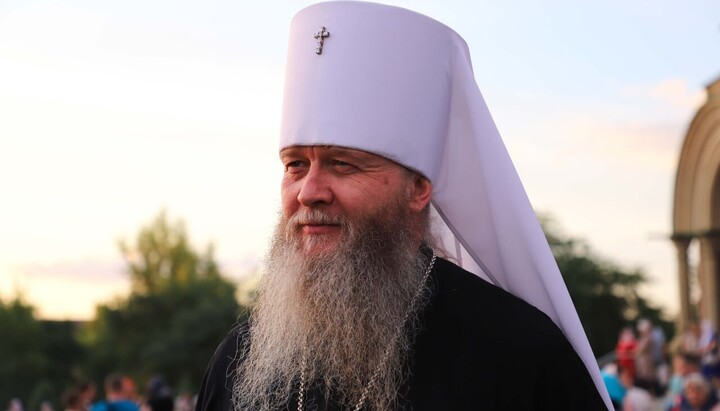
Metropolitan Panteleimon of Luhansk. Photo: Press Service of the Luhansk Eparchy
Metropolitan Panteleimon of Luhansk was sentenced in absentia to 11 years in prison for “collaborating with the Rashists.” The judges justified the verdict by saying he attended a meeting in the Kremlin to legitimize the seizure of Ukrainian territories, gave interviews to Russian media, and endorsed the occupation of Ukraine, etc. But no details or evidence were provided to us.
But this is not about whether the verdict itself was just. We want to draw attention to a related part of the ruling – that the hierarch is banned from “holding any positions in religious organizations for 13 years.”
Patriotic social media pages are already claiming that now the UOC Synod is obliged to remove him from his see and prohibit him from serving. But is that really true? The issue here is not that we support Metropolitan Panteleimon’s non-ecclesiastical activities. The problem lies elsewhere.
Let’s set aside the political and ecclesiastical context and imagine a purely hypothetical situation: law enforcement catches and arrests the Metropolitan of Luhansk, he serves his sentence, and is released. What should the UOC Synod do? Follow the court ruling, strip him of his see, and ban him from ministry for 13 years? But under the country’s highest law – the Constitution – Church and state are separate. How can the state dictate to the Church who may serve as priest or bishop and who may not?
We live in a country where one denomination is openly called a “state attribute” and has its interests promoted abroad, while another is threatened with a ban over canonical (!) ties. Meanwhile, certain religious figures render services to the government by justifying its actions internationally.
Perhaps, in fact, Ukraine is no longer a secular state?
Read also
Why is it legal to kill a person before birth but not after?
Children are the most privileged members of society. Yet that same society officially permits children to be killed – and on a massive scale.
Honoring the Bolsheviks’ successors at Kyiv Lavra
It was under the Reserve that the relics of the saints were desecrated, Lavra churches were turned into an atheism museum, and toilets were installed in sanctuaries.
"Degenerates" and "stupid animals": anti-UOC activists turn on children
Future historians will wonder how a vast country’s information agenda could have been shaped for so long by people so petty, vicious, and utterly contemptible.
Zelensky sees murder of Polish priest but not of Sviatohirsk monk
Why does Zelensky react so emotionally and swiftly to the murder of a Catholic cleric while remaining completely silent about the murder of an Orthodox monk?
UOC vs. OCU numbers: pollsters count, social media recount
Official polling suggests Dumenko’s structure has an overwhelming lead in the number of parishioners, while social media polls paint a very different picture. Which should we believe?
Who is working for the Kremlin in Poland? OCU, Uniates and Catholics versions
Who in the conflict between Poland and Ukraine is "an agent of the Russian Federation"? Zelensky, who gave the UPA name to an AFU special operations center? Nawrocki, who stripped him of an order for it? Polish MEPs?