Turning a minus into a plus
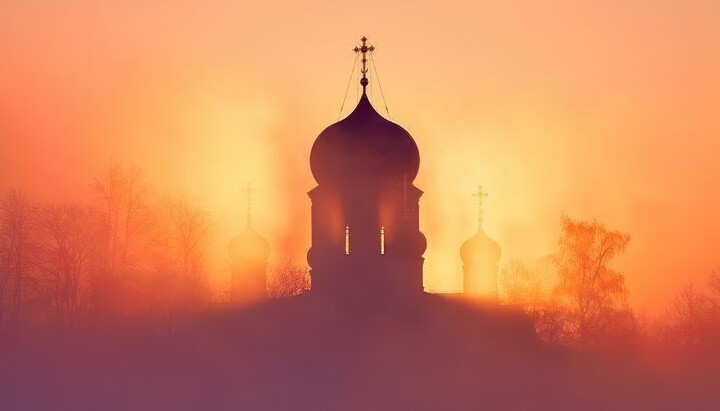
Church dome. Photo: Pinterest / Larisa Batyrgareeva
“The lamp of the body is the eye… If therefore the light that is in you is darkness, how great is that darkness!”
We deeply believe that our inner world is a reflection of the outer world. If everything is well with us, with our loved ones, and around us, then there will be light inside us too. And vice versa. When our loved ones are sick, when the world around us is collapsing, deep darkness settles in our hearts. It seems so obvious – so why even talk about it? But in the Gospel and in the writings of the Holy Fathers, we find the thought that it’s actually the other way around. The outer world, as we perceive it, is a reflection of our inner world.
That’s a strange idea, isn’t it? Let’s try to unpack it.
How can we see the world in light when it lies in darkness? How can we rejoice when there is a sea of human sorrow and suffering around us? How can we remain calm and at peace when troubles, grief, and disasters press in on all sides?
Yet, for example, Elder Simon (Bezkrovny) teaches that the world around us is as we are – that it is a reflection of our mind. Elder Thaddeus of Vitovnica taught the same. It turns out that the problem of our inner darkness isn’t what’s happening outside, but what’s happening inside us. The problem lies in our personal attitude toward what happens, in how I see the world and interpret the events in it.
Self-knowledge is one of the most important elements of spiritual life. It’s crucial that we learn to look at ourselves from the outside. Then we’ll see that, in some strange way, our mind is always searching for what is bad. It somehow likes to read about bad things, learn bad news, hear when someone tells something bad. That’s exactly why most news isn’t about good things.
People don’t want to hear about good things; they want to know what’s wrong with the world. This shows that our spiritual eye truly is darkened, that something is wrong with us if we so masochistically want to dwell in the darkness of our own consciousness.
If we step back and objectively label with pluses and minuses everything that surrounds us, both inside and out, we will see that there are far more pluses. Far more reasons for joy than for sorrow. And yet, as if bewitched, we seek out darkness in everything and fill our soul with it.
But someone might ask a very reasonable question: “Doesn’t one huge minus outweigh countless pluses? Isn’t a deadly illness or war, hanging like a terrible Damoclean sword over every home, a convincing reason to live in darkness?”
Indeed, when death comes, when there is war, famine – then all the pluses seem to be wiped away.
At that point, we need to look more closely at the minus and try to understand why it seems that way to us. And the answer is very simple. Because the minus carries pain and fear, which we experience as the darkness of suffering. But then we need to ask ourselves: “Is there any meaning in them?” We see that all the countless generations who have ever lived on earth have felt pain and fear. All people have gone through wars, diseases, epidemics. Each of them died in some painful way. There is not a single saint who did not pass through the Cross.
That means pain and fear are important formative factors of something far greater than our earthly life. They launch and guide within the soul processes that nothing else can begin. This is necessary. Painful circumstances are integrated into our life by God’s providence. Just imagine what a person would become if they feared nothing, worried about nothing, if they did not know what pain is.
For us, pain and fear are a minus only because we lack faith, courage, and humility. Because we do not trust God.
How do you turn a minus into a plus?
The wise say there is only one way: find the plus within the minus. Understand why you need it. For what are you willing to endure pain and fear? And having understood, love and accept what you fear.
Imagine Christ coming to you personally and saying: “If you bear everything I send you in this life with dignity, I guarantee you eternal, unending joy.”
And even better, imagine if He let us see what God has prepared for those who love Him.
But at the same time, He would also give us freedom of choice: to live in nothing but pluses here and now, but then be doomed to eternal darkness and gnashing of teeth. And it would be good to see that too. Then the minus would immediately become a vast plus for us. We would gladly choose to go through fear and pain, if only to remain with God for eternity.
We want guarantees. It isn’t enough for us that the Gospel says: “He who endures to the end will be saved.”
If we had true faith, any minus could become a plus for us. We would be able to see the good in the bad. We would sincerely thank God for all the sorrows He allows to happen to us for the sake of our salvation.
So truly, the issue isn’t what is happening around us, but what is happening within us. The world is as we choose to see it. And the truth is that the inner is more important than the outer. If our eye is full of light, then the world around us – no matter what it is – will also be filled with light.
Read also
From love spells to bishop's throne
Antioch’s most powerful sorcerer sent demons against a devout young Christian woman three times – and failed every time. In the end, a demon himself revealed the truth that led to his conversion.
The Weeping Queen of Blachernae
On the night of the Feast of the Protection, only two people witnessed the miracle in the Church of Blachernae. Everyone else prayed and saw nothing. Yet they, too, received grace.
Deadly spiral of human hatred
The tragedy of Lebanon's civil war lays bare how dehumanization and fear can turn human beings into monsters.
Woe to expectant mothers – or to those of little faith?
God commanded one prophet not to have children, yet told his people in exile to bear sons and daughters. What does this apparent contradiction tell us today?
The help God never asked for
Uzzah wanted only to keep the Ark of the Covenant from falling into the dust. Why did this well-intentioned act cost him his life, and who was really responsible for his death?
Freedom begins when there's nothing left to take
Fear of persecutors takes root in our attachment to possessions. We turn to St. Basil the Great to understand why the prefect's threats held no power over him.