Typikon as a tuning fork of church life: the rule on fasting
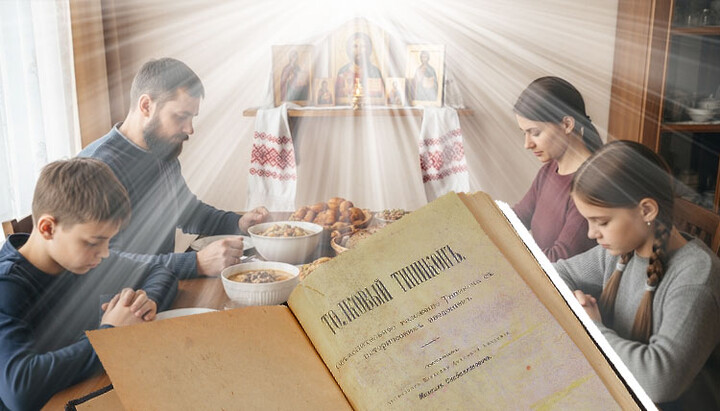
The Typikon is strict, detailed, and unlike the common assumptions often found in today’s church environment. Photo: UOJ
Fasting is one of the most discussed aspects of church life. It’s common to hear about the unchanging nature of its rules, the obligation to fast “as prescribed,” and standard phrases like: “The Church has established,” “The Typikon prescribes,” and so on.
But the core problem remains: very few actually know what is truly “prescribed by the Typikon.”
Most people are guided by habit, local traditions, the words of “their priest,” or pamphlets of questionable origin that have nothing to do with the Typikon.
The rules of fasting were formed over centuries. In different regions and monasteries, this process evolved independently. As discussed in a previous article, our Church follows the rule of one particular monastery – the Lavra of St. Sabbas the Sanctified. Its climate, vegetation, access to food, and the monks’ lifestyle directly influenced the fasting prescriptions. For example, seafood was often permitted in that region because it was simple and nutritious. But does such a rule make sense in a place where fish is an expensive delicacy? Clearly not.
What was fasting like before the Typikon?
Originally, fasting meant complete abstinence from food, not just refraining from certain types. The strictness of a fast was measured by its duration: food might be avoided until noon, until 3:00 PM, or until evening.
In the writings of the Holy Fathers, we see this understanding: "Let us not think that mere abstinence until evening will save us... What use is fasting, tell me, if you don’t eat all day, but spend your time in games, jokes, even perjury and slander?" – St. John Chrysostom.
Thus, fasts were initially distinguished only by their length and came in three forms:
- Wednesday and Friday fasts, which lasted until the ninth hour (around 3:00 PM).
- Great Lent, where food was taken only in the evening (around 6:00 PM).
- Total abstinence, when an entire day was spent without food (e.g., on Great and Holy Friday).
Later, fasting practices expanded. First came abstention from meat, then from dairy and eggs. By the 5th century, the practice of limiting not only when, but also what one ate during fasts became established. Over time, specific forms of fasting such as raw food and dry eating developed. Thus, fasting came to involve three elements: timing, quantity, and type of food – the foundation of the Typikon’s prescriptions.
So what does the Typikon actually say about fasting?
To begin with, it prescribes no more than two meals per day throughout the year. When only one meal is allowed, it is taken at the ninth hour (around 3:00 PM) or after Vespers.
The Typikon defines several degrees of fasting:
- “Full permission” – no restrictions (except meat for monastics)
- Permission for fish, oil, and wine
- Cooked food with oil and wine
- Hot food without oil
- Dry eating (xerophagy) – “bread and water and similar,” i.e., raw, dried, or soaked fruits and vegetables
- Total abstinence from food and drink – this is what the Typikon literally refers to as “fasting”
It’s worth noting that wine in the Byzantine tradition was typically diluted with hot water and low in alcohol, hence its frequent allowance in the Typikon, though usually with limitations.
The general order of meals is described in Chapter 35 of the Typikon. Wednesdays and Fridays (and Mondays in monastic practice) are treated like Great Lent – one meal per day, usually dry eating. Feasts may lighten fasting rules.
As an example, here is a moderate observance of the Apostles’ Fast according to the Typikon:
- One meal per day (around 3:00 PM)
- On regular weekdays: cooked food without oil
- On Mondays, Wednesdays, and Fridays: dry eating
- On Saturdays and Sundays: fish is permitted, with two meals allowed
Naturally, the requirements for other multi-day fasts (e.g., Great Lent) are much stricter.
It’s worth asking: are these the rules people mean when they say we should fast “according to the Church’s Typikon”?
What are the conclusions?
We’ve seen how fasting evolved – from total abstinence to intricate systems. The Typikon is strict, detailed, and often quite different from what is commonly imagined in contemporary church life.
But the main question remains: how does this relate to the life of a layperson today? What elements of the Typikon are possible, reasonable, and truly beneficial? Where is the line between fidelity to tradition and spiritual flexibility?
These questions require not hasty answers, but a careful look at history, the individual, and the context of his or her life.
The Typikon, like a tuning fork, sets the tone – but to perform the music of faith, one must understand the notes, the rhythm of the age, and the capacity of one’s own soul
And when looking at this medieval score, it becomes clear: what the modern Christian needs is not a cryptic template, but a living understanding.
Read also
Trial of a dead pope
Once in Rome, the body of a deceased pope was seated on the throne and put on trial. The accusation relied on a church canon that had once saved his see.
Monastery built in defiance of king
When Orthodox believers in Minsk were left with just one church, townspeople decided to build another – and even a royal decree did not stop them.
Young Mother and Sleeping Christ
Michelangelo carved a Virgin Mary who looks younger than her Son – and signed his name in marble for the only time in his life. Neither of these peculiarities was accidental.
Orthodox books from a Uniate printing press
In the 18th century, Uniate monks at Pochaiv printed books used in prayer by Orthodox Christians and Old Believers alike.
The story of the honey brotherhood
The Mogilev Brotherhood began with members pooling money to brew honey drinks for feast days – and eventually grew to have its own printing press.
Golgotha in the midst of a pogrom
In the autumn of 1938, the Jewish artist Marc Chagall painted the crucified Christ. Synagogues burn and refugees flee around the cross, while the Crucified One Himself is wrapped in a prayer shawl.