How to view 20th-century elders' prophecies about today’s events in Ukraine
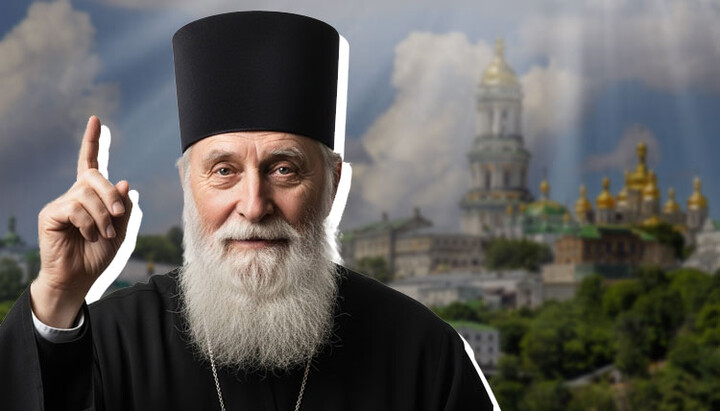
All prophecies concerning the fate of our homeland should be approached with attention. Photo: UOJ
Prophecy is not only a prediction of the future, but also a true and discerning understanding of the present. The holy prophets Elijah and Ezekiel, whose memory we recently celebrated, are striking examples of this. They not only spoke – often symbolically – about the coming of the Messiah, Christ, but also boldly denounced the idolatry promoted by the leaders of Israel in their time.
All our Orthodox bishops and priests, following Christ and the ancient prophets, are likewise called to a prophetic ministry. We must learn not only to copy the preaching models of the 20th century – though they are immensely rich and instructive – but also to speak boldly and truthfully about present-day realities. When we preach, we are obliged to call things by their proper names. But this must not come “from the wind of our own minds” (for then it usually becomes false prophecy), but must be based solidly on Holy Scripture and the patristic Tradition of the Church.
The fact that many of the prophecies made by 20th-century elders – who lived not so long ago – are being fulfilled today testifies that the Church was not mistaken in glorifying them as saints. One of the most well-known is the prophecy of Venerable Lavrenty of Chernigov (+1950), who, during the godless Soviet era, foretold that the persecution of the Church would soon end, churches and monasteries would be restored, and domes would once again be gilded. But – he emphasized – this would be short-lived, as new and even more fearsome persecutions would soon begin.
Naturally, many people have wondered: why is this so? Why would the Church enjoy only a brief time of freedom? There are no surviving records of how Venerable Lavrenty answered that question, but one might reasonably assume that he was urging both contemporary and future pastors and believers to focus not merely on external piety – such as the beauty of churches and services – but above all on inner spiritual work: the struggle against passions and lusts, and the pursuit of virtue. Seeing that many Christians were spiritually lazy, he may have spoken of the short duration of the Church’s outward freedom to awaken them.
Other ascetics and elders of the 20th century – though not yet canonized – also foresaw many of the developments we are now witnessing. They did so not by means of political analysis, as secular commentators do, but through deep spiritual discernment and an understanding of human nature’s tendency toward sin. For example, when one holy woman foretold that a well-known hierarch of her time would end his life as a mere “man in trousers,” it was not a mystical revelation but a sober conclusion drawn from his unworthy way of life, which could not possibly lead to a different end.
Therefore, we must treat all prophecies concerning the fate of our homeland or certain prominent individuals with attentiveness, while also rejecting all hysteria and fabricated predictions falsely attributed to particular elders – especially when these so-called prophecies contradict the spirit of Holy Scripture and Church Tradition.
Read also
The spiritual sensitivity of a living soul
A pastoral reflection on why witnessing wrongdoing causes spiritual pain – and what our response to the sins of others reveals about the state of our hearts.
Love is stronger than death
The loss of a loved one leaves a deep wound, but the Christian faith emphasizes the eternal nature of love. A conversation about the spiritual bond between spouses beyond the threshold of earthly life.
The true compass of the Christian life
St. Anthony the Great called discernment the highest virtue. The experience of the Desert Fathers shows that the path to spiritual sobriety lies through humility, seeking counsel, and overcoming the passions.
What is the essence of Christian spiritual feat?
Archpriest Vasily Kucher reflects on modern asceticism.
How can one find their purpose in life?
Archpriest Vasiliy Kucher addresses the question of life’s purpose and God-given calling.
“Let God arise”: Why do we speak of a past event as though it were future?
Archpriest Vasyl Kucher explains the linguistic and theological features of the well-known prayer.