Scientists discover cause of aging and methods to block it
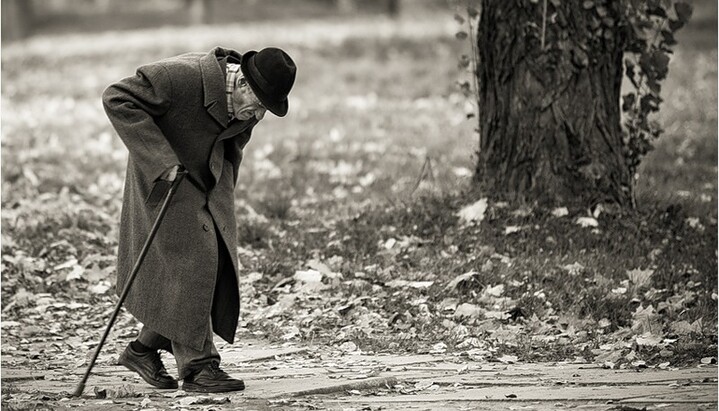
A senior. Photo: Mira Brig
Korean scientists have made an important discovery in the field of aging research: they found that this process can spread throughout the body via a special intermediary protein. The results of the study were published in the journal Metabolism.
Researchers discovered that the HMGB1 protein is capable of transmitting aging signals from one cell to another. In its normal state, it resides inside the cell nucleus and participates in DNA organization. However, when cells age or experience stress, they release this protein outside.
The main discovery is that only a specific chemical form of the protein is dangerous. "Reduced" HMGB1, which has not come into contact with oxygen, can attack healthy cells and initiate aging processes in them. Its oxidized form remains harmless.
Researchers tested this on human cells under laboratory conditions. When healthy lung, kidney, skin, and muscle cells were treated with the "bad" form of the protein, they stopped dividing and began producing inflammatory substances – classic signs of aging.
Experiments on mice confirmed the theory. Injections of reduced HMGB1 into young animals caused aging symptoms within a week. Conversely, blocking this protein in older mice improved tissue healing and physical performance.
Blood analysis showed that in people aged 70-80, the concentration of the "harmful" protein is significantly higher than in 40-year-olds.
The study explains why aging often accelerates with age. The more aging cells in the body, the more they release HMGB1, which causes healthy cells to age. It results in a kind of chain reaction.
However, scientists also see ways to solve the problem. They propose several strategies: blocking the protein's binding to target cells, promoting its conversion to a safe form, or stopping the inflammatory processes it triggers.
Some approaches can be implemented now. The study showed that existing drugs for treating autoimmune diseases can prevent cell aging caused by HMGB1.
The work of Korean scientists changes the perception of aging as a local process. It is now clear that it can spread throughout the body like a signal. This opens up new possibilities for developing anti-aging therapy.
For the first time, scientists are not only studying the mechanisms of aging but also seeing concrete ways to block them.
Earlier, the UOJ reported that scientists discovered a third state between life and death.
Read also
Medieval сhurch сrumbles as Culture Ministry сites missing agreement
The 14th–15th-century St. Nicholas Church in Chesnyky, Ivano-Frankivsk Region, is falling into disrepair.
Poland сondemns Lviv Regional Council's decision to declare 2007 year of UPA
Polish Prime Minister Donald Tusk says the Lviv Regional Council's decision to dedicate 2027 to the UPA and Roman Shukhevych is harmful to Ukraine.
OCU seeks court recognition of ownership of seized Cherkasy cathedral
The Cherkasy Regional Commercial Court will hear an OCU lawsuit seeking ownership of St. Michael's Cathedral, which was seized from UOC believers.
Lithuanian bishop: Ukraine is no model for believers' rights
Vicar of Vilnius Diocese voices concern over attempts to import Ukraine's religious conflict into Lithuania.
Hundreds of believers honor St. Alexis of Carpatho-Russia in Khust Eparchy
At the St. Nicholas Monastery in the village of Iza-Karputlash, Metropolitan Mark of Khust led a festive liturgy, concelebrated by six metropolitans, five archbishops and three bishops.
Court upholds UOC parish appeal in Voloshky over OCU switch dispute
The Northern Commercial Court of Appeal has upheld the appeal of the St. Nicholas parish of the UOC in the village of Voloshky, Volyn region, in a dispute over a transfer to the OCU.