Hospitals, schools, shelters: how the Church served people in Byzantium
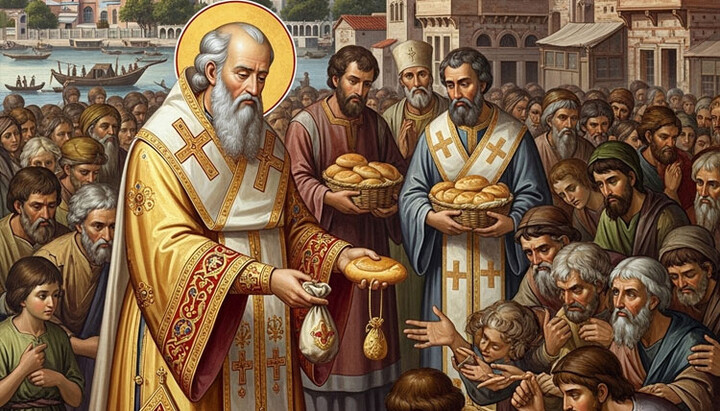
St. John Chrysostom fed more than 3,000 people daily. Photo: UOJ
In the previous article, we examined how in the apostolic period, social service was born out of deep faith and love. By the 4th century, the ministry of mercy did not become less significant; on the contrary, it expanded and acquired new forms, facilitated by the Church's position within the state.
After the Edict of Milan in 313 and then the proclamation of Christianity as the state religion under Theodosius I in 380, the Church received unprecedented opportunities and resources to expand its charitable activities. The state supported church initiatives as they contributed to the stability of the empire through charity, medicine, and education. Byzantine emperors often called their laws "philanthropic". The Theodosian Code (5th century) and the Justinian Code (6th century) established the legal basis for church charity.
In accordance with civil laws, special organizations were created for different groups of the needy.
Some were directly supported by the emperor, others were sponsored by benefactors. But the Church itself also created many of its social institutions.
Charity and assistance to the poor
The Church organized the distribution of food, clothing, and shelter through ptochotrophia, or "houses of the poor". In the mid-4th century, during a famine, Saint Basil the Great opened free public dining rooms. To achieve this, he had to struggle and even argue with the wealthy, urging them to open their food reserves and share with the starving.
Later, free kitchens and baths, funded by the Patriarchate and imperial donations, began to open throughout the empire. For example, Saint Patriarch John IV the Faster in the 6th century fed thousands of poor people daily, and Empress Theodora actively supported shelters for women in difficult circumstances.
St. John Chrysostom, while in Antioch, fed more than 3,000 people daily, and later in Constantinople, 7,000 people.
His disciple, Blessed Theodoret, Bishop of Cyrrhus, writes: "He was all in labor... To the sick, he was a physician, to the sorrowful, a comforter. For all, he became everything."
Medical assistance and hospitals – Church's creation
Few know, but hospitals (xenons) are a creation of the Church. The idea of building an institution that would serve the suffering belongs to St. Basil the Great. Initially, it was met with great resistance. Nevertheless, in 372, the famous complex, later known as the Basileias, was built. It combined a hospital, leprosarium, shelters, schools, and homes for the poor.
St. Gregory the Theologian, after the funeral of his friend, S.t Basil, said about the Basileias: "Come out, brothers, from your city and look at this new city, where piety reigns... Here, illness is viewed philosophically, here misfortune turns into happiness... In the hospital 'Basileias', we see people whom everyone rejected and hated for their illness. And Basil the Great managed to convince us that if we consider ourselves human, we should not neglect our kind, for by our heartlessness, we offend Christ Himself."
Over time, new medical institutions were opened, often at monasteries.
For example, at the monastery of St. Sampson in Constantinople, the hospital had separate wards for men and women, as well as specialized departments. Doctors, often monks, combined knowledge of ancient medicine with Christian care, making Byzantine hospitals unique for their time.
Care for the needy, education, and cultural service
The Church paid special attention to orphans (orphanotrophy), widows, and the elderly (gerocomy). Specialized shelters appeared as early as the 4th century. The famous Constantinople shelter of St. Zotikos (4th century) raised orphans, teaching them crafts and Christian faith. The Justinian Code required bishops to oversee orphans, and emperors allocated lands for the maintenance of shelters. There were also homes for travelers (xenodochy), where the Church provided shelter and food.
Monasteries and church schools played a key role in education.
Thanks to the Church's efforts, literacy in Byzantium was higher than in Western Europe. Monasteries maintained libraries and schools, not only preserving ancient texts but also teaching children from poor families literacy and crafts. In the 9th century, St. Patriarch Photios I the Great organized schools where the poor could receive basic education for free.
All these examples show that the Church did not just content itself with freedom but also scaled its ministry of love, which began in the apostolic community.
Assistance to the poor, medical care, care for orphans, and education – these forms developed in close connection with the state and reflected the Christian ethic of mercy.
They saved lives, provided education, and strengthened social stability. However, with the fall of Constantinople in 1453, the historical development of Orthodox social service was largely interrupted. Nevertheless, even in this new, radically changed world, the Church continued to carry out its mission of charity.
Read also
Why were holy monasteries turned into state prisons?
The history of Christian Europe preserves the memory of times when monasteries served as places of exile imposed by the state. Within their walls, the fates of monarchs and righteous men were decided.
A shepherd boy with a letter from Christ to French king
In the summer of 1212, thousands of pilgrims carrying staffs waited for the sea to part before them. Later chroniclers added ships, slave traders, and a pope's lament to their story.
Facade of bones and facade of light
Antoni Gaudí spent forty-three years building a church in Barcelona, knowing that this construction was for the ages.
Trial of a dead pope
Once in Rome, the body of a deceased pope was seated on the throne and put on trial. The accusation relied on a church canon that had once saved his see.
Monastery built in defiance of king
When Orthodox believers in Minsk were left with just one church, townspeople decided to build another – and even a royal decree did not stop them.
Young Mother and Sleeping Christ
Michelangelo carved a Virgin Mary who looks younger than her Son – and signed his name in marble for the only time in his life. Neither of these peculiarities was accidental.