At the origins of Orthodox press in Ukraine: a journalist's memoirs
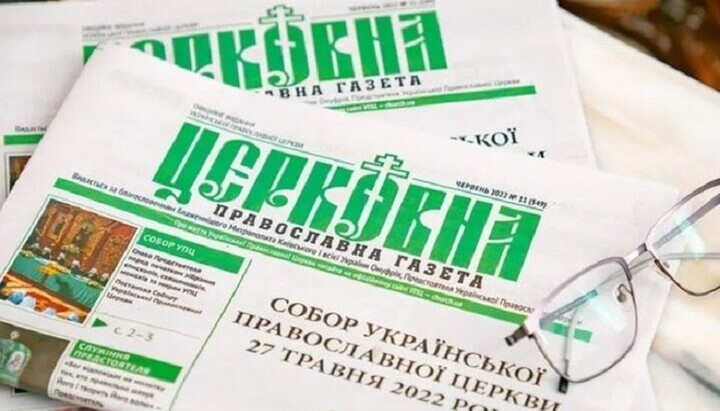
The main printed edition of the UOC. Photo: author
First edition: "Ukrainian Orthodox Bulletin"
The first newspaper of the UOC, «Український Православний Вісник» ("Ukrainian Orthodox Bulletin"), was established in 1989 under the tenure of then-Metropolitan Filaret (Denisenko), before his fall into schism. The author of these lines, then a young journalist, had the opportunity to be its organizer and chief editor by the blessing of the spiritual father of the Kyiv clergy, the late Archpriest Mykhailo Boiko.
The newspaper was published in two languages, with a circulation of 20,000 copies, and was distributed across the dioceses, by subscription, and through the Soyuzpechat kiosk network throughout Ukraine.
I would like to recall the names of the editorial staff who worked on the newspaper: secretary Viktor Zinovyev, correspondents Tetiana Krasovska, Stanislav Rechynsky, Larysa Kozyk (now deceased), literary editors Olena Bobrovnikova (now the senior editor of the UOC Publishing Department, nun Eutropia), Tetiana Shmyhovska, artist-designer Halyna Zueva. The newspaper lasted for three years until the schism of 1992. The clergy, particularly Archpriests Vasyl Tarasov and Oleksandr Kubelius (the first rector of the KDS after its opening in 1990, now deceased), assisted the publication.
With the arrival of Metropolitan Volodymyr (Sabodan)
When in June 1992 the newly elected Primate of the UOC, His Beatitude Metropolitan Volodymyr (Sabodan), arrived at the Kyiv-Pechersk Lavra for ministry, the church treasury was empty. All funds were seized by the schismatic Filaret. After meeting with His Beatitude and interviewing him, he offered me to be his press secretary and editor of a new church newspaper. I agreed.
Although I was listed as the chief editor of the "Church Orthodox Newspaper", in fact, the chief editor was Metropolitan Volodymyr himself.
We would bring the already laid-out pages of the next issue to His Beatitude for review, and he would make the necessary corrections with a black pen in his neat handwriting. He also provided documents for publication. I remember once he was searching for a document on his desk for a long time. I asked timidly, "Perhaps we can do without it, Your Beatitude?» He smiled, continuing his search: «No way. The devil must be shamed." And the document was found.
His Beatitude dictated the news feed about his service, official meetings, trips to eparchies and abroad. Sometimes I had to sit in his office for an hour or more, trying not to miss anything (there were no dictaphones or computers at that time). There was no editorial office as such. Familiar journalists helped with the layout at the "Press of Ukraine" plant, where the issue was printed.
Later, computers, an editorial office, and a small staff appeared. A brilliant assistant was KDA student Ioann Tronko (now a well-known archpriest), who laid out the newspaper on a computer. The pages were proofread by literary editors Svitlana Panchenko and my wife, journalist Svitlana Heruk. KDA students, brothers Vladislav and Hieromonk Tykhon Sofiychuks (now an archpriest and a metropolitan), the late Archimandrite Longin (Chernukha), rector of KDAiS Archpriest Mykola Zabuga, and others assisted.
In 1998, I handed over the newspaper to the new editor, Priest Vladislav Sofiychuk, and moved to work in the secular newspaper "Region", where I covered the life of the Ukrainian Orthodox Church.
Development of church media in the 2000s
In 2000, the UOC press service was created, headed by the honored journalist of Ukraine Vasyl Anisimov. Its creation was facilitated by Metropolitan Volodymyr and his secretary, the dean of Kyiv, Archpriest Vitaliy Kosovsky. It was then that the official website of the UOC was launched, and I was invited to be the deputy to Anisimov. Church magazines began to be published, and a TV channel was created.
Over time, almost all UOC eparchies, monasteries, KDAiS, and synodal departments began to have their own websites. The "Orthodoxy in Ukraine" portal (editor Yulia Kominko) was actively operating, and the youth magazine "Otrok" (chief editor Archbishop Iona (Cherepanov)) gained popularity. The created Orthodox TV channel "Hlas" produced films that were broadcast throughout Ukraine. The UOC Synodal Information and Education Department, led by the late Archbishop Ilarion (Shyshkovsky), oversaw all Orthodox mass media.
In 2014, the now-popular portals "Orthodox Life" (chief editor Natalia Horoshkova) and UOJ were created. I had the opportunity to be an employee of the UOC and Kyiv Metropolis press services, and the editor of the "Сyrillic" newspaper.
The voice of the Church in times of persecution
Despite the widespread total persecution of the canonical Ukrainian Orthodox Church, its voice is fully expressed. First of all, in the sermons of His Beatitude Metropolitan Onuphry, bishops, clergy, and numerous lay bloggers. Nevertheless, SBU efforts led to the closure of several Orthodox portals, and several priests and journalists ended up in prison.
The "UOJ" portal regularly and comprehensively covers the life of the UOC, exposing the lawlessness of schismatics and authorities.
In particular, the criminal activities of Mr. Yelensky, who at all levels declares complete freedom of religion in Ukraine, calling the UOC a "branch of the ROC" and an "enemy". He echoes President Zelensky's rhetoric, denying the raider seizures of churches and the Kyiv-Pechersk Lavra, and remaining silent about the repressions against UOC clergy and bishops.
The fearless voice comes from the persecuted Metropolitan Theodosiy (Snihirev) of Cherkasy and Kaniv, who has become an international defender of religious rights and freedoms. Eparchial websites provide comprehensive information about the persecutions. Despite the fact that many foreign lawyers and journalists testify to violations of freedom of conscience and the Constitution of Ukraine (Article 35), these voices are ignored by the authorities of several European countries and the USA.
***
In conclusion, we can say that the voice of the canonical Church of Ukraine is heard worldwide thanks to our Orthodox media. As the Savior said: «If they keep silent, the stones will cry out» (Luke 19:40).
The voice of the Church not only exposes lawlessness but also gives hope to millions of the faithful that the persecutions will cease, for, as the saints say, «God is not in power but in truth».
Currently, the Information and Education Department is headed by a member of the Holy Synod of the UOC, Metropolitan Clement (Vecheria). He is also the spokesperson for the UOC in all secular media. The network of UOC publications and internet resources, under difficult conditions, is today the largest in terms of numbers and readership among all religious media in Ukraine. And thank God for that.
As one of the oldest Orthodox journalists, I want to thank all my colleagues and the currently actively working young generation of UOC journalists for their worthy obedience to the canonical Ukrainian Orthodox Church.
Protodeacon Serhiy Heruk
Read also
Facade of bones and facade of light
Antoni Gaudí spent forty-three years building a church in Barcelona, knowing that this construction was for the ages.
Trial of a dead pope
Once in Rome, the body of a deceased pope was seated on the throne and put on trial. The accusation relied on a church canon that had once saved his see.
Monastery built in defiance of king
When Orthodox believers in Minsk were left with just one church, townspeople decided to build another – and even a royal decree did not stop them.
Young Mother and Sleeping Christ
Michelangelo carved a Virgin Mary who looks younger than her Son – and signed his name in marble for the only time in his life. Neither of these peculiarities was accidental.
Orthodox books from a Uniate printing press
In the 18th century, Uniate monks at Pochaiv printed books used in prayer by Orthodox Christians and Old Believers alike.
The story of the honey brotherhood
The Mogilev Brotherhood began with members pooling money to brew honey drinks for feast days – and eventually grew to have its own printing press.