President of Estonia challenges anti-church law in court
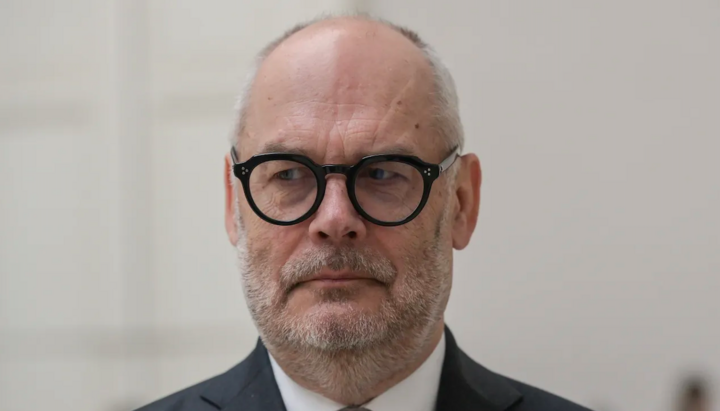
President of Estonia Alar Karis. Photo: SIPA/Scanpix
On October 3, 2025, the President of Estonia, Alar Karis, submitted an appeal to the Supreme Court requesting that the recently adopted amendments to the Law on Churches and Religious Associations be declared unconstitutional. The news was reported by Tvnet.lv, citing the presidential press service.
Karis noted that the amendments violate three articles of the Estonian Constitution – the articles on freedom of religion, freedom of association, and the principle of proportionality. According to him, the state already possesses sufficient mechanisms to oversee religious organizations and should not interfere in their dogmas or internal affairs.
“Legal instruments for controlling and restricting the activities of the Moscow Patriarchate that undermine sovereignty and democracy already exist. The current legislation provides for extensive oversight of religious associations. The problem is not the absence of such instruments, but their insufficient use – if necessary, we must enforce the existing ones more strictly,” emphasized the President.
He also warned that the overly broad language of the law could lead to interference in religious teachings: “The intention to prohibit not only administrative and economic ties with foreign states but also doctrinal ones is too vague. It would be sufficient to restrict only those connections that genuinely pose a threat. If the state begins to interfere in the teachings and rituals of religious associations, the authority of foreign spiritual leaders among their followers may in fact increase,” Karis said.
The Law on Churches obliges religious organizations to amend their statutes if they are subordinate to foreign centers whose activities the authorities deem dangerous to the country’s sovereignty. If an organization’s charter or leadership refuses to comply, its parishes may secede and register new statutes even without the consent of the original governing body.
Observers note that, in effect, the law is directed against the Estonian Orthodox Christian Church (EOCC). Government representatives have stated that if the EOCC refuses to comply with the law’s requirements, legal prosecution and an effective ban on its activities may follow.
Earlier, the UOJ reported that the Riigikogu once again refused to amend the Law on Churches, previously rejected by the President.
Read also
SBU told Phanar many UOC bishops would join OCU in 2018, report says
According to a Phanar representative’s account, Ukrainian security services told the Constantinople delegation that many UOC representatives were prepared to attend the OCU’s “Unification Council.” In the end, only two did.
Catholic cardinal visits Ukrainian POWs during trip to Russia
During three days of consultations in Moscow, Cardinal Matteo Zuppi discussed prospects for ending the war in Ukraine.
Ukrainians help restore Serbian Orthodox church in Paris
Orthodox Ukrainians have become regular parishioners of St. Sava Church in Paris and have taken part in its restoration.
Bulgarian Church clergy and laity oppose Phanar head’s visit
More than 2,000 clergy and laity have called for the Ecumenical Patriarch’s visit to be canceled, citing disagreement with his actions and concerns that the visit could legitimize schism.
Unknown intruders break down doors at two UOC churches in Sloviansk
Archbishop Paisiy said OCU activists are suspected of breaking into the churches in Sloviansk, and police have launched an investigation.
Sviatohirsk Lavra prays for murdered monk on 40th day after death
The brethren of the Sviatohirsk Lavra held a memorial service for murdered Monk Varsonofiy, calling on the faithful to pray for the newly departed monk.