Over 100 advocates urge EU to end online censorship
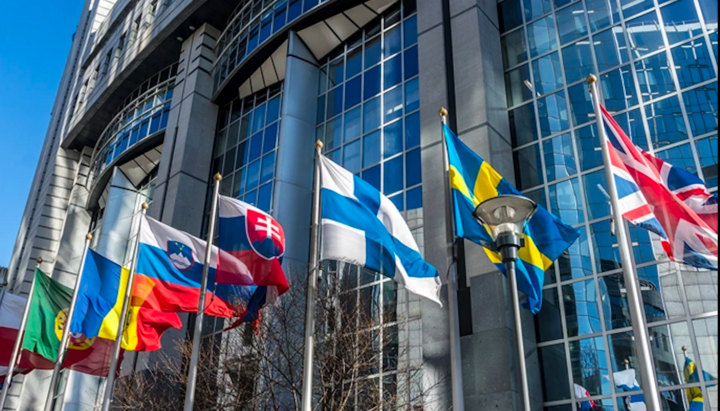
European national flags in front of the European Parliament building in Brussels, Belgium. Photo: Getty Images
On October 9, 2025, more than a hundred free speech advocates, including former U.S. and European officials, sent an open letter to the European Commission urging it to review provisions of the Digital Services Act (DSA), which they say pose a global threat to freedom of expression, reports The Christian Post.
In the letter, signed by 113 experts, the authors state that the current version of the DSA creates a “pan-European censorship infrastructure” with vaguely defined limits that could allow lawful content to be removed not only within the EU but also beyond its borders. The signatories called on the European Commission to involve independent experts in digital rights, free speech, and constitutional law in evaluating the law.
"The broad definition of ‘illegal content’ in the DSA, combined with existing jurisprudence of the Court of Justice of the European Union (CJEU) opens the door to worldwide takedowns,” the letter notes. According to the authors, social media platforms may adopt EU restrictions as global content moderation standards.
Among the signatories are former U.S. Ambassador for International Religious Freedom Sam Brownback, Princeton professor Robert George, journalist Michael Shellenberger, and human rights advocate Ayaan Hirsi Ali. Former U.S. diplomat Andrew Puzder warned that the DSA “DSA could restrict speech protected under the First Amendment.”
Adina Portaru, senior legal counsel at ADF International in Brussels, stated that the European Commission’s claims about “creating a safe digital environment” are misleading. In her view, the DSA effectively establishes a global regime of online censorship under the guise of user protection.
The Digital Services Act, which came into effect in January, obliges online platforms to remove “illegal content” under threat of fines of up to 6% of global turnover. Critics argue that such provisions could be used to suppress any inconvenient opinions, including religious and conservative views.
Earlier, the UOJ reported that the EU plans within five years to legalize gender changes for minors.
Read also
Khust Eparchy honors memory of St. Job of Uholka
A Liturgy is served in Mala Uholka, a birthplace of St. Job of Uholka, on the saint's feast day.
UOC parish in Cologne donates ultrasound machine to Kharkiv region hospital
In Cologne, UOC believers raised funds for an ultrasound machine for the Kehychivka district hospital in the Kharkiv region.
Shevchuk tells Pope Leo of Ukraine's preparations for "another harsh winter"
The head of the UGCC expressed "special gratitude" to the Pope for his phone calls with Putin and Zelensky.
Berlin hierarch comments on Phanar document published by UOJ-USA
Metropolitan Mark called the information about the 2018 "Unification Council" alarming if confirmed, and expressed hope that Patriarch Bartholomew will reconsider his position.
UOC marks Synaxis of All Saints of Volyn Land at Lutsk cathedral
Metropolitan Serhiy of Ternopil and Kremenets led the Liturgy on the feast day of the Lutsk cathedral of All Saints of the Volyn Land.
SBU detains OCU cleric who organized draft evader's escape for money
In Transcarpathia, law enforcement officers detained a clergyman of the OCU who arranged for a draft evader to be smuggled into Slovakia for $15,000.