Absurdity and iniquity: Berehomet believers respond to the call to join OCU
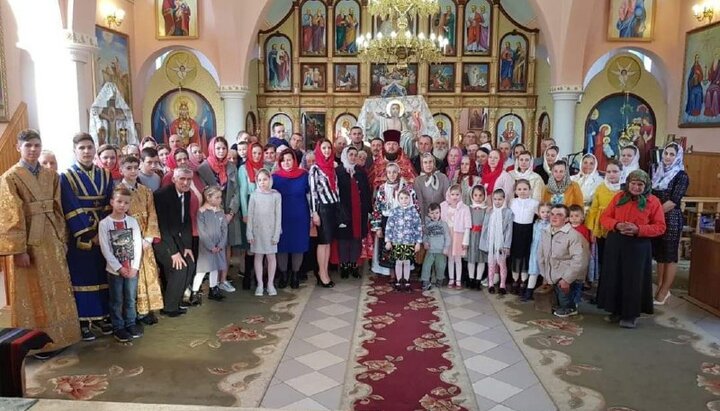
The parishioners of the Intercession temple in Berehomet, Chernivtsi region, responded to the local authorities' call to move to the OCU within 10 days, stating the incompetence of officials. The collective letter of believers was posted by the press service of the Chernivtsi-Bukovyna diocese on its Facebook page.
To prove the absurdity of the call of the authorities, believers of the UOC give a simple example.
“The 15th session of the Berehomet village council voted that the husband and wife who live in the village of Berehomet should divorce and marry other people within 10 days. From this example, it is clear that the village council does not have the authority to decide who needs to get a divorce and whom to marry,” the message says.
The letter notes that since the Church is separated from the State, local governments do not have the right to interfere in the affairs of religious communities.
“We want to remain faithful to the Ukrainian Orthodox Church,” say the parishioners of the Intercession church.
Recall that on May 23, 2022, the Berehomet authorities gave church communities 10 days to move to the OCU.
Read also
Ukraine’s Foreign Ministry plans advocacy visits abroad for UCCRO
Members of the All-Ukrainian Council of Churches and Religious Organizations have planned advocacy visits abroad following a meeting with Ukraine’s deputy foreign minister.
UOC priest detained by recruitment officers in Kyiv sent to training ground
UOC priest Maksym Kostiuchenko, who was detained on his way to a church service in Kyiv, has been sent to a military training ground in Chernihiv Region.
25 tons of humanitarian aid from Volyn reach Sviatohirsk Lavra
Around 25 tons of food donated by believers of the UOC Volyn Eparchy arrived at Sviatohirsk Lavra on October 22.
UOC West European Vicariate holds children's camp in Germany
A children’s camp was held in the UOC’s Western Deanery in Germany from October 19 to 23.
Vinnytsia Metropolitan consecrates UOC Intercession church in Luka-Barska
Metropolitan Varsonofy consecrated the Church of the Intercession in Luka Barska, Vinnytsia Region, and celebrated the first Divine Liturgy in the new church.
“Joy of All Who Sorrow” lower сhurch сonsecrated in Korosten
Metropolitan Nikodim of Zhytomyr and Novohrad-Volynskyi presided over the consecration of the church and celebrated the Divine Liturgy at St. Nicholas Church in Korosten.