And who exactly are the “sanctioners”?
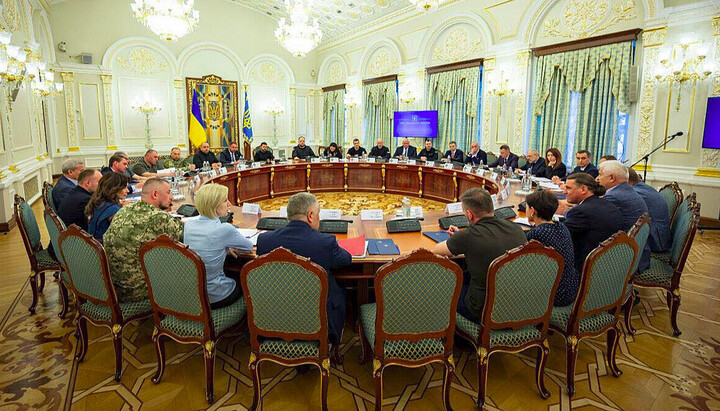
A meeting of the NSDC. Photo: Umerov’s Facebook
On 13 November, Zelensky signed an NSDC decree imposing sanctions on businessmen Tymur Mindich and Oleksandr Zukerman, both of whom appear in a major corruption case.
Mindich is Zelensky’s long-time partner from “Kvartal 95” and, as the media claim, his long-time close friend.
The sanctions were imposed for only three years (the standard term is ten). At the same time, Mindich and Zukerman are listed in the document as citizens of Israel, meaning their Ukrainian assets are unaffected.
It is worth recalling that these men are accused of stealing hundreds of millions of dollars in the energy and defense sectors – at a time when Ukrainians spend hours without electricity and the front lacks weapons.
Meanwhile, in recent months Zelensky has imposed sanctions on hierarchs, priests, and even journalists essentially for the mere fact of belonging to the UOC – and without any leniency.
Equally noteworthy is the composition of the body imposing the sanctions. In the section “Members of the NSDC,” the officials listed right after Zelensky – R. Umerov, H. Halushchenko, S. Hrynchuk – are themselves figures in the very NABU investigation that has already resulted in sanctions against Mindich and Zukerman.
Court rulings are still ahead, of course, but based on the recordings provided by NABU, it is fair to say that these individuals have, at the very least, far from impeccable reputations. At most – they may be involved in stealing sums from the people that an ordinary person can hardly imagine.
And these are the people who made the decision to sanction representatives of the UOC.
One of Griboedov’s characters uttered a line that became proverbial: “And who are the judges?” In our case, it can be updated slightly: “And who are the sanctioners?”
Read also
Shoulder straps or a cassock: who writes the script for UOC "fighters"?
Everything indicates that both Veliar and Pshenychny are ordinary performers of someone else's script. There is only one question – does the scriptwriter wear shoulder straps or a cassock?
Why is it legal to kill a person before birth but not after?
Children are the most privileged members of society. Yet that same society officially permits children to be killed – and on a massive scale.
Honoring the Bolsheviks’ successors at Kyiv Lavra
It was under the Reserve that the relics of the saints were desecrated, Lavra churches were turned into an atheism museum, and toilets were installed in sanctuaries.
"Degenerates" and "stupid animals": anti-UOC activists turn on children
Future historians will wonder how a vast country’s information agenda could have been shaped for so long by people so petty, vicious, and utterly contemptible.
Zelensky sees murder of Polish priest but not of Sviatohirsk monk
Why does Zelensky react so emotionally and swiftly to the murder of a Catholic cleric while remaining completely silent about the murder of an Orthodox monk?
UOC vs. OCU numbers: pollsters count, social media recount
Official polling suggests Dumenko’s structure has an overwhelming lead in the number of parishioners, while social media polls paint a very different picture. Which should we believe?