“O Gladsome Light”: Why this is the central hymn of Vespers
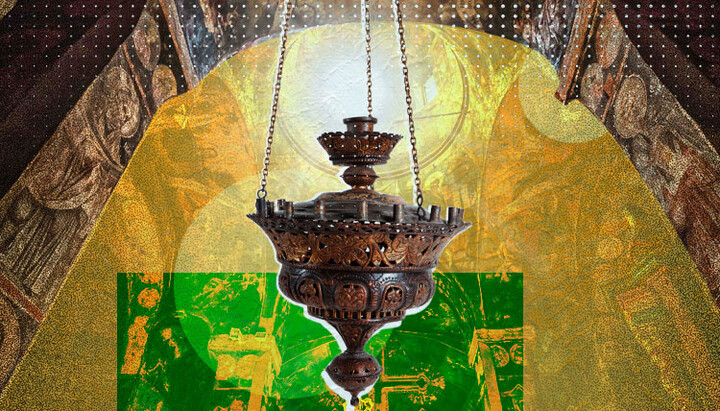
"O Gladsome Light..." Photo: UOJ
In the previous article, we spoke about the opening hymns of Vespers – thanksgiving for the day that has passed and praise of the Creator. Yet Vespers is not only the conclusion of the day; it is also the anticipation of the Unsetting Light, the longing for and foretaste of the encounter with God. In it, the Old Testament hope for the Savior is joined with its New Testament fulfillment, and this unity unfolds in the subsequent parts of the service – which is what we will discuss today.
“Lord, I Have Cried”: The oneness of the Old and New Testaments
After the Litany of Peace, the Typikon prescribes the reading of the Psalter by kathismata. At Vespers, one kathisma is appointed; at Matins, two or three. Thus, the entire Psalter is read over the course of a week. During Great Lent, it is read twice, because kathismata are added during the services of the Hours.
In parish practice, the complete reading of kathismata is rare.
When that is the case, the readings are arranged according to a schedule that still allows the entire Psalter to be read, even if over a longer period than a week.
Even if the Typikon’s instruction regarding kathismata at Vespers is not followed, the psalms (140, 141, 129, 116) are still sung during “Lord, I Have Cried.” To the final verses of the psalms are added New Testament hymns – the stichera dedicated to the feast or the saint of the day. This alternation reveals the unity of the two Covenants: the Old responds to the New, and the New reveals and fulfills what the Old promised.
“O Gladsome Light”: the hymn to the “Joyful Light”
At the conclusion of the stichera, the ancient hymn “O Gladsome Light” (Свете Тихий) is sung. This text may rightly be called the central hymn of Vespers, a hymn never omitted even at Pascha, because its words largely express the very character of the evening service.
In it, the Church addresses Christ as the “Mild Light” or “Joyful Light” (Greek: Φῶς ἱλαρόν), the Light of the glory of the immortal Heavenly Father, to whom we, arriving at the setting of the sun and seeing the evening light, offer praise to God – the Father, the Son, and the Holy Spirit.
This contemplative hymn goes back to the ancient Old Testament custom of lighting the lamps in the Tabernacle during the evening offering (Lev. 24:1–4).
The history of the “lamp-lighting” thanksgiving
Christians adopted this tradition and filled it with new meaning. The light of the evening lamp became a witness to the Light of the World (John 8:12) and a reminder of the One who is “the true Light that enlightens everyone coming into the world” (John 1:9). The burning lamp was a sign of Christ’s presence (Matt. 18:20).
From the writings of the early Fathers, we see that the custom of evening lamp-lighting thanksgiving took deep root in the life of the first Christians.
It was performed not only in communal gatherings but also in homes. Saint Gregory of Nyssa describes how his sister Macrina, seeing the evening lamp lit, made an effort to offer thanksgiving and, with those words, peacefully departed to the Lord.
Saint Basil the Great spoke of the established liturgical custom of bringing in the lamp with solemnity as an ancient practice: “It seemed good to our Fathers not to receive the grace of the evening light in silence, but at its appearing to give thanks at once… to the Father, the Son, and the Holy Spirit.” The exclamation “The Light of Christ illumines all” at the Liturgy of the Presanctified Gifts is connected with this same tradition.
The Church carefully preserves this heritage. Vespers is still called the “lamp-lighting” service. It is also appropriate for home Vespers: one may light an oil lamp when reading “O Gladsome Light,” imbuing the moment with its full spiritual meaning.
The Paremia: readings from Scripture
From here, the service naturally transitions to the reading of Old Testament passages and psalms. This is why an evening prokeimenon – selected verses from the Psalter – is sung after “O Gladsome Light” as the introduction to the readings.
On feasts and commemorations of saints, the paremia are read – specially chosen passages from the Old or New Testament.
The prophetic themes of the feast are revealed in them. For example, on the Nativity of Christ, the prophecies concerning the Virgin Birth are read.
The history of these readings also reaches deep antiquity. They were originally part of catechesis – preparation for Baptism. Later, the Old Testament readings were transferred to Vespers to keep the Divine Liturgy from becoming too lengthy. In the 4th–5th centuries, these readings, according to St. John Chrysostom, were accompanied by catechetical homilies. A reminder of this survives in the Lenten Vespers, where the Book of Genesis is read.
In our own home evening prayers, we may also include edifying readings – Scripture, the lives of the saints. According to the Typikon's guidance, such readings are heard while sitting.
Read also
Golgotha in the midst of a pogrom
In the autumn of 1938, the Jewish artist Marc Chagall painted the crucified Christ. Synagogues burn and refugees flee around the cross, while the Crucified One Himself is wrapped in a prayer shawl.
Stories of the Early Church. Level of governance: patriarch
How did several episcopal sees rise above the rest, why did the Church’s administrative map come to mirror that of the empire, and is the patriarchate a sacred form of Church governance?
A Chronicle without an author
We are accustomed to calling The Tale of Bygone Years the work of St. Nestor. Yet another monk left his signature on it, while the chronicle itself passed from one generation of scribes to the next.
How a wedding stopped a war
The young princess of Slutsk was married off to keep two powerful noble families from drowning the city in blood. Soon afterward, a Uniate metropolitan complained that Orthodoxy had been reborn in Slutsk.
Man before the forces of nature
A solitary figure on the shore seems insignificant before the immense power of the sea, yet it is he who stands before the Creator.
The mysteries of Golgotha in the light of archaeology
The veil of centuries obscures what really happened in the fourth century. Archaeology and ancient texts shed light on the true history of one of Christianity’s greatest sacred sites.