Supreme Court denies the right to alternative service during wartime
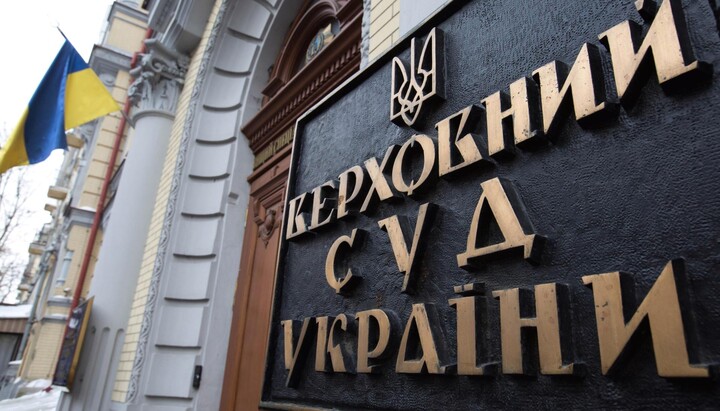
Building of the Supreme Court of Ukraine. Photo: open sources
The Criminal Cassation Court within the Supreme Court of Ukraine has set an important precedent in examining a case involving the mobilization of a Jehovah’s Witness. The Court concluded that under martial law, religious beliefs cannot serve as grounds for refusing military service, and it upheld a sentence of three years’ imprisonment for evading mobilization.
The case concerned a conscripted man who did not report to the Territorial Recruitment and Social Support Center (TRC) after receiving a summons, citing religious convictions. Case materials note that in 1995 the native of Nedryhailiv, Sumy Region, completed his compulsory service as a medical inspector. However, after joining the religious organization of Jehovah’s Witnesses in 2023, his beliefs changed. The defense insisted that his deeply held religious convictions prevented him from performing any form of military service, including positions such as signalman, driver, or cook.
In its ruling, the Supreme Court stated that Ukraine provides alternatives to military service in peacetime, and citizens may freely make use of them. However, in wartime, during mobilization and defensive war, the duty to defend Ukraine rests on all citizens regardless of their religious beliefs.
The Supreme Court also referred to the practice of the European Court of Human Rights, noting a key distinction: none of the ECHR’s decisions were issued in the context of a full-scale war such as Ukraine is facing.
This ruling creates a precedent for all similar cases. It is worth noting that in July 2024, the Razidniansky District Court of Odesa Region, in a comparable case, recalled ECHR practice. The European Court emphasized that a state must provide individuals with an alternative (non-military) service entirely separated from military obligations, and that Jehovah’s Witnesses’ right to refuse military service on religious grounds is guaranteed by Article 9 of the Convention for the Protection of Human Rights. However, the Law “On Mobilization Preparation and Mobilization” does not provide for alternative (non-military) service during martial law, creating a legal conflict between Ukraine’s international obligations and its wartime legislation.
Earlier, UOJ reported that more than a thousand cases had been initiated against Jehovah’s Witnesses for refusing mobilization.
Read also
Met. Meletiy consecrates house of worship for UOC community in Dankivtsi
Members of the persecuted UOC Intercession parish in Dankivtsi have converted a house into a place for communal prayer and worship services.
OCU eparchy sells church center site to developer for housing
The OCU’s Volyn Eparchy sold land intended for a spiritual center to a private developer planning to build townhouses and residential buildings.
SBU names UOC priest’s wife a suspect in Cherkasy region
The SBU accused Matushka Kateryna Prykotenko of “spreading enemy propaganda” through correspondence with parishioners.
UGCC cleric calls Russian Orthodox literature dangerous for clergy
While examining the causes of divisions within the UGCC, Yustyn Boiko concluded that Russian Orthodox literature had influenced Greek Catholic clergy.
UOC will play major role in achieving peace, says Vadym Novynskyi
UOC Protodeacon Vadym Novynskyi believes the Church will help bring about reconciliation within Ukrainian society after the war ends.
Catholic media outraged by forcible conscription of Uniate cleric
The Vatican’s Apostolic Nunciature has demanded the return of a forcibly mobilized Greek Catholic cleric.