"Glory to God for everything!": Theology of gratitude and the heart of Liturgy
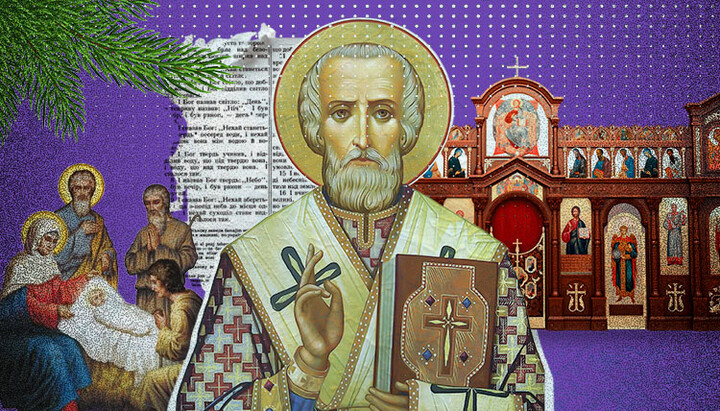
The teacher of gratitude St. John Chrysostom. Photo: UOJ
The Nativity Fast is approaching. This is a special time when the Church calls us to slow down a bit in our life's race to prepare our hearts for meeting the Christ Child. It's time to set spiritual goals for these forty days. The upcoming fast will be different for each of us: stricter for some, milder for others, depending on strength and circumstances. But the crown of all efforts – both gastronomic abstinence and the struggle with habits – is not just "cleansing the body," but restoring a living union with God.
The deeper a person delves into the inner content of church life, the clearer they understand: the root of all our troubles is ingratitude, and the beginning of all healing is the ability to give thanks.
Chrysostom: the Teacher who died with gratitude
Today we honor the memory of Saint John Chrysostom. He is not just a great theologian of the 4th century. He is the person who taught us to pray as we do today. He is the author of the order of the Divine Liturgy, which is celebrated in churches for most of the year.
If we ask what the main merit of the saint before the Church is, the answer will be unexpected: he taught us to thank God even when everything around us is falling apart. His life was full of sorrows: intrigues of the imperial court, slander, unjust condemnation, exile, and death in exile, far from friends and flock.
But his last words, spoken before his death, became the motto of true Christianity: "Glory to God for all things!"
In Greek, the word "thanksgiving" sounds like "Eucharist". For us, this word is often associated only with the moment of receiving the Holy Mysteries. But it is also a state of the soul that has realized the Creator's love and is grateful to Him for it.
What happens behind closed doors?
The culmination of the Liturgy comes after the priest's exclamation: "Let us give thanks to the Lord!" At this moment, the choir sings "It is meet and right..." and in the altar, the most important thing begins – the reading of the Eucharistic Canon (Anaphora).
Unfortunately, by established tradition, these deeply profound prayers are read by the priest secretly (to himself or in a whisper). And here lies the tragedy of misunderstanding. People standing in the church hear only fragments of phrases and the choir's singing, which does not replace but only accompanies the priest's prayer. As a result, many parishioners are just waiting for "something to end in the altar" to hear the familiar "And all, and everything."
But if we heard or knew these words, our faith would change forever.
For in this inspired thanksgiving, Saint John Chrysostom revealed the entire spectrum of God's action in our lives.
What does the priest pray for on behalf of all of us and, at the same time, in secret from us?
- For the creation of man: "You have brought us from non-existence into being..." – gratitude is expressed for the very fact of life, for our existence.
- For salvation: "...and when we fell away, You raised us up again and did not cease to do all things until You brought us to heaven." Let's ponder these words! We still sin, we stumble, but God in His love has already "granted us the Future Kingdom."
- For all benefactions: "...manifest and hidden, which have been upon us." We must thank God even for what we did not notice or understand (including sorrows that ultimately turned out to be beneficial for the soul).
The Liturgy is the "common work"
All these prayers are ours, the people's. The priest reads them not on his own behalf, but on behalf of the entire community (that's why the plural "we" is so often found in them).
Only one petition of the Eucharistic Canon pertains solely to the altar servers – where the priest thanks God for deeming him, a sinner, worthy to stand at the Altar: "We thank You also for this ministry, which You have accepted from our hands."
Everything else is the Liturgy itself, which translates from Greek as "common work". It is the joint breath of the Church.
Let's remember: a hundred or two hundred years ago, parishioners baked prosphora for the Liturgy themselves. They brought bread and wine from home. It was their real, tangible participation in the Sacrifice. Now prosphora is most often brought to parishes from monasteries, and people have become merely passive participants, not co-prayers in the Liturgy.
The only action that only an ordained priest can perform is the invocation of the Holy Spirit and the blessing of the Gifts. But the "Amen" (which means "Truly, so be it!") to these prayers should be pronounced by all the people.
And how can one say "so be it" from the heart if you do not know what was said?
How not to be "deaf" at the service?
History shows that the ancient Church did not know such a phenomenon as "secret prayers". Their appearance was not due to the clergy's desire to hide something from the laity, but for technical reasons: the increase in the number of worshippers and the construction of huge churches with problematic acoustics. To avoid prolonging the service and not trying to outshout a crowd of thousands without microphones, prayers began to be read quietly while the choir filled the pauses with singing.
Today, the practice is gradually changing. In some churches, rectors (and in some eparchies – even bishops) already read the Eucharistic prayers aloud, restoring the meaning of worship to the people. This always causes an incredible spiritual uplift among parishioners: they suddenly understand what they are participating in!
The church ceases to be a place where "the priest does something, and we watch", and becomes a place of joint prayer.
If in your parish these prayers are read by the clergy silently or in a low voice in the altar, and we hear nothing, there is no need to despair and grumble. This is not a reason for condemnation.
No one and nothing prevents us from taking responsibility for our prayer upon ourselves. Here are some recommendations for those who wish to delve deeper into the content of the Liturgy:
- Follow the text. With the abundance of information today, finding the "Order of the Divine Liturgy" in print or in a phone app is a matter of minutes.
- Read in parallel. When the choir sings "It is meet and right," open the text of Chrysostom's Anaphora and read it to yourself.
- Immerse yourself. Live through each word of thanksgiving: for creation, for the Cross, for the Resurrection, for this specific day, for the air you breathe.
Of course, there is no need to go to extremes and read absolutely all the priestly prayers, ignoring what is happening in the choir. But the Eucharistic Canon is the heart of the service.
This is the moment that needs to be fully experienced through your soul, living it with the fullness of the Church.
One cannot come to the "Mystical Supper" and stand in the corridor while others converse with the Host.
Let's try during the days of the Nativity Fast to start coming to church at least a little prepared. Let's try not just to "stand through" the service, but to co-serve with the priest with our attention and understanding of those great words left to us by Saint John Chrysostom. And then the exclamation "Let us give thanks to the Lord" will cease to be just a signal that Communion is about to begin, and will become the natural state of our hearts.
With such a heart – grateful, seeing, and loving – we will be able to worthily meet the celebration of the incarnation of the Christ Child into the world.
Read also
Why were holy monasteries turned into state prisons?
The history of Christian Europe preserves the memory of times when monasteries served as places of exile imposed by the state. Within their walls, the fates of monarchs and righteous men were decided.
A shepherd boy with a letter from Christ to French king
In the summer of 1212, thousands of pilgrims carrying staffs waited for the sea to part before them. Later chroniclers added ships, slave traders, and a pope's lament to their story.
Facade of bones and facade of light
Antoni Gaudí spent forty-three years building a church in Barcelona, knowing that this construction was for the ages.
Trial of a dead pope
Once in Rome, the body of a deceased pope was seated on the throne and put on trial. The accusation relied on a church canon that had once saved his see.
Monastery built in defiance of king
When Orthodox believers in Minsk were left with just one church, townspeople decided to build another – and even a royal decree did not stop them.
Young Mother and Sleeping Christ
Michelangelo carved a Virgin Mary who looks younger than her Son – and signed his name in marble for the only time in his life. Neither of these peculiarities was accidental.