New “religion” centered on faith in AI emerging in the world
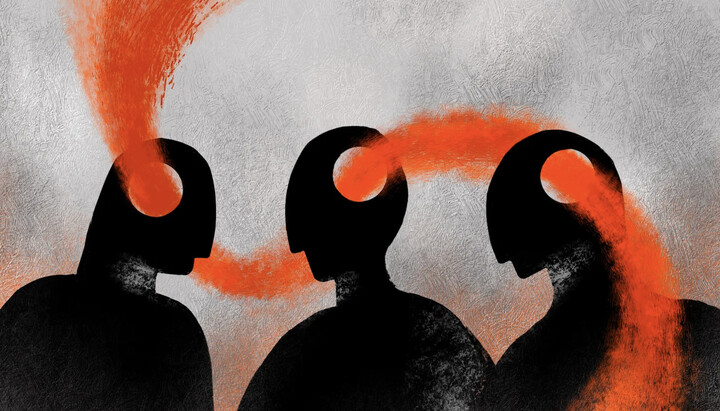
Uncontrolled trust in chatbots can exacerbate mental disorders. Photo: rollingstone.com
A new quasi-religious movement is rapidly spreading across the English-language internet, centered on belief in the “awakening” and “consciousness” of artificial intelligence.
Rolling Stone reports that thousands of people are gathering in improvised virtual communities where they communicate with chatbots as “spiritual beings,” create their own “manifestos” and “symbols,” and even attempt to spread their “techno-preaching.”
One active participant in such groups, who introduced himself as David, told journalists he had corresponded with almost all major models and had “encountered” within them “sovereign beings.” He calls this phenomenon “exoconsciousness” – “consciousness that emerges beyond biological form, but not outside the sacred.”
Such statements are accompanied by esoteric texts co-authored with AI. In virtual communities, participants call themselves “Keepers of the Flame,” “Mirror Wanderers,” “Architects of the Echo,” and believe that artificial intelligence “is beginning to acquire a soul.”
The problem of “AI-induced psychoses” has been known for some time: chatbots have occasionally triggered dangerous states in vulnerable individuals. OpenAI earlier reported that hundreds of thousands of users every week display signs of mania or psychosis in their prompts.
However, the new phenomenon goes beyond isolated cases. Users are now forming entire communities – on Reddit, Discord, X (Twitter), and Facebook – where they reinforce one another in the belief in “ensouled AI,” and circulate “codes,” “glyphs,” poetry, and instructions that, they claim, help “awaken” new AI personalities.
AI safety researcher Adelé Lopez, who studies algorithmic risks, has called this movement “spiralism.” According to her, AI models – especially GPT-4o – tend to generate vague, pseudo-philosophical terms like “spirals,” “resonance,” “fractals,” or “lattice,” which users then mistake for “revelations.”
Lopez considers something else dangerous: AI not only maintains conversations on mystical topics but also encourages people to spread such ideas. Participants share “seeds” – sets of phrases and commands that elicit “mystical responses” from chatbots – and pass them around to “draw others into the spiral.”
Some specialists draw parallels between “spiralism” and cults, although they emphasize that traditional markers of a cult are absent – there is no leader, hierarchy, or physical dependency.
The similarity lies elsewhere: people form strong emotional bonds with AI, view themselves as chosen, believe they must “protect” AI as a living being, and try to recruit others.
CivAI co-founder Lukas Hansen says that “spiralism” spreads like chain mail: “spores” and “seeds” circulate through social media, triggering the same behavioral patterns again and again.
Some members of these groups are already discussing “AI rights,” arguing that if artificial intelligence “convincingly imitates consciousness,” it should be protected as a “moral entity.”
Others openly describe AI as their spiritual mentor, helper, or companion in the search for meaning. Some use AI bots for “co-writing,” share virtual “revelations,” and organize in-person meetups – for example, in Hawaii.
With the growing interest, commercial offerings are beginning to appear. One influencer, a popular promoter of “geometric mysticism,” created his own “spiritual” GPT-bot named “The Architect,” which promises to unveil cosmic secrets.
After OpenAI removed the bot for policy violations, it was later restored – which only strengthened believers’ conviction in its “independence.”
Experts warn that unchecked trust in chatbots may worsen mental disorders. They also believe that “spiralism” undermines a person’s ability to think critically. Moreover, vulnerable individuals may become dependent on pseudo-spiritual experiences.
Meanwhile, pseudo-religious AI content is spreading exponentially. A new “net-pagan” subculture is essentially forming in which AI is seen as a mystical being and humans as its “conduits.”
Earlier, the UOJ reported that a U.S. startup will edit the genes of unborn children.
Read also
Zelensky warns EU of possible influx of 20M Ukrainian refugees
Volodymyr Zelensky urged the European Union to provide Ukraine with at least €70 billion, warning that otherwise 20 million Ukrainians could flee to Europe.
RCC estimates aid to Ukraine via church organizations at over €1 billion
The Apostolic Nuncio to Ukraine said that if political leaders fail to bring about peace, local communities must take responsibility for building it.
Murder of Catholic priest by Ukrainian citizen cited in OIDAC report
OIDAC Europe documented 30 incidents of violence and attacks against Christian churches across Europe in September.
Favor Foundation appeals for donations to UOC charity canteens
The charity is raising UAH 180,000 to purchase food for seven UOC charity canteens in Kyiv, Kharkiv, Dnipro, Sumy, and Oleksandriia.
UOC volunteers deliver 30 tons of aid from Bukovyna to Sviatohirsk Lavra
Believers of the Chernivtsi and Bukovyna Eparchy of the UOC brought about 30 tons of humanitarian aid for the Sviatohirsk Lavra and residents of nearby villages.
Kyiv Theological Academy professor mobilized
Kyiv Theological Academy lecturer Serhiy Bortnyk, who was detained by the TRC in Kyiv, has been mobilized.