Switzerland installs virtual image of Christ for confessions
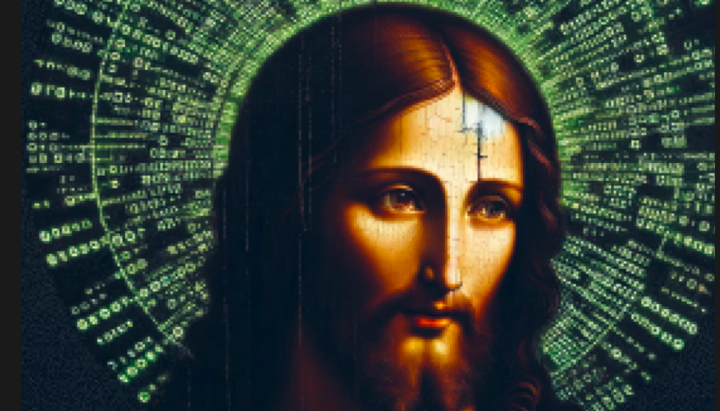
AI-powered Image of Jesus Christ. Photo: Peter Diem/Lukasgesellschaft
In November 2025, a virtual image of Christ powered by artificial intelligence was installed in the chapel of Saint Peter in Lucerne (Switzerland). The Guardian reported on the project.
The installation, titled Deus in Machina, was created as a joint experiment between the church and university developers. A screen and technical equipment were placed inside the confessional, while an AI program trained on theological texts responded to visitors as a conversational partner. People were warned that this was not a real confession but a test of the technology.
“It was really an experiment,” said Marco Schmid, a theologian with the Peterskapelle church. “We wanted to see and understand how people react to an AI Jesus. What would they talk with him about? Would there be interest in talking to him? We’re probably pioneers in this.”
Within two months, more than a thousand people tried speaking with the virtual figure. Some described the experience as “spiritual,” while others found it too superficial. Inside the church community, the installation sparked mixed reactions: some Catholics spoke out against using a confessional booth for this purpose, while Protestants expressed dissatisfaction with portraying Christ in a digital format.
Project leaders acknowledged that the experiment cannot become a permanent practice, since the potential responsibility for AI errors is too great.
Nevertheless, the authors believe that the virtual figure may serve as a tool for conversations about Christianity and for drawing people toward questions of faith. According to theologian Marco Schmid, the high level of interest shows that many are seeking opportunities for spiritual dialogue in today’s technological world.
For him, the experiment – and the keen interest it had generated – had shown him that people were looking to go beyond the Bible, sacraments and rituals.
Earlier, the UOJ reported that a U.S. startup plans to edit the genes of unborn children.
Read also
Met. Meletiy consecrates house of worship for UOC community in Dankivtsi
Members of the persecuted UOC Intercession parish in Dankivtsi have converted a house into a place for communal prayer and worship services.
OCU eparchy sells church center site to developer for housing
The OCU’s Volyn Eparchy sold land intended for a spiritual center to a private developer planning to build townhouses and residential buildings.
SBU names UOC priest’s wife a suspect in Cherkasy region
The SBU accused Matushka Kateryna Prykotenko of “spreading enemy propaganda” through correspondence with parishioners.
UGCC cleric calls Russian Orthodox literature dangerous for clergy
While examining the causes of divisions within the UGCC, Yustyn Boiko concluded that Russian Orthodox literature had influenced Greek Catholic clergy.
UOC will play major role in achieving peace, says Vadym Novynskyi
UOC Protodeacon Vadym Novynskyi believes the Church will help bring about reconciliation within Ukrainian society after the war ends.
Catholic media outraged by forcible conscription of Uniate cleric
The Vatican’s Apostolic Nunciature has demanded the return of a forcibly mobilized Greek Catholic cleric.