Orthodox Church celebrates feast of St. Nicholas the Wonderworker
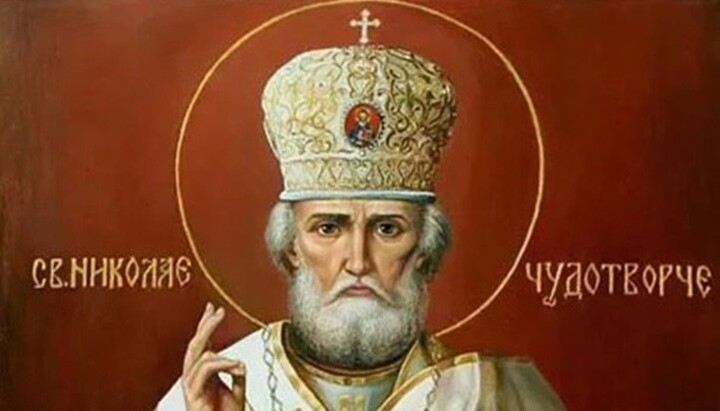
Icon of St. Nicholas. Photo: t.me/blagovist_uoc
On December 19, the Holy Church celebrates the memory of one of the most venerated saints of Orthodoxy – St. Nicholas the Wonderworker, Archbishop of Myra in Lycia. On this day, the faithful commemorate the repose of St. Nicholas.
The name of this wonderworker, swift helper, and intercessor for all who turn to him in prayer has been glorified throughout the world, among many countries and peoples.
St. Nicholas was born in the year 270 in the town of Patara, located in the region of Lycia in Asia Minor, which was a Greek colony. The parents of the future archbishop were wealthy people, yet they believed in Christ and actively helped the poor.
From early childhood, St. Nicholas devoted himself entirely to faith, spending much time in church. As he grew older, he became a reader and later a priest in the church where his uncle, Bishop Nicholas of Patara, served as rector.
After the death of his parents, St. Nicholas the Wonderworker distributed all his inheritance to the poor and continued his service to the Church. In the years when the attitude of Roman emperors toward Christians became somewhat more tolerant, yet persecutions still continued, he ascended the episcopal throne in the city of Myra. Today this city is called Demre and is located in the province of Antalya in Turkey.
As a hierarch, St. Nicholas remained a great ascetic, embodying meekness, kindness, and love for people. This was especially precious for the Lycian Church during the persecution of Christians under Emperor Diocletian (284–305). Bishop Nicholas, imprisoned together with other Christians, supported them and exhorted them to endure bonds, tortures, and sufferings with steadfastness. The Lord preserved him unharmed. After the accession of the holy Equal-to-the-Apostles Constantine, St. Nicholas was returned to his flock.
Despite his great meekness of spirit and purity of heart, St. Nicholas was a zealous and bold warrior of the Church of Christ. Struggling against the spirits of wickedness, he went around pagan sanctuaries and temples in the city of Myra and its surroundings, destroying idols and reducing pagan shrines to dust. In 325, St. Nicholas took part in the First Ecumenical Council, which adopted the Nicene Creed, and together with St. Sylvester, Pope of Rome, Alexander of Alexandria, Spyridon of Trimythous, and the other holy fathers of the Council, he opposed the heretic Arius.
Even during his lifetime, the saint was glorified by many miracles. Through his prayer to Christ, he saved the city of Myra from a terrible famine. He prayed for sailors, rescuing them from shipwrecks, and freed from prison those who had been unjustly condemned. Well known is the story of how the archbishop saved three young women from disgrace by providing dowries for their marriage.
St. Nicholas the Wonderworker reposed in the Lord between 335 and 351 – the exact date is unknown. His relics remained incorrupt. At first, they rested in the cathedral church of the city of Myra in Lycia, where he served as archbishop. They exuded myrrh, and this myrrh healed believers from various ailments. Later, the relics were transferred to the city of Bari in Italy.
More than one feast day in the Orthodox liturgical calendar is dedicated to St. Nicholas. On December 19 according to the new calendar, the Church commemorates the day of the saint’s repose, while August 11 marks his birth.
On May 22, the faithful commemorate the translation of the relics of St. Nicholas the Wonderworker from Myra in Lycia to Bari, which took place in 1087.
As the UOJ previously reported, in Lviv a child was deprived of a gift because of language.
Read also
Khust Eparchy honors memory of St. Job of Uholka
A Liturgy is served in Mala Uholka, a birthplace of St. Job of Uholka, on the saint's feast day.
UOC parish in Cologne donates ultrasound machine to Kharkiv region hospital
In Cologne, UOC believers raised funds for an ultrasound machine for the Kehychivka district hospital in the Kharkiv region.
Shevchuk tells Pope Leo of Ukraine's preparations for "another harsh winter"
The head of the UGCC expressed "special gratitude" to the Pope for his phone calls with Putin and Zelensky.
Berlin hierarch comments on Phanar document published by UOJ-USA
Metropolitan Mark called the information about the 2018 "Unification Council" alarming if confirmed, and expressed hope that Patriarch Bartholomew will reconsider his position.
UOC marks Synaxis of All Saints of Volyn Land at Lutsk cathedral
Metropolitan Serhiy of Ternopil and Kremenets led the Liturgy on the feast day of the Lutsk cathedral of All Saints of the Volyn Land.
SBU detains OCU cleric who organized draft evader's escape for money
In Transcarpathia, law enforcement officers detained a clergyman of the OCU who arranged for a draft evader to be smuggled into Slovakia for $15,000.