Orthodox Christians mark Christmas Eve
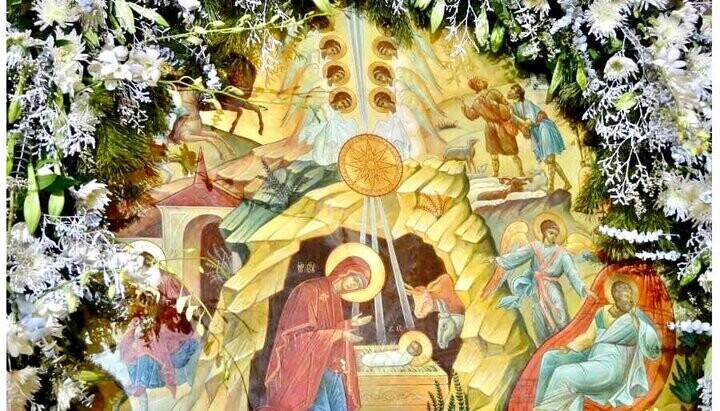
Icon of the Nativity of Christ. Photo: VC
On January 6 (December 24 on the Julian calendar), Orthodox Christians observe Christmas Eve. The name of the day is linked to an ancient custom of preparing and eating sochivo (kutia) – a porridge made from wheat, barley, or rice, with honey, poppy seeds, dried fruit, raisins, and nuts added.
Christmas Eve occurs twice a year – on the eve of the feasts of the Nativity of Christ and the Baptism of the Lord.
In popular tradition, there is a pious custom of refraining from food “until the first star.” This practice is associated with the tradition of the Star of Bethlehem, which announced Christ’s birth. At the same time, the church rubric (the typikon) contains no direct instruction requiring abstention from food until nightfall.
In Ukrainian folk tradition, it is also common on Christmas Eve to prepare twelve Lenten dishes symbolizing the twelve apostles. This practice is not a church-wide ordinance and is not enshrined in liturgical prescriptions.
Earlier, the UOJ reported that believers from Bukovyna delivered humanitarian aid to the Sviatohirsk Lavra for Christmas.
Read also
Met. Meletiy consecrates house of worship for UOC community in Dankivtsi
Members of the persecuted UOC Intercession parish in Dankivtsi have converted a house into a place for communal prayer and worship services.
OCU eparchy sells church center site to developer for housing
The OCU’s Volyn Eparchy sold land intended for a spiritual center to a private developer planning to build townhouses and residential buildings.
SBU names UOC priest’s wife a suspect in Cherkasy region
The SBU accused Matushka Kateryna Prykotenko of “spreading enemy propaganda” through correspondence with parishioners.
UGCC cleric calls Russian Orthodox literature dangerous for clergy
While examining the causes of divisions within the UGCC, Yustyn Boiko concluded that Russian Orthodox literature had influenced Greek Catholic clergy.
UOC will play major role in achieving peace, says Vadym Novynskyi
UOC Protodeacon Vadym Novynskyi believes the Church will help bring about reconciliation within Ukrainian society after the war ends.
Catholic media outraged by forcible conscription of Uniate cleric
The Vatican’s Apostolic Nunciature has demanded the return of a forcibly mobilized Greek Catholic cleric.