Why Phanar recognized UAOC ordinations involving bogus bishop, historian says
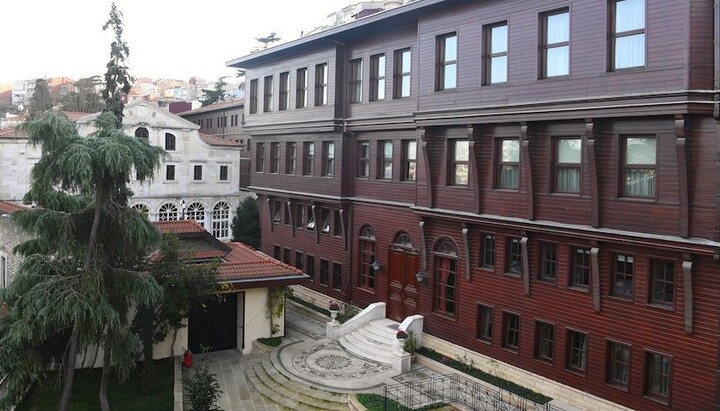
Phanar. Photo: open sources
Historian and religious scholar Serhii Shumylo explained on what grounds the Constantinople Patriarchate, prior to the creation of the OCU, recognized as valid the first episcopal “ordinations” of the UAOC, despite the participation of an impostor in them.
According to Shumylo, in March–April 1990, Vikentiy Chekalin and Archbishop Ioann Bondarchuk – who had been defrocked in 1989 – took part in the first two episcopal ordinations for the UAOC. Among those “ordained” by them was Andriy Abramchuk, who is now the OCU’s “Metropolitan of Ivano-Frankivsk.”
According to Shumylo’s research, Vikentiy Chekalin (in the world Viktor Chekalin) was an impostor and not a bishop. In 1986, following complaints by parents, he was accused of indecent acts involving schoolchildren.
“He was arrested and spent about a year in prison. There was an investigation and a forensic psychiatric examination, which declared him mentally unwell. He was released early in 1987,” the historian said.
According to him, in 1989 Chekalin unexpectedly appeared in New York at the Synod of the Russian Church Abroad, where he began presenting himself as a bishop of the Catacomb Church. At a Synod meeting in early 1990, it was proven that Vikentiy Chekalin was not a bishop but an impostor, unable to provide any documents confirming his alleged ordination.
Soon afterward, Chekalin appeared in Lviv. On March 31, 1990, in the Drohobych district, together with Ioann Bodnarchuk, he “ordained” the first “bishop” of the UAOC – Vasyl Bodnarchuk, Ioann’s own brother – and on April 5, Andriy Abramchuk, now an OCU “metropolitan.”
“From those two ordinations began the history of the revival of the episcopate of the Ukrainian Autocephalous Orthodox Church in Ukraine,” Shumylo noted.
The historian said that in 2018 he sent a detailed report to Ecumenical Patriarch Bartholomew about Chekalin’s imposture. The document was prepared with the blessing of Metropolitan Kallistos Ware of Diokleia, one of the most authoritative Orthodox theologians of the 20th century, a professor at Oxford University and honorary chairman of the International Institute of Athonite Heritage.
“After my report, there was discussion, and I am very grateful – the General Secretary of the Holy Synod of the Ecumenical Patriarchate, Fr. Grigorios (now Metropolitan of Ankara), contacted me. We had many hours of discussions. I was surprised how thoroughly the General Secretary studied the matter and discussed every detail with me,” the historian said.
According to him, after reviewing all the materials, the Ecumenical Patriarchate concluded that Chekalin had indeed been an impostor and that his episcopacy could not be recognized. At the same time, the Phanar stated that although Ioann Bodnarchuk had been defrocked by the Russian Orthodox Church, at the time of the ordinations he “was a lawful bishop of the Moscow Patriarchate, possessing indisputable apostolic succession, about which there are no questions.”
According to Shumylo, Constantinople decided to regard those ordinations as having been performed by a single lawful bishop – namely, the defrocked Bodnarchuk.
The General Secretary of the Synod, Fr. Grigorios, explained the Phanar’s position in these terms:
“Chekalin is zero – that is, he is not a bishop at all, just a random person who happened to be there due to certain circumstances. He is zero. And in mathematics, whether you multiply by zero, divide by zero, add zero, or subtract zero – it produces nothing and gives nothing in the result.”
“In essence, the presence of zero during the ordination performed by Ioann Bodnarchuk did not add anything positive, but neither did it create a problem that would render the ordinations entirely invalid. If both bishops had been illegitimate – not bishops at all – then it truly would have been self-consecration. But since one bishop, who presided at and performed the liturgy and led the ordination, was a lawful bishop with canonical succession, they decided to treat it as a single-handed ordination,” Shumylo conveyed the Patriarchate’s position.
According to him, in this case the Phanar applied the principle of economia.
“Any schismatic community is, by definition, uncanonical and exists outside the Church until it reunites with the Church. Before reunion with the fullness of the universal Church, any schismatic community is considered cut off from the Church, essentially devoid of grace. It is filled with grace at the moment of reunion, of grafting into the Church. And there are different forms of such grafting. One form is through acceptance into concelebration,” Shumylo explained the position of the Constantinople Church.
Earlier, the UOJ reported that, according to the late Archbishop Anastasios of Albania, the ordinations of Filaret Denysenko “are invalid, empty, deprived of Divine Grace and the action of the Holy Spirit.”
Read also
Poland collects signatures to ban 'Banderism'
Polish activists are calling for criminal penalties for promoting the ideology of the OUN-UPA, placing it on par with Nazism and communism.
OCU cleric says people should eat less meat on Wednesdays and Fridays
OCU cleric and blogger Oleksii Filiuk, who has over a million followers, explained that he tries to limit his meat consumption on fasting days.
DESS head: Religious freedom was violated under Yanukovych, not Zelensky
Yelensky claims that the law banning the UOC, adopted under Zelensky, does not restrict believers’ religious freedoms.
Drabinko donates ROC-published books with patriarch's foreword to OCU academy
Oleksandr Drabinko donated books to the OCU's Volyn Theological Academy featuring a foreword by the Russian Orthodox Patriarch on the spiritual unity of the Russian and Ukrainian peoples.
Yelensky complains courts are hearing hundreds of cases over OCU “transfers”
The head of DESS said courts in Vinnytsia region alone are hearing more than 100 lawsuits challenging the “transfer” of religious communities to the OCU.
OCU opens registration desk for "services" at Lavra
A former church shop at the UOC monastery takes prayer notes and registers visitors for OCU "services".