Filaret Denysenko dies at 97
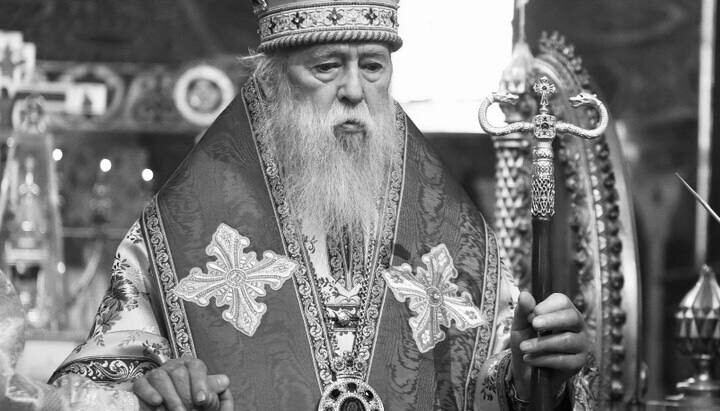
Filaret Denysenko. Photo: UOC KP
Filaret Denysenko died on March 20, 2026. The news was announced by OCU Primate Epifaniy Dumenko. Ukrainian media reports say Denysenko had spent his final days in hospital after his condition worsened, though no further details about his death were immediately provided.
According to Dumenko, the Orthodox Church of Ukraine will “remember and also carry out his lessons and instructions on the importance of conciliarity, humility before the will of God and the will of the fullness of the Church, and devoted service to God, the Church of Christ, and the Ukrainian people.”
Mykhailo Denysenko was born on January 23, 1929, in the village of Blahodatne in Donetsk Region. In 1950, he was tonsured a monk with the name Filaret. He went on to make a rapid rise in the Russian Orthodox Church: in 1966 he became Metropolitan of Kyiv and Halych, Exarch of Ukraine – one of the most influential hierarchs of the Moscow Patriarchate. After the death of Patriarch Pimen in 1990, he was elected locum tenens of the patriarchal throne, but lost the patriarchal election to the future Patriarch Alexy II.
After Ukraine declared independence, Denysenko moved toward a break with the Moscow Patriarchate. In 1992, the Council of Bishops of the Ukrainian Orthodox Church in Kharkiv expressed no confidence in him and removed him from the Kyiv see. The same year, the Council of Bishops of the Russian Orthodox Church defrocked Filaret. Refusing to accept those decisions, Denysenko, with the backing of then President Leonid Kravchuk, became one of the founders of the schismatic UOC-KP, and in 1995 was proclaimed its “patriarch.” In 1997, the Council of Bishops of the Russian Orthodox Church anathematized him.
In 2018, the Synod of the Constantinople Patriarchate unilaterally declared that the sanctions against Denysenko had been lifted and restored him to episcopal rank as the “former Metropolitan of Kyiv.” Filaret himself did not accept Constantinople’s refusal to recognize his “patriarchal” title. After the creation of the OCU in December 2018, he said that, according to behind-the-scenes agreements, he rather than Epifaniy Dumenko was supposed to lead the new structure. He soon came into conflict with Dumenko and effectively returned to leading the structures of the Kyiv Patriarchate.
Denysenko’s health problems worsened in August 2025, and in October he drew up a will asking that after his death he be buried by the UOC-KP rather than the OCU.
Denysenko remains one of the central figures in the history of the church schism in Ukraine. He was the driving force behind the division whose consequences continue to shape the country’s religious landscape to this day.
Read also
UOC volunteers deliver 30 tons of aid from Bukovyna to Sviatohirsk Lavra
Believers of the Chernivtsi and Bukovyna Eparchy of the UOC brought about 30 tons of humanitarian aid for the Sviatohirsk Lavra and residents of nearby villages.
Kyiv Theological Academy professor mobilized
Kyiv Theological Academy lecturer Serhiy Bortnyk, who was detained by the TRC in Kyiv, has been mobilized.
Kherson Eparchy receives another aid shipment from Dnipro
120 food packages, over a ton of vegetables and dairy products have been delivered from Dnipro to Kherson for parishioners and needy residents.
Supreme Court denies UOC open hearing on appeal against DESS
Judges decide to consider UOC appeal against DESS in written proceedings.
Pope holds phone call with Putin
Pope Leo XIV discussed the humanitarian situation in Oleshky with Vladimir Putin.
"Russia will collapse", Dumenko says, predicting OCU recognition after war
The OCU head believes that Churches that have not recognized the OCU now fear Russia, but will grow bolder after Ukraine's victory.