Two deaths
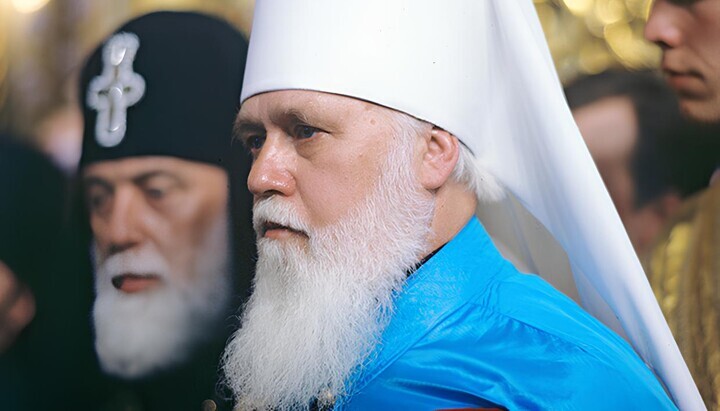
Patriarch Ilia and Filaret when the latter was still Metropolitan of Kyiv. Photo: open sources
In the span of a single week, two men of nearly the same age passed away – Patriarch Ilia of Georgia and Filaret Denysenko. Both had spent many decades as hierarchs and shaped the spiritual life of their peoples – the Georgian and the Ukrainian. And yet how differently they did so.
Over 49 years as primate, Patriarch Ilia virtually brought the Georgian Church back to life, united Georgians into one family, and became godfather to tens of thousands of children. Today, not only Georgia but the whole world mourns him. And this is no exaggeration – Patriarch Ilia was an unquestioned authority for the whole of Orthodoxy.
Filaret Denysenko died almost unnoticed. No national mourning will be declared for him in Ukraine, no long lines of mourners will come to bid him farewell. A few perfunctory condolences will be issued by the country’s leadership, and within a week the head of the UOC-KP will be forgotten.
But why is that? Could Filaret have been granted the same love and reverence as Patriarch Ilia? Without question, he could have. In the 1970s and 1980s, his position was in many ways similar to that of the Georgian primate. But at a certain point they chose different roads. Ilia did everything for the unity of his nation. Filaret did everything for division. It was he who became the face of the schism and enmity in Ukrainian Orthodoxy that continue to this day.
The one consuming ambition of his life was power – to be first, to be chief, to be patriarch. When Poroshenko and Epifaniy cheated him out of the primacy in the OCU, he revived his own UOC-KP.
He poured torrents of filth on Epifaniy. Even if some of it was deserved, it was still filth. Everyone remembers his swaggering remark: “It is still not known which of us will die first.” Now it is known. Filaret died first.
We know that, despite everything, many in the UOC prayed that before his death Filaret might still find repentance. They pitied him and wished him a Christian end. Sadly, he was unable to repent.
And so before us stand two lives and two deaths – that of a righteous man and that of one far from righteousness. The Lord shows them to us as though laying them upon two open palms. And it is a striking lesson for every Christian.
When Moses addressed the people before their entry into the Promised Land, he said: “I have set before you life and death, blessing and cursing. Therefore choose life, that both thou and thy seed may live.”
And it is not Moses alone – it is God Himself speaking to each of us: choose life, and not death.
Read also
Shoulder straps or a cassock: who writes the script for UOC "fighters"?
Everything indicates that both Veliar and Pshenychny are ordinary performers of someone else's script. There is only one question – does the scriptwriter wear shoulder straps or a cassock?
Why is it legal to kill a person before birth but not after?
Children are the most privileged members of society. Yet that same society officially permits children to be killed – and on a massive scale.
Honoring the Bolsheviks’ successors at Kyiv Lavra
It was under the Reserve that the relics of the saints were desecrated, Lavra churches were turned into an atheism museum, and toilets were installed in sanctuaries.
"Degenerates" and "stupid animals": anti-UOC activists turn on children
Future historians will wonder how a vast country’s information agenda could have been shaped for so long by people so petty, vicious, and utterly contemptible.
Zelensky sees murder of Polish priest but not of Sviatohirsk monk
Why does Zelensky react so emotionally and swiftly to the murder of a Catholic cleric while remaining completely silent about the murder of an Orthodox monk?
UOC vs. OCU numbers: pollsters count, social media recount
Official polling suggests Dumenko’s structure has an overwhelming lead in the number of parishioners, while social media polls paint a very different picture. Which should we believe?