"Andrei the Liar": how the empress bricked up the metropolitan who exposed her
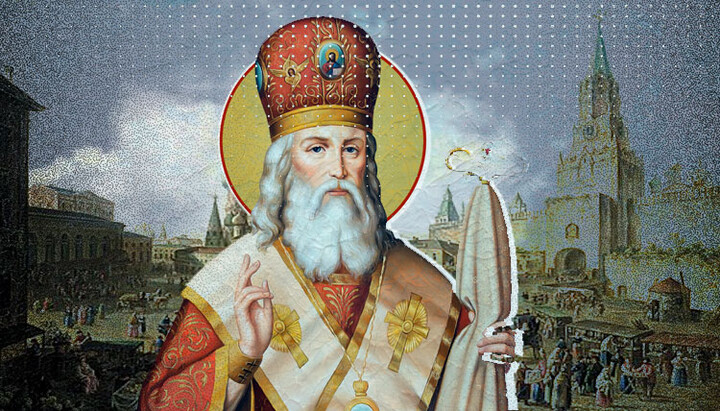
Hieromartyr Arsenius (Matseevich). Photo: UOJ
In February 1772, a priest approached the door of a casemate in Reval fortress. The door was bricked up – only a narrow window remained for bread and water. By special permission of the empress, the masonry was dismantled. The priest stepped inside and ran out screaming. The guards rushed after him. He said he had seen an archpastor in full vestments in the cell.
The prisoner was dying. He was called "Andrei the Liar (Vral')" – so ordered the personal decree of Catherine II. Who he really was, the priest had no right to ask: he had signed an oath to remain silent "not only in conversations, but even in conjectures or any gestures." The secret was to be taken to the grave. The state was burying him while he was still alive.
Why monastic lands appealed more to the guards than to the monks
Let us begin with a document, because behind every political process stands a document, and behind every document stands money.
On February 26, 1764, Catherine II signed the Manifesto on the secularization of monastic lands. The treasury received 8.5 million desyatinas of land and about 910,000 male serfs. The number of monasteries in Russia decreased by more than half: there were 954 – 387 remained, 567 monasteries were abolished. The remaining episcopate was put on state salary – modest ones, comparable to those of mid-level provincial officials.
The Manifesto was drawn up in the best traditions of official hypocrisy. Church lands were to be confiscated so that "the spiritual order would not be burdened with worldly concerns."
To rob the Church for its own good. Such rhetoric has hardly changed since then.
Catherine ascended the throne through a coup, and the guards expected reward. The army was going to war and needed to be equipped with something. The treasury was almost empty and had to be filled. Money was found in monasteries as always happens in such cases. The entire synodal hierarchy understood this. And remained silent. All except one – Metropolitan Arsenius (Matseevich) of Rostov, a native of Vladimir-Volynsky, a graduate of the Kiev Theological Academy, the last bishop who still remembered the basic truth: the Synod is not a ministry.
Anathema as a legal document: a weapon that cannot be confiscated
On February 9, 1763, on the Sunday of the Triumph of Orthodoxy, Holy Martyr Arsenius performed in Rostov the "Rite of Excommunication" with his own additions – against "those who use violence and offend the holy churches of God and monasteries, taking the property given to them by ancient God-lovers." Then he submitted two reports to the Synod, where he canonically proved: a monarch who encroaches on the property of the altar turns from a defender of faith into its persecutor.
This was a precise strike. Bishop Arsenius struck the Empire with its own weapon – canonical law and liturgical statute. He did not raise a rebellion or appeal to the people from the public squares.
He served the Liturgy and submitted official papers: it was impossible to refute his arguments and scandalous to arrest him.
The Synod reported to the empress: Metropolitan Arsenius is "an offender of Her Majesty." Catherine gave him a more personal characterization – "a hypocrite, cunning and power-hungry mad liar (vral')." She would write the word "liar" in an official document once more – four years later. Already as the nickname of the condemned.
Brothers in Christ who chose state rations
On April 14, 1763, Holy Martyr Arsenius was brought to trial before the Synod. This situation demands particular attention, because this is where the main crime of the story begins.
He was not judged by secular officials. He was judged by his associates. Metropolitan Dimitry (Sechenov) of Novgorod, Metropolitan Timothy (Shcherbatsky) of Moscow, Archbishop Gabriel (Kremenetsky) of St. Petersburg – the elite of Russian hierarchy – unanimously decreed to depose and defrock the defendant to further hand him over to secular court. The ecclesiastical court worked as an obedient guillotine in foreign hands.
Metropolitan Arsenius held himself courageously at the interrogation in the presence of the empress.
He spoke harshly, without the slightest plea for mercy, accusing Catherine of usurping ecclesiastical authority until she literally covered her ears and the guards rushed to cover his mouth.
To his main accuser, Metropolitan Dimitry (Sechenov), the bishop said directly: "Your tongue was sharper than a sword to me – you will choke with it and die." According to contemporary accounts, the prophecy came true.
The hieromartyr was stripped of his rank and exiled to the Nikolo-Korelsky Monastery on the shores of the White Sea, to a cramped cell beneath the altar vaults, with daily labor and a guard of four soldiers. The monastic brotherhood, however, revered him as a sufferer and sought the archpastor’s blessing.
A certain peasant Andrei the Liar: how to erase a person from history
In 1767, two monks composed a denunciation: the former metropolitan compares the current rule with the persecutions of Julian the Apostate, doubting Catherine's legal rights to the throne. This proved sufficient.
On December 20, 1767, a supreme decree was issued: to defrock, dress in peasant clothes, rename as "a certain peasant Andrei the Liar" and exile to the Reval fortress for eternal imprisonment. Nine days later, in the Arkhangelsk provincial chancellery, the rite of defrocking was performed over the seventy-year-old elder. Twelve days later, having traveled two thousand versts along the winter road in a closed kibitka, he found himself in a casemate of the Grosshtanport tower – a cell two by three meters.
The guards were ordered not to talk to the prisoner. f he tried to speak, gag him. Ink and paper were forbidden. Then the door was bricked up.
Let’s call things by their proper names: the most enlightened sovereign, a correspondent of Voltaire and Diderot, the author of instructions on human rights, ordered a person to cease existing. First – without a name. Then – altogether.
In a letter to the new fortress commandant, she wrote with undisguised irritation: "You have an important bird in a strong cage, take care that it doesn't fly away... The people have revered him from ancient times and commonly consider him holy, but he is nothing more than a very great rogue and hypocrite."
He spent the last winter of 1771–1772 in an unheated casemate. Contemporaries testified: toward the end he was denied not only clothing but also food. The only thing that remained after him in the cell was an inscription scratched on the wall: "It is good for me that You have humbled me."
When in February 1772 the masonry was finally dismantled and the priest was admitted to the dying man, he ran out screaming, saying he had seen an archpastor in full vestments in the cell. Coming to his senses, he returned, confessed, and gave communion. He took the secret with him as ordered.
Historian Anton Kartashev later wrote that the case of Holy Martyr Arsenius became a point of no return: after him the Church for a century and a half turned into a silent "Department of Orthodox Confession."
The state destroyed one hierarch in a casemate because he alone destroyed the illusion that the monarch has power over the altar.
In 1918, the Local Council recognized his deposition as unlawful. In 2000, Holy Martyr Arsenius (Matseevich) was glorified in the ranks of saints.
The case is closed. Although everything that was in it remains relevant in any era when the state again begins to explain to the Church what it should own, and what it should remain silent about.
Read also
Why holy monasteries turned into state prisons
The history of Christian Europe has preserved the memory of times when monasteries became places of state exile. The fates of monarchs and righteous men were decided there.
A shepherd boy with a letter from Christ to French king
In the summer of 1212, thousands of pilgrims carrying staffs waited for the sea to part before them. Later chroniclers added ships, slave traders, and a pope's lament to their story.
Facade of bones and facade of light
Antoni Gaudí spent forty-three years building a church in Barcelona, knowing that this construction was for the ages.
Trial of a dead pope
Once in Rome, the body of a deceased pope was seated on the throne and put on trial. The accusation relied on a church canon that had once saved his see.
Monastery built in defiance of king
When Orthodox believers in Minsk were left with just one church, townspeople decided to build another – and even a royal decree did not stop them.
Young Mother and Sleeping Christ
Michelangelo carved a Virgin Mary who looks younger than her Son – and signed his name in marble for the only time in his life. Neither of these peculiarities was accidental.