In Khmelnytskyi region, curfew to be shortened on Easter night
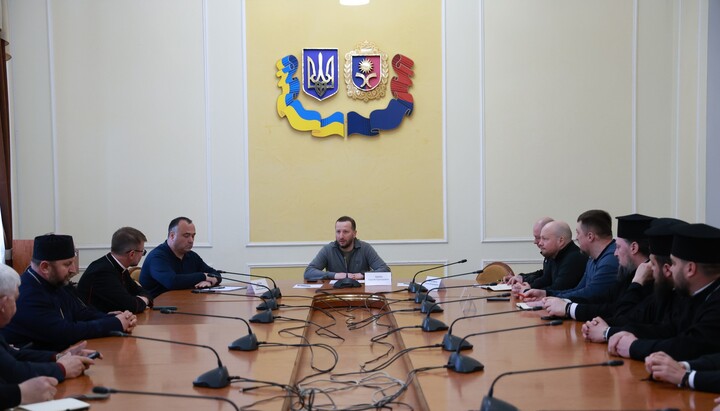
A meeting at the Khmelnytskyi Regional State Administration. Photo: head of the RSA on Facebook
The Khmelnytskyi region authorities will reduce the curfew on the night of Christ's Resurrection, from April 11 to 12, 2026. It will be in effect from 00:00 to 03:00. This was announced on Facebook by the head of Khmelnytskyi Regional State Administration Serhii Tiuryn.
According to Tiuryn, this will allow believers to attend Divine services without violating the established rules.
The authorities also recommended that representatives of religious organizations who were present at the meeting at the Regional State Administration on April 7, where possible, hold online broadcasts of services in order to “reduce the number of attendees.”
As the UOJ reported, authorities will open access to the Church of the Holy Sepulchre in Jerusalem.
Read also
OCU opens registration desk for "services" at Lavra
A former church shop at the UOC monastery takes prayer notes and registers visitors for OCU "services".
UOC delegation arrives in Georgia to mark 1,700 years of Christianity
Metropolitan Serhiy of Ternopil and Archbishop Iov of Shumsk concelebrated the Divine Liturgy with Patriarch Shio in Tbilisi.
Khmelnytskyi Eparchy donates 100,000 UAH for 15-year-old boy's treatment
A UOC eparchy has provided financial aid to seriously ill child.
Metropolitan Pavel leads festive service at Lavra skete
The abbot of the Kyiv-Pechersk Lavra celebrates solemn service at a capital church.
Pope urges safe grain export from Ukraine
The Pontiff called on the warring parties to ensure grain shipments through the Black Sea, on which the food supply of the poorest countries depends.
UOC believers hold prayerful procession to protect Chernivtsi cathedral
Metropolitan Meletiy, clergy and parishioners prayed for the preservation of the Holy Spirit Cathedral in Chernivtsi and its protection from encroachment.