ROCOR Council of Bishops launches canonization process for Seraphim (Rose)
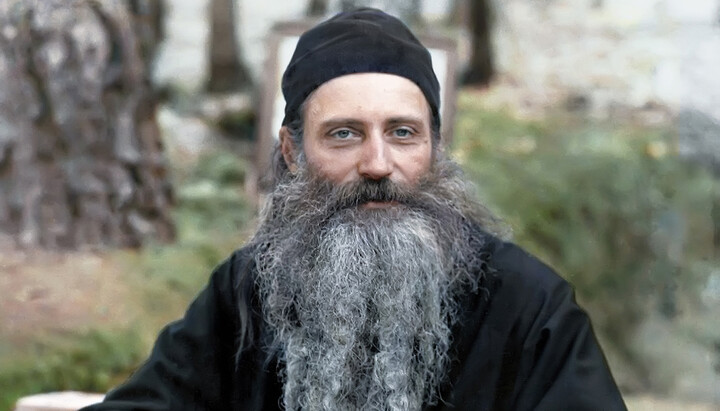
Hieromonk Seraphim Rose. Photo: open sources
On May 4, 2026, members of the Council of Bishops of the Russian Orthodox Church Outside of Russia (ROCOR), meeting in Munich, voted to canonize Hieromonk Seraphim (Rose), a UOJ source reports. The canonization has not yet been officially announced.
Hieromonk Seraphim was a spiritual writer and the author of numerous works that had a major influence on Orthodox life. His best-known writings include Orthodoxy and the Religion of the Future, The Soul After Death, and The Mysteries of the Book of Revelation.
Earlier, the UOJ reported that at a meeting of the Synod of Bishops held at the Synodal residence in New York on December 9–11, 2025, a commission was established to study the life, legacy, and veneration of Hieromonk Seraphim. The commission was headed by Bishop James of Sonora, vicar of the Western American Diocese.
Read also
Yelensky: Not recognizing OCU means indirectly denying Ukrainian statehood
Viktor Yelensky believes that Local Churches that do not recognize the OCU thereby indirectly fail to recognize Ukrainian statehood as well.
UOC priest at Lavra urges believers to accept hardships with gratitude
Archpriest Heorhiy Boyko at the prayer vigil near the Kyiv-Pechersk Lavra recalled the sufferings of Great Martyr George the Victorious.
UOC honors patron saint of Kherson land
A Divine service was held at the Holy Spirit Cathedral of Kherson on feast day of St. Barsanuphius of Kherson.
Nativity of John the Baptist Church of UOC damaged by shelling in Kharkiv
A church of the Kharkiv Eparchy (UOC) was damaged during another shelling.
Drabinko and Zinkevych arrive on Mount Athos
Representatives of Dumenko's religious organization are visiting the Holy Mountain.
Zelensky warns EU of possible influx of 20M Ukrainian refugees
Volodymyr Zelensky urged the European Union to provide Ukraine with at least €70 billion, warning that otherwise 20 million Ukrainians could flee to Europe.