What kind of Ukraine are we moving toward?
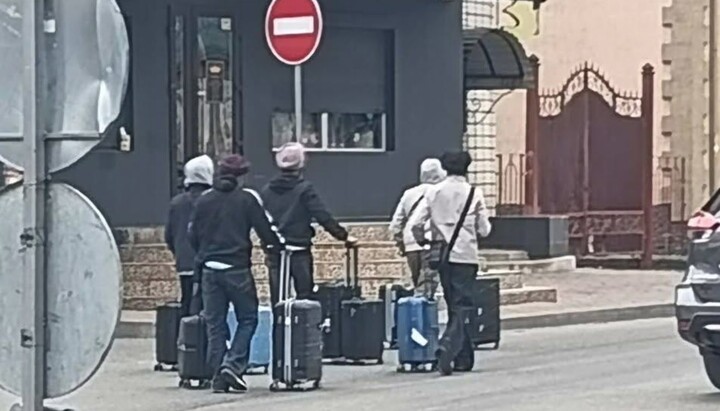
Migrants in Ukraine. Photo: open sources
In recent years, Ukraine's authorities have stopped concealing the obvious: the country is losing its people at an alarming rate. What was once a demographic forecast has become a demographic catastrophe. There are already not enough workers today. Tomorrow, there may not be enough people left to build, teach, heal, or defend the nation.
Against this backdrop, Fr. Yustyn Boyko, one of the most prominent media personalities and de facto spokesmen of the Ukrainian Greek Catholic Church, recently criticized the large-scale importation of migrant labor into Ukraine. He warned that these newcomers come from a different culture, a different mentality, and a different spiritual tradition, and that in the long run such policies could trigger profound ideological conflicts.
At first glance, it is difficult to disagree.
Every nation has the right to preserve its cultural and spiritual identity. Every state naturally prefers that its future be built by its own citizens rather than by millions of newcomers for whom the country is not a homeland but merely a place of employment.
Yet this raises an unavoidable question.
The same Fr. Boyko, along with much of the leadership of the UGCC, has consistently called for what they describe as a "just peace." In practice, this formula has often been used to justify prolonging the war until a set of ideal political conditions is achieved.
But every additional day of war comes with a very real price.
More mobilization.
More dead soldiers.
More shattered families.
More children growing up without fathers.
More civilian casualties.
And more Ukrainians who, having settled in Europe, decide that they will never return home.
While politicians debate strategies and public figures deliver patriotic speeches, Ukraine continues to lose what is more valuable than any resource, territory, or economic indicator – its people.
Today, government officials openly acknowledge the need to bring in massive numbers of foreign workers. Discussions about importing millions of migrants are no longer hypothetical. The head of Ukraine's Migration Policy Office, Voskoboinyk, has publicly stated that Ukrainians may eventually become a mixed population. Ukrainian Armed Forces officer Denys Yaroslavskyi has warned that within several decades there could be six migrant children for every Ukrainian schoolchild.
One may dispute the figures.
One may challenge the forecasts.
But the trend itself is impossible to ignore.
A nation that loses millions of its own citizens inevitably faces a fundamental question: who will replace them?
Today, virtually every official gathering begins and ends with the slogans "Glory to Ukraine!" and "Glory to the Nation!"
The words are stirring. They are inspiring. They are repeated endlessly.
Yet a far more important question is rarely asked.
What kind of Ukraine are we actually moving toward?
What kind of nation will inhabit this land twenty, thirty, or forty years from now?
Will its children speak Ukrainian?
Will they regard this land as their homeland?
Will they worship in Christian churches?
Will they believe in Christ at all?
These questions receive far less attention than political declarations and patriotic rhetoric. Yet they are the questions that will ultimately determine Ukraine's future.
The paradox is striking. Those who speak most passionately about their love for Ukraine often fail to recognize what may be the greatest threat to its long-term survival. A country does not disappear only when it loses territory. A country disappears when it loses its people.
That is why an immediate peace remains Ukraine's only real hope.
The terms of such a peace are for politicians to debate. But peace itself has long since become a matter of national survival.
If Greek Catholics truly love Ukraine as much as they claim, they should be among the first to call for an immediate end to the bloodshed. Because every additional day of war brings not demographic recovery, cultural renewal, or spiritual revival, but their further erosion.
Otherwise, they may one day discover that the country they professed to defend has become almost unrecognizable.
And then the slogan "Glory to the Nation!" will echo across a land where little remains of the nation that once inspired it.
And there will be almost no one left to preserve it, protect it, or pass its faith on to future generations.
Read also
Who destroyed and restored Kyiv Lavra? MinCulture's video reveals the truth
The Culture Ministry’s propaganda about the Kyiv-Pechersk Lavra has inadvertently revealed the truth.
Ternopil post on Feast of Intercession: Has calendar reformn failed?
A significant number of believers have rejected the new church calendar introduced by the OCU and UGCC with government support.
Shoulder straps or a cassock: who writes the script for UOC "fighters"?
Everything indicates that both Veliar and Pshenychny are ordinary performers of someone else's script. There is only one question – does the scriptwriter wear shoulder straps or a cassock?
Why is it legal to kill a person before birth but not after?
Children are the most privileged members of society. Yet that same society officially permits children to be killed – and on a massive scale.
Honoring the Bolsheviks’ successors at Kyiv Lavra
It was under the Reserve that the relics of the saints were desecrated, Lavra churches were turned into an atheism museum, and toilets were installed in sanctuaries.
"Degenerates" and "stupid animals": anti-UOC activists turn on children
Future historians will wonder how a vast country’s information agenda could have been shaped for so long by people so petty, vicious, and utterly contemptible.