Poturaev: Jurisdictions of city churches should be decided by its residents
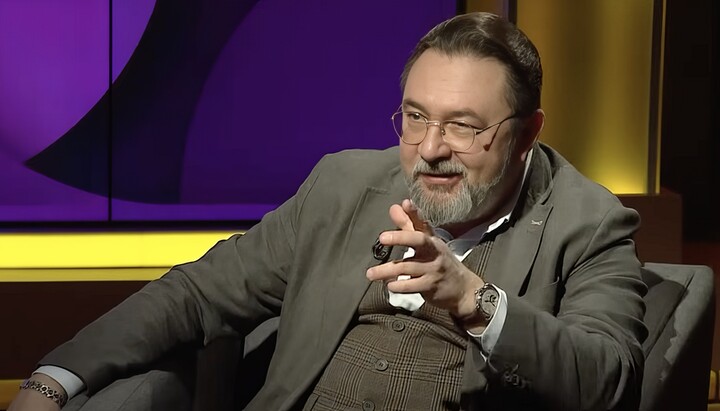
Mykyta Poturaev. Photo: Suspilne Culture
On June 3, 2026, Mykyta Poturaev, head of the Verkhovna Rada Committee on Humanitarian and Information Policy, called at a conference at Ukrinform for territorial communities in cities to be given the right to determine which jurisdictions churches on their territory should belong to.
Poturaev said it would be worth asking local self-government bodies in Kyiv, Kharkiv, Odesa, and Dnipro “which confession the territorial community identifies with.” In the MP’s view, city mayors should address this issue.
“I am not calling for anything to be taken away from anyone. I am calling for people to be helped. Let communities decide, based on their religious self-identification, to whom the city should grant the use of particular religious facilities,” Poturaev said.
He recalled that cities have many churches in municipal ownership and urged territorial communities to decide, “based on their religious self-identification,” which groups should be granted use of various religious sites.
Poturaev did not specify on what legal basis he proposed that city residents determine the confessional affiliation of churches. His remarks directly contradict current Ukrainian law. Article 8 of the Law “On Freedom of Conscience and Religious Organizations” clearly states that decisions on changing a religious community’s affiliation and related property matters are made exclusively at a general meeting of members of that religious community. The law provides no role in this process for territorial communities, city councils, or mayors.
Thus, transferring the right to decide from a religious community to a territorial one would effectively mean redistributing church property on political rather than religious grounds – something that directly contradicts both the letter of the law and the constitutional principle of separation of Church and state, which Poturaev himself cited in his remarks.
Earlier, the UOJ reported that, according to Poturaev, after the UOC is banned, its faithful could open even casinos in their churches.
Read also
Lionel Messi thanks God for his achievements as he ends international career
Argentine football star Lionel Messi credited God for his success as he brought his international career to a close, saying he could never have achieved so much without God's will.
Odesa’s St. Elijah Monastery honors memory of its founder
Metropolitan Agafangel led celebrations at St. Elijah Monastery in Odesa on the feast day of St. Gabriel of Mount Athos.
OCU cleric rejects suspension, accuses ruling bishop of usurping power
An OCU cleric called the decree suspending him "canonically null and void" and accused "Bishop" Semanchuk of attempting to seize parishes and using mobilization threats as blackmail.
Supreme Court: Religious beliefs do not exempt citizens from mobilization
The Supreme Court has clarified that Ukrainian law does not provide for alternative civilian service under martial law.
Ukraine birth rate drops 17%, demographer says
The head of a department at Ukraine’s Institute of Demography has reported a sharp decline in the country's birth rate.
Khust Eparchy honors memory of St. Job of Uholka
A Liturgy is served in Mala Uholka, a birthplace of St. Job of Uholka, on the saint's feast day.