A lesson for the modern Church from the depths of ages
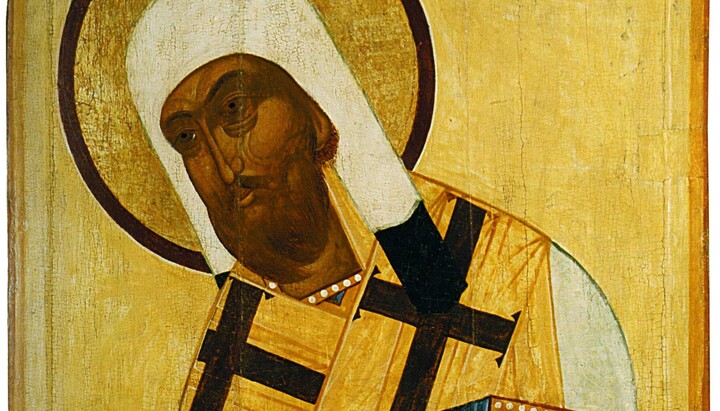
Icon of Saint Leontius of Rostov. Photo: Wikipedia
On June 5, the Church commemorated St. Leontius of Rostov, one of the first monks of the Kyiv Caves Lavra, who labored in asceticism together with Sts. Anthony and Theodosius of the Caves. Nearly a thousand years have passed since Leontius lived, yet history is cyclical, and the realities of his time remain relevant today.
When Bishop Leontius was appointed to the Rostov see in the mid-11th century, it was an almost entirely pagan land. The hierarch’s preaching provoked only anger and irritation among the local nobility, and he was driven out of the city. But Leontius did not leave. He settled nearby, built a small church, and continued to proclaim the Gospel. His meekness and love first won over the children, and through them, their parents; they came to the church and received Baptism.
The success of his preaching enraged the pagans of Rostov, and they resolved to deal with the bishop by force. It is known that an armed crowd approached the very church itself. The deacons and priests begged the bishop to change his clothes and hide, but he chose another path: he vested in his episcopal robes and, together with the clergy, went out to meet the attackers. His fearlessness so astonished the pagans that many of them believed on the spot and received Baptism – and from that day the Church in Rostov began to grow.
Why is this ancient story so interesting to us today?
Because Leontius had no desire whatsoever to be “one of their own” for the local authorities or non-believers. From the very beginning, he could have shown what today would be called “tolerance,” held common prayer services with the pagans, and refrained from “imposing” his teaching. He could have said that the strength and unity of the people of Rostov lay in diversity.
Today, we almost always rely on ourselves, on “princes,” on acquaintances, and so on, taking as our guide in life the proverb, “Trust in God, but keep your powder dry.” Yet by such calculating attitudes toward reality, we do not give God room to act. This is our chief misfortune. Worldly prudence pushes trust in God to the margins. What remains with us is only the logic of this world: whoever is smarter, stronger, and faster wins. Sometimes, in order not to lose the loyalty of the powerful, Christians replace trust in God with worldly calculation.
The authorities of many countries, despite their formal adherence to Christianity, behave like ancient pagans. They demand that Christians keep silent about certain “inconvenient” words of Holy Scripture – such as love for one’s enemies or the impossibility of taking up arms. And those who continue to speak are treated as Leontius was treated – they are driven out. Worse still, some church authorities act in the same way.
Today the UOC is free – it is bound neither by the favor of princes nor by fear of losing it. It is being driven out, just as St. Leontius once was. But when he had to choose between comfortable accommodation and following the Gospel, he chose the latter – and Christ did not abandon him.
Read also
Shoulder straps or a cassock: who writes the script for UOC "fighters"?
Everything indicates that both Veliar and Pshenychny are ordinary performers of someone else's script. There is only one question – does the scriptwriter wear shoulder straps or a cassock?
Why is it legal to kill a person before birth but not after?
Children are the most privileged members of society. Yet that same society officially permits children to be killed – and on a massive scale.
Honoring the Bolsheviks’ successors at Kyiv Lavra
It was under the Reserve that the relics of the saints were desecrated, Lavra churches were turned into an atheism museum, and toilets were installed in sanctuaries.
"Degenerates" and "stupid animals": anti-UOC activists turn on children
Future historians will wonder how a vast country’s information agenda could have been shaped for so long by people so petty, vicious, and utterly contemptible.
Zelensky sees murder of Polish priest but not of Sviatohirsk monk
Why does Zelensky react so emotionally and swiftly to the murder of a Catholic cleric while remaining completely silent about the murder of an Orthodox monk?
UOC vs. OCU numbers: pollsters count, social media recount
Official polling suggests Dumenko’s structure has an overwhelming lead in the number of parishioners, while social media polls paint a very different picture. Which should we believe?