The Mystery of a Converted Heart
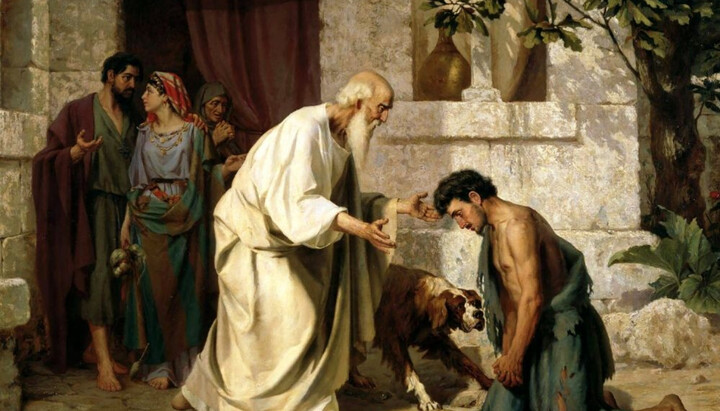
Painting "The Prodigal Son" by Nikolai Losev. Source: Arthive
Svetlana Samoilova asks:
Why does a criminal who repents become a saint, while a person raised in a believing family grows up and leaves the Church?
Archpriest Vasily Kucher answers:
This is, perhaps, the most painful question. And it is usually asked by those who have experienced it in their own family.
Let us begin with the fact that this is nothing new. Recall the parable of the prodigal son. The one who left, squandered everything and returned, while the one who had been beside his father all his life remained standing outside the door at the end, resentfully settling accounts.
Note that the elder son never went anywhere. He was simply beside his father, receiving nothing for his heart. That is the whole difference.
The point is that faith is not something passed down by inheritance, like a surname or an apartment. Faith is a personal encounter with God. And, unfortunately, it often happens that a child raised in church inherits not an encounter, but a way of life, a habit, rules. He knows how to stand, when to cross himself, what is allowed and what is not. But the problem is that a way of life without an encounter at some point becomes merely an inconvenient habit, from which one naturally wants to be free.
In this sense, the criminal's position is paradoxically more advantageous. He sees the whole truth about himself, has nothing to hide behind, and when God finds him, he receives it as a pardon.
But for a person who has "done everything right" since childhood, there seems to be nothing to repent of. That is why Christ's words that the publicans and harlots go into the Kingdom of God before you (Matt. 21:31) were addressed precisely to believing and righteous people.
There is also a second reason, simpler and more bitter. Children do not leave God. They leave what they saw at home. And if there was prayer in the family but no forgiveness, if the rules were observed strictly but the person nearby went unnoticed, then the child draws a perfectly logical conclusion: this is not for me.
But I would not rush to write such a child off. Because even if he leaves, it is far from always the end of the story. The prodigal son also left at first. But his father did not chase after him or lecture him; he simply waited and looked down the road every day.
So if this has happened in your family, remember: you know the father from the parable, and in such a situation he did exactly two things: he waited and he loved. God did the rest.
Read also
The spiritual sensitivity of a living soul
A pastoral reflection on why witnessing wrongdoing causes spiritual pain – and what our response to the sins of others reveals about the state of our hearts.
Love is stronger than death
The loss of a loved one leaves a deep wound, but the Christian faith emphasizes the eternal nature of love. A conversation about the spiritual bond between spouses beyond the threshold of earthly life.
The true compass of the Christian life
St. Anthony the Great called discernment the highest virtue. The experience of the Desert Fathers shows that the path to spiritual sobriety lies through humility, seeking counsel, and overcoming the passions.
What is the essence of Christian spiritual feat?
Archpriest Vasily Kucher reflects on modern asceticism.
How can one find their purpose in life?
Archpriest Vasiliy Kucher addresses the question of life’s purpose and God-given calling.
“Let God arise”: Why do we speak of a past event as though it were future?
Archpriest Vasyl Kucher explains the linguistic and theological features of the well-known prayer.