How to stop forcing faith and start living with God
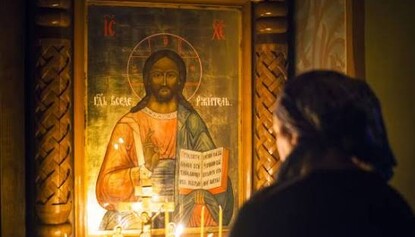
A woman praying in front of the icon. Photo: open sources
Unfortunately, what I felt was missing were practical suggestions for moving from a “religion of duty” to a “religion of the heart.”
Of course, such guidance can be found in the writings of the Pietists – Gerhard Tersteegen, Philipp Jakob Spener, and Johann Arndt – whose works Fr. Peter has devoted many years to translating. But not everyone can make their way through their archaic, ornate, and rather cumbersome prose, at least by modern standards, to grasp the essential message.
So I'll try to bring together some of their practical advice in a short cheat sheet for “rebooting your faith” – as I understand it.🙂
Level 1. The Life of the Heart (Our Relationship with God)
a) Inner stillness, or the “prayer of presence”
Growing in God begins when we stop looking for Him only outside ourselves – in texts, rituals, and endless religious talk – and turn inward, to where the Holy Spirit dwells within us.
We need to spend five to ten minutes a day in complete silence. Close your eyes, try to quiet the stream of thoughts, and simply stand silently before God, aware that He is present in your heart at that very moment.
What might this look like in practice?
Set aside five to ten minutes in the morning, immediately after waking up, or in the evening, before going to bed. Less is fine; more is unnecessary. What matters is not how long you spend but how consistently you do it.
Find somewhere you can be alone, even if it's the bathroom because there's nowhere else. You don't need to kneel or stand rigidly at attention. Your body should be relaxed so it doesn't distract your mind. Sit comfortably in a chair or armchair. Take a few deep breaths, letting the tension go.
Close your eyes. Don't try to manufacture feelings of joy or repentance. Acknowledge yourself as you are at that moment and tell God honestly what you find. For example:
“Lord, I'm here. I come to You tired and empty, and I want to spend some time with You in silence.”
Direct your attention toward your heart. Descend into it – not physically, but in your mind.
If it helps, imagine taking an elevator down from your head, where thoughts are buzzing and swirling, into the center of your chest, where a small flame – the flame of the Spirit – is burning, leaving all the noise upstairs.
Or simply keep your inward gaze fixed on that point, in the center of your chest, slightly to the right of your heart.
As you breathe slowly in and out, turn your thoughts calmly and without strain toward God, who dwells in the depths of your heart. Say in rhythm with your breathing: “Lord... You are here... I am with You.”
At some point, unrelated thoughts will inevitably intrude. Don't get irritated or try to fight them. Let them drift past like clouds in the sky. Don't cling to them. As soon as you notice that your attention has wandered, gently bring it back into your heart.
Tersteegen said that a baby in its mother's arms may cry and squirm, but it still remains with her. In the same way, your soul remains with God even when distracting thoughts overwhelm your mind.
It is practically impossible to empty your mind of thoughts altogether. The point, therefore, is to create a kind of distinction between the mind, where thoughts come and go, and the heart, where the Holy Spirit breathes.
Your goal is not to eliminate thoughts but to avoid becoming absorbed in them. And whenever you do get distracted, gently and calmly return your attention to your heart – as many times as necessary.
This is precisely why you use short phrases synchronized with your breathing: “Lord” – “I am here”; “Lord” – “You are near”; “Lord” – “have mercy,” and so on.
These words are not so much a prayer in themselves as a way of keeping your attention focused on God. Your very presence with Him should become prayer – genuine communion.
When your five or ten minutes are over, sit for another half-minute with your eyes open. Take a deep breath and thank God for those moments of “silence together,” even if you feel you experienced nothing at all.
Spiritual growth does not have to be accompanied by dramatic emotional experiences. Learn to trust God rather than trying to control His life and activity within your heart.
b) Prayer from the heart instead of reciting prayers
One of the major mistakes in spiritual life is trying to manufacture holiness through our own efforts. Outwardly, this often takes the form of reciting enormous numbers of prayers.
Following the Pietists, Fr. Peter Meshcherinov calls this “the frantic activity of fallen human nature.” In essence, it is a flurry of activity that produces no real results.
Yes, it's good to have a few prayers for daily use that reflect your inner condition or help open your heart to God. But what matters is that you can genuinely make those words your own and mean what you say.
Even more important is learning to pray in your own words, sincerely sharing with God your weakness, pain, spiritual dryness, and sense of emptiness. Throughout the day, combine these brief, personal prayers with the “prayer of presence” described above.
Tersteegen maintained that God meets us where we speak honestly about ourselves, not where we try to impress Him with our “achievements in prayer and asceticism.”
c) Holy inactivity (Heilige Untätigkeit)
When all our attempts to “make ourselves holy” have failed, the long-awaited moment of becoming “poor in spirit” arrives.
Think of a hyperactive child who has to exhaust all his energy and stop running around before his mother can finally catch him, feed him, and straighten him up.
If you have reached this point in your Christian life – if you have lost all your former spiritual joys and sense of purpose – then “rest in your poverty.”
Don't rush around trying to do more. Don't double your prayer rule or substitute trips to monasteries for fasting. Instead, say honestly:
“Lord, there is nothing left inside me but emptiness. Fill it with Yourself, in whatever way You see fit.”
Then try to be quiet, stop striving, and simply remain with God in silence, allowing Him to work in your heart Himself.
Level 2. The Life of the Mind (Reading and Fellowship)
a) Nourishment from the word
Johann Arndt and Philipp Jakob Spener taught that we should read the Bible not merely to acquire knowledge but to allow God to heal our hearts through His Word.
What does this look like in practice?
In my view, the Gospels, the apostolic epistles, and the Psalms are better suited to daily spiritual reading than trying to work through the entire Bible.
Read a little at a time. Choose a single paragraph, parable, verse, or even one short phrase.
Don't open Scripture in a hurry just to check another task off your list. Set aside two or three minutes.
Before you begin, close your eyes for at least a minute and “descend into your heart.” Say:
“Lord, help me hear what You want to tell me. Bring these words to life for me. Let them touch my heart and heal it.”
Read very slowly. After reading a sentence, pause. Read it again.
If a particular word or thought catches your attention, don't rush ahead. Listen to how the verse resonates in your heart rather than merely analyzing it with your mind.
After reading the passage, don't close the book immediately. Ask yourself four simple questions – not abstract theological questions, but practical ones:
- What does this verse tell me about God, His love, or myself?
- How does this passage expose the dryness or lack of love in my heart right now?
- What in this passage can I thank God for at this very moment?
- What help do I need from God to put this passage into practice in my life today?
Choose one short phrase from the passage that particularly struck you. Write it down on your phone or a piece of paper and keep it with you. As you go about your day, return to that phrase in your thoughts, trying to experience its meaning in your heart.
It can also be helpful to combine five minutes of the “prayer of presence” with a slow, attentive reading of a single Gospel verse.
b) Gospel and prayer groups (Collegia Pietatis, or “Conventicles of Piety”)
For all the importance of the Divine Liturgy and Holy Communion, communal worship in church can still leave a Christian feeling alone in a crowd.
That is why it is so important to find at least two or three people with whom you can read Scripture, exchange thoughts, share spiritual struggles, and support one another through words of encouragement and prayer.
Level 3. Outward life (everyday service)
The Pietists taught that serving God does not end when we walk out of church.
The Church and its sacraments are the walls and roof of the spiritual temple, but its altar is in your heart.
If your heart lacks childlike trust, stillness, peace, and the “breath of the Holy Spirit,” the outer walls remain little more than scenery.
The temple in which the Liturgy never ceases is wherever you happen to be right now.
Whether you are carrying out your duties at work, doing household chores, talking with colleagues, or spending time with loved ones, you are serving God through everything you do and say. Don't forget that.
Gerhard Tersteegen himself earned his living for most of his life as a silk weaver. In practice, this meant spending twelve to sixteen hours a day hunched over a loom in a dimly lit room, since an open flame could set the silk on fire. The delicate thread could snap at the slightest wrong movement of his hand.
Yet this difficult, painstaking, monotonous work did not prevent him from remaining inwardly with God. He considered it the finest way to serve his Creator.
Offer God your everyday work as a small sacrifice, doing it honestly and with love. Serve Him through the people around you – without religious grandstanding, simply helping them, supporting them, and treating them with ordinary human kindness.
Even in the midst of everyday life, you can make room for the breath of the Spirit.
Level 4. Where can you find the time?
In fact, the “religion of the heart” requires far less time than the “religion of duty” to which we are accustomed. Just seven to ten minutes a day: five to seven minutes for the “prayer of presence” and another two or three for reading the Gospel.
Ideally, find those minutes at the very beginning or end of the day – immediately after waking up, while you're still lying in bed, or just before falling asleep.
If you're riding the subway or sitting in a traffic jam, close your eyes for a minute or two and spend a little time in God's presence.
Before turning on your computer at work, pause for a moment. Recall the Gospel phrase with which you began your day, or simply speak a few heartfelt words to God before immersing yourself in your daily tasks.
Whether you're walking from home to the bus stop, washing dishes, or taking a shower, whatever your body is doing, your attention and spirit can briefly retreat into your heart and remain there in silence before God.
These are only tiny fragments, fleeting moments of your earthly life. Yet even they are enough for the Holy Spirit to begin His unseen work in your heart.
God is not an accountant. He is a Physician.
And spiritual growth – growing in God – is not about accumulating religious merits through more prayers, more fasting, more prostrations, or more frequent Communion.
It is about making room in our hearts for a place where we can meet God every day, where Christ Himself can dwell and work.
Read also
How anti-church media shape our agenda
It is striking how anti-Church media outlets manage to set the agenda for us Orthodox Christians. They have somehow convinced people that concelebrating with Russian Orthodox Church (ROC) clergy, or even attending an ROC service, is haram, taboo, a red flag. But why on earth should that be?!
Two tragedies. Two very different standards
Oleksandr Matsievskyi said “Glory to Ukraine!” before he was executed. The whole world witnessed his murder. Politicians, government officials, and Ukrainian and international media spoke about him. He was posthumously awarded the title of Hero of Ukraine. And rightly so. Because the killing of an unarmed person is a tragedy and a crime.
Regarding the attack on the Holy Dormition Sviatohirsk Lavra's monks
As of now, there has been no official information about the opening of a criminal investigation into the attack on the monks of the Holy Dormition Sviatohirsk Lavra.
Culture Ministry paves way for mass seizure of UOC churches?
In recent years, we have seen the Ministry of Culture increasingly terminating unilaterally long-term lease or free-use agreements concluded with the UOC for those churches or monasteries that are architectural monuments and are state-owned (or communally owned). The goal is clear: to push the UOC out of Ukraine's religious landscape.
About “our own” God on both sides of the war
Two similar “miracles” – and two opposite conclusions about God.
If Christians “moved in” like this
A text with reverse logic about migration and expectations from society.