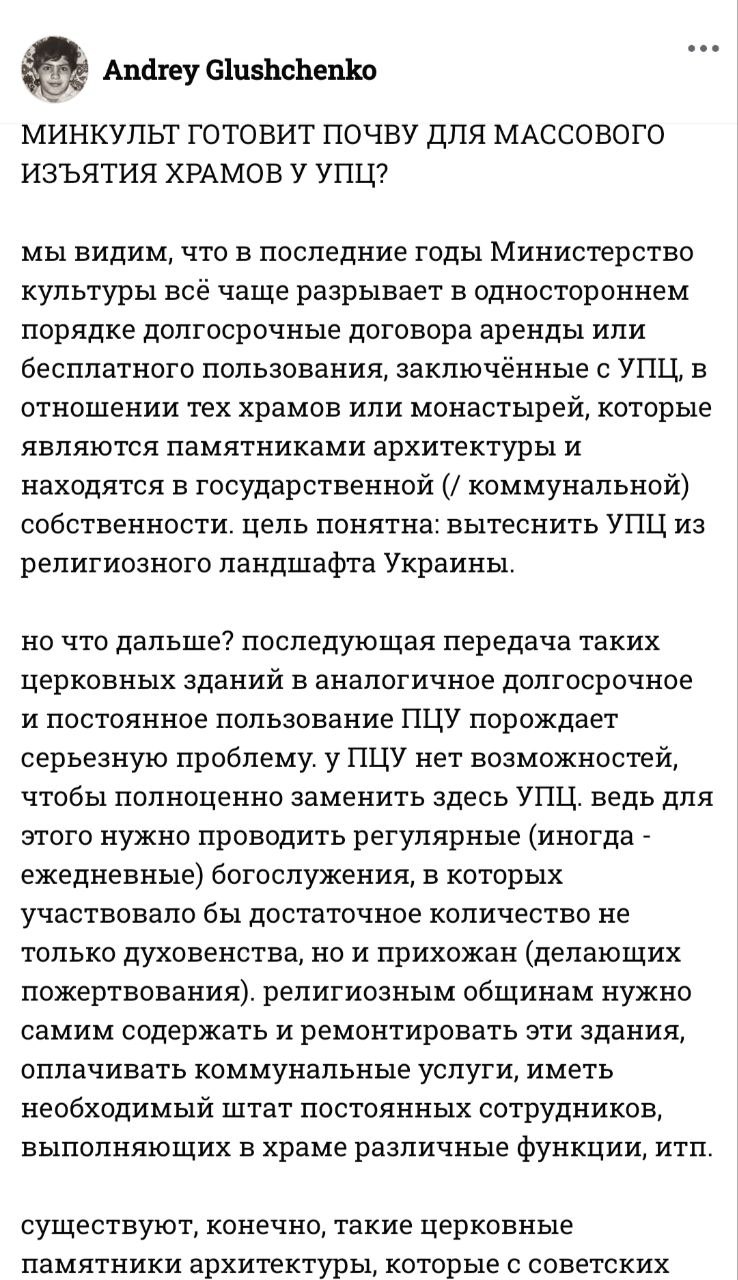
Culture Ministry paves way for mass seizure of UOC churches?
In recent years, we have seen the Ministry of Culture increasingly terminating unilaterally long-term lease or free-use agreements concluded with the UOC for those churches or monasteries that are architectural monuments and are state-owned (or communally owned). The goal is clear: to push the UOC out of Ukraine's religious landscape.
But what happens next? The subsequent transfer of these church buildings to the Orthodox Church of Ukraine (OCU) for similar long-term or permanent use creates a serious problem. The OCU lacks the resources to fully take over the UOC’s role at these sites.
Doing so would require holding regular services, sometimes daily, with sufficient numbers of both clergy and parishioners who contribute financially. Religious communities would also have to maintain and repair the buildings themselves, pay utility bills, and employ enough permanent staff to perform the various duties involved in running a church.
Of course, some historic church properties have remained under permanent state management since Soviet times, including the St. Sophia Cathedral complex in Kyiv and most of the Upper Lavra. These function primarily as museums.
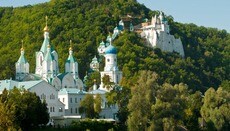
Yet the situation is different for the other churches and monasteries – as many as 3,000 of them – that the UOC has used under long-term lease agreements over the past two, three, or four decades. As experience with the cathedrals in Volodymyr and Chernihiv, the Lower Lavra, and other sites has shown, abruptly transferring these properties to the OCU creates, or will eventually create, the problems described above.
A shortage of resources. The OCU simply does not have the human resources – clergy and parishioners – or the financial means to take over all these churches and monasteries for long-term, permanent religious use.
After all, this would mean that OCU clergy would have to hold regular services there, while the OCU’s own religious communities and employees, rather than the state, would bear primary responsibility for maintaining and repairing the buildings, paying utilities, providing access, and offering services to visitors, such as selling books and icons.
Moreover, according to statistics, the OCU currently has only one priest for every two parishes and fewer than three monks per monastery. In the UOC, the corresponding ratios are one priest per parish and 20 monks per monastery.
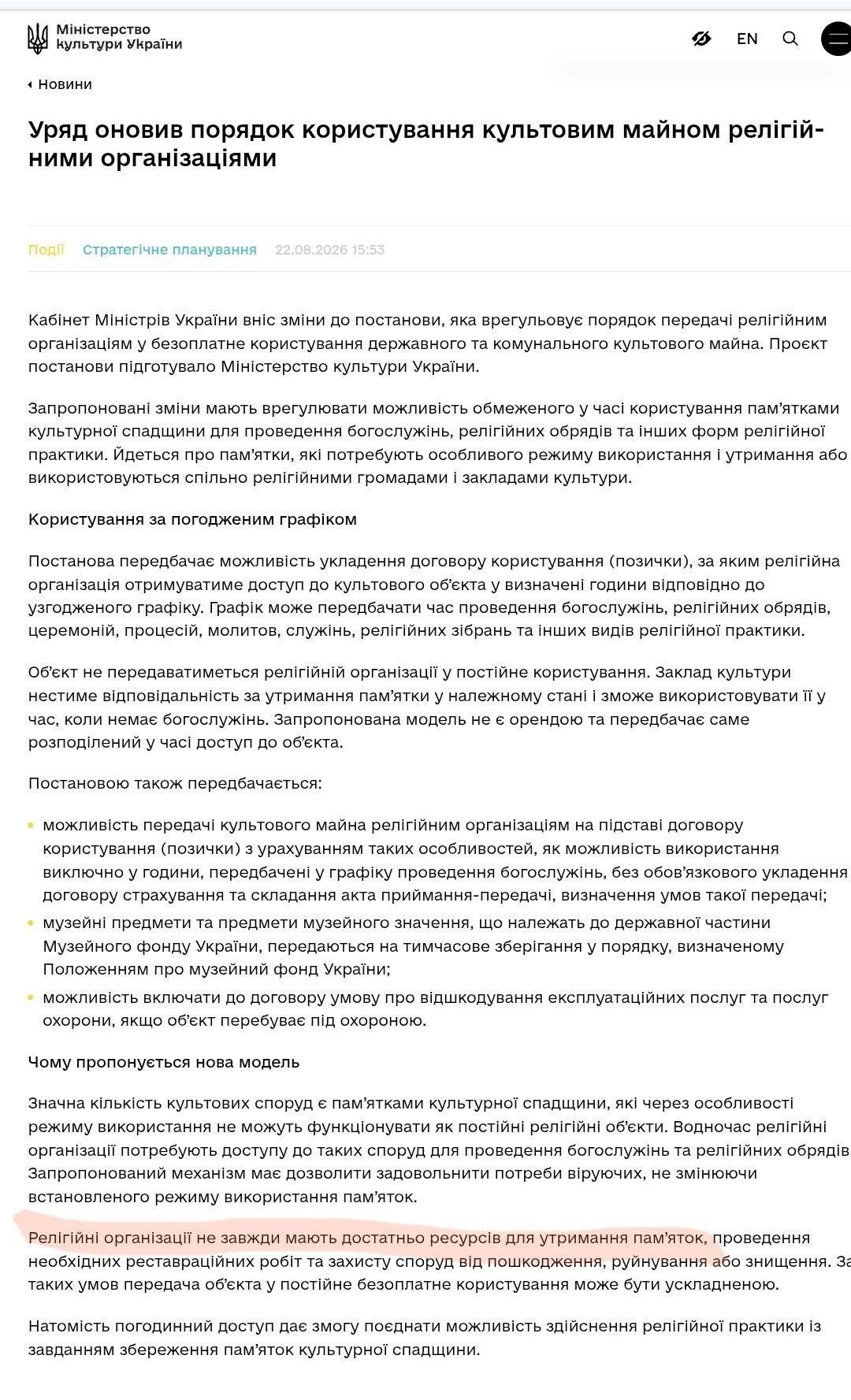
What solution does the Ministry of Culture envision? To spare the OCU the burden of finding the personnel and funds needed to meet these obligations, it will be offered the opportunity to hold services in these churches and monasteries free of charge, but only according to a fixed schedule – for a few hours each week.
Unlike the arrangements previously made with the UOC, no long-term lease agreements will be signed. Instead, the right of permanent use, along with responsibility for keeping the buildings in proper condition, will remain with departments of the Ministry of Culture and other secular government bodies.
Outside worship hours, these church buildings will therefore be entirely at the disposal of local cultural institutions, which could use them, for example, to host various cultural events.
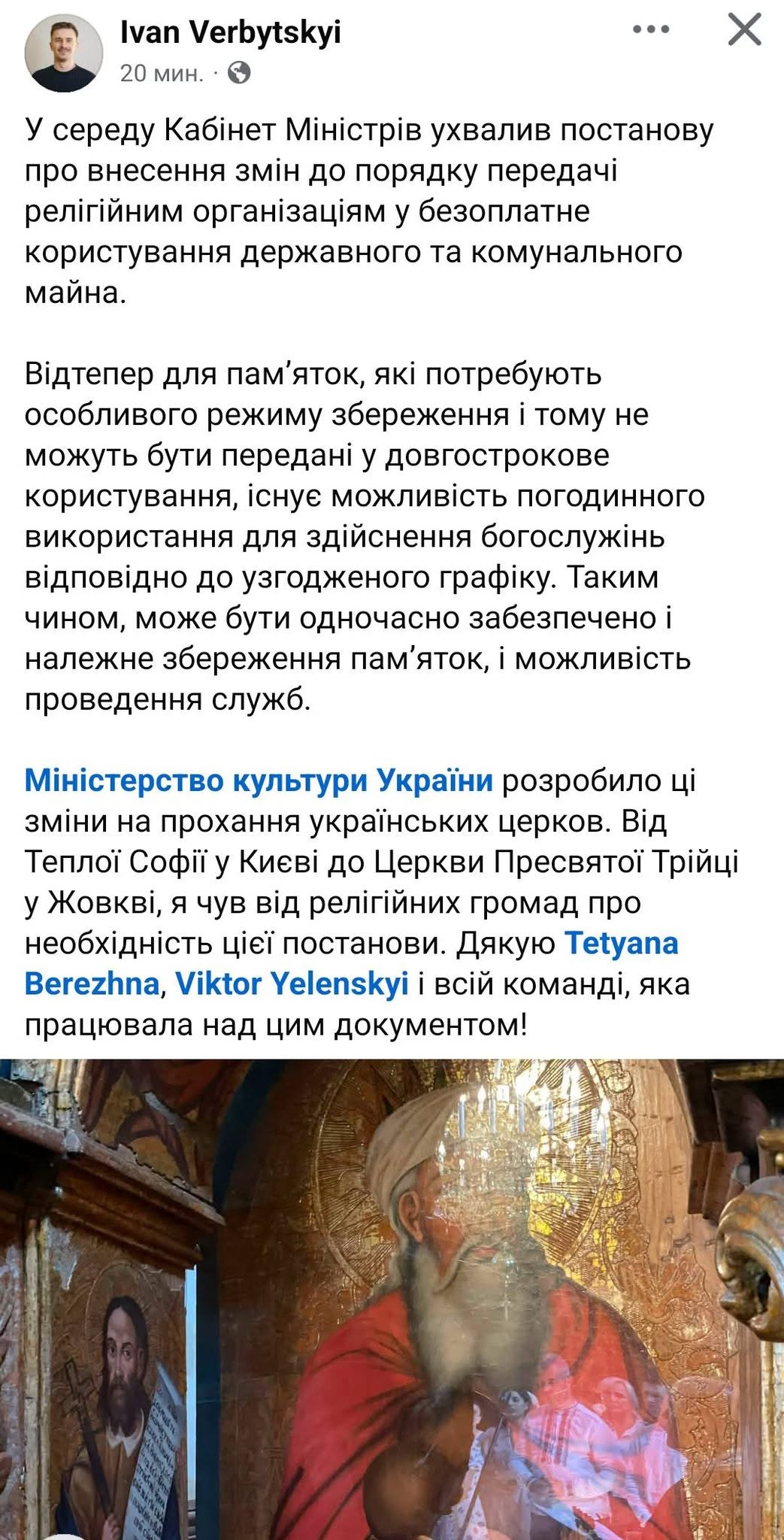
That is why I believe the Cabinet of Ministers’ recent decision (see screenshots) reflects much more than a desire to regulate religious organizations’ access to historic church properties already under the Ministry of Culture’s permanent management, such as St. Sophia Cathedral.
The decision may also be laying the groundwork for the mass termination of agreements granting UOC communities long-term use of the many churches and monasteries owned by the state or local governments.
Under such an arrangement, the OCU would be spared the responsibility of maintaining these properties while still being allowed to hold occasional services there – creating the appearance of an active religious life.
I may be wrong. Time will tell. But if my suspicions prove correct, it is not hard to imagine the physical condition these sacred Ukrainian churches and monasteries will be in a few years from now...