Administration office of Gorlovka diocese of UOC shelled again
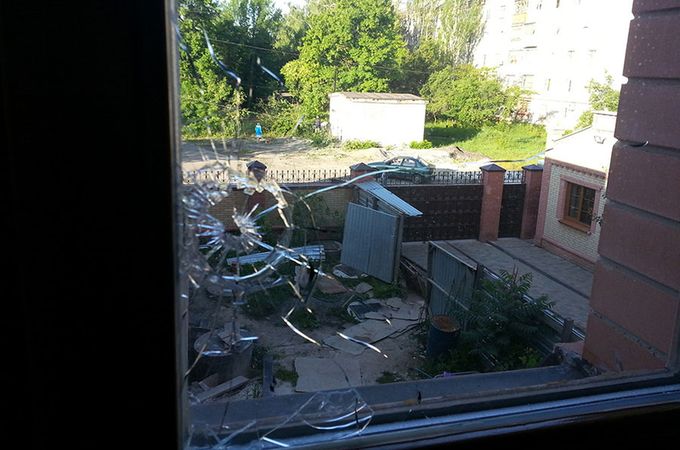
At about 1:30 am, June 11, the main office of Gorlovka eparchy of the UOC suffered from the shelling, reports the site of Gorlovka and Slavyansk diocese of the UOC.
A guard of the diocesan office stayed alive – a fragment of a shell went across the security room just over his head. Nobody was injured, except the dog watching the premises.
The shell exploded near the transformer station. Pieces of it damaged walls of the station, a fence around it and a guard’s car. The windows of the guard room were shattered with a blast wave.
It is to be recalled this is the first shelling of Gorlovka center since August 2015. Earlier Gorlovka diocesan administration office suffered from shelling twice – on July 28, 2014 and on August 25, 2015.
Read also
Reports to SBU of weapons in UOC churches were always false, Novynskyi says
The protodeacon said that under Maliuk, inspections began to be accompanied by public accusations against the Church without evidence.
Culture Ministry pledges to speed up seizure of Kyiv-Pechersk Lavra from UOC
Culture Minister Tetiana Berezhna has pledged to personally attend a court hearing in the Kyiv-Pechersk Lavra case.
Kamianske Eparchy honors Dnipro Icon of the Mother of God for first time
A festive service was held at a cathedral in Kamianske, where the Dnipro Icon of the Mother of God was brought out for veneration by the faithful for the first time.
Kyiv conscription officers abduct UOC priest
TRC officers reportedly abducted Maksym Kostiuchenko, a cleric of a UOC church in the Ukrainian capital.
Court grants DESS lawsuit to dissolve UOC’s Rovenky Eparchy
The appeals court partially granted the DESS lawsuit seeking to dissolve the Rovenky Eparchy but rejected the request to seize its property, citing a gap in Ukrainian legislation.
Met. Meletiy consecrates house of worship for UOC community in Dankivtsi
Members of the persecuted UOC Intercession parish in Dankivtsi have converted a house into a place for communal prayer and worship services.