Church’s view: don’t scatter
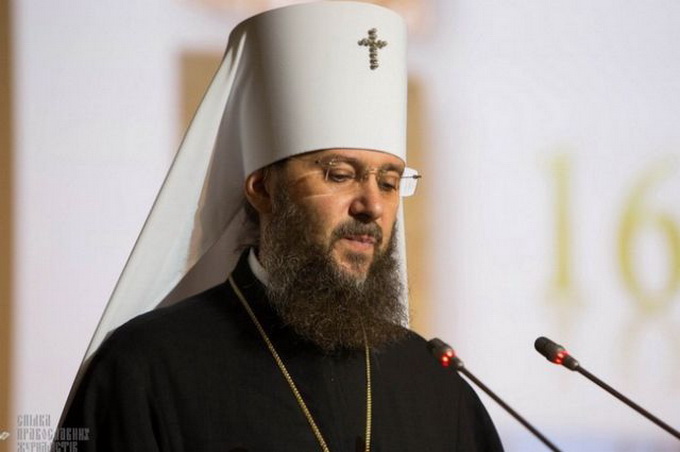
According to him, many people believe that it's real, because the man has a free will and a certain set of moral values. They determine our good deeds, which do not have to be based on faith in the Creator. The main thing is the result, a specific good deed. And it is not very important, in principle, if it will be connected with faith or not.
In this context it is important to understand that good deeds are not confined only to some external act. To give alms, to feed the hungry, to help the poor, to visit the sick – all these merciful deeds are very significant and necessary. However, it is more important, with what heart and spirit the man does it. If he does good deeds only to show off, to earn as much praise as possible, to amuse his pride, the price of such deeds is low. It is just as someone decided to give a hungry man the bread bugged by worms and mold. The latter are often our passions: vanity, conceit, adulation, pride.
Quite a different situation is when the good is done with God and for God's sake. This is what the Lord Himself says: "I am the vine, ye are the branches; He who abides in Me, and I in him, bears much fruit; for without Me you can do nothing "(John 15: 5). God's grace and passion drives away passions, and the man, making a good deed, not only helps the neighbour but transforms himself. His heart becomes more and more receptive to God's love. Moreover, he, like a ship lost in the vast ocean after a severe storm, begins to confidently go to the only correct course to carry it through all life's reefs to the cove called "Salvation".
Let's be honest – the Almighty God Himself is able to create any good deed. Even combining the efforts of inhabitants of our planet, we cannot do what God does not wish to do. That is why what is important for Him is not the very good deed, its scale, but the state of the heart, with which a person does good. This is clearly and explicitly said by St. John Chrysostom: "God does not require an abundance of offerings, but the wealth of mental arrangement, which is not expressed in the measure applied, but the zeal feed."
More fully this idea is expressed in the words of St. Seraphim of Sarov: "The true goal of our Christian life is the acquisition of the Holy Spirit of God. Fasting, vigil, prayer, charity, and all good deeds for Christ's sake are the means for acquiring the Holy Spirit of God. Note that done for the sake of Christ a good deed brings us the fruits of the Holy Spirit, yet not for the sake of Christ done the deed, although good, brings no reward either in the life of the world to come or any God’s grace in this life. That is why Our Lord Jesus Christ said: "Anyone who does not gather with me, scatters (Matthew 12:30.)".
AIF
Read also
Confession from afar: from ancient letters to mobile phones
When someone is confined to a hospital bed or trapped under shelling, a difficult question arises: Can a phone conversation with a priest take the place of sacramental confession?
A tale of two oaths and a mother on a mountain
The story of a drought in Judea reveals the depths of God's justice and the price of a human promise.
Collapse of Babel's tower of globalism
October 24 is United Nations Day. An analysis of the crisis of secular institutions and the ideology of globalism through the prism of biblical Babylon and Pentecost.
Archpastor's word for weary city dwellers
When exhaustion weighs us down, we turn to ancient sermons to ask profound questions about human destiny and the nature of existence.
Brother of tax collector and brother of Lord
The Gospel is silent about the son of Alphaeus, and commentators have argued for centuries over who he was. And the Church commemorates two apostles named James in close proximity.
Prayer commemorations instead of loving embraces
At every Orthodox wedding, the choir sings a hymn to the martyrs. For families separated by war, these words carry a special meaning.