Relics of Holy New Martyr Grand Duchess Elizabeth Feodorovna brought to Russia
The reliquary was greeted at the airport by Bishop Nazary of Kronstadt and clergy of the St. Petersburg Diocese and then taken to the St. Alexander Nevsky Lavra in St. Petersburg. A moleben was celebrated before the relics in the Lavra’s Holy Trinity Cathedral, after which all gathered had the opportunity to venerate the relics.
The sacred relics will remain at the Holy Trinity Cathedral of the St. Alexander Nevsky Lavra from May 5 to 9, and at the Cathedral of the Feodorovskaya Icon of the Mother of God in memory of the 300th anniversary of the House of Romanov from May 9 to 11.
Bringing of the shrine is held on the occasion of the 100th anniversary of the tragic events in Russia.
The male youth choir of the Eastern American Diocese of ROCOR will participate in services during the stay of the reliquary.
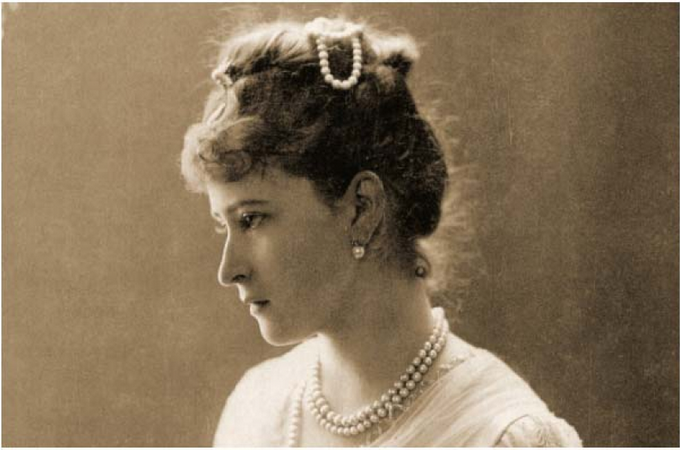
Grand Duchess Elizabeth Feodorovna Romanova (1864-1918); canonized as Holy Martyr Elizabeth Feodorovna, was a German princess of the House of Hesse-Darmstadt, and the wife of Grand Duke Sergei Alexandrovich of Russia, the elder sister of the last Russian Empress Alexandra Feodorovna, the founder of the Marfo-Mariinsky Convent of Mercy in Moscow. In 1992 Elisabeth was canonized by the Russian Orthodox Church as the Holy New Martyr.
In 1909, she bought a plot of land on the Bolshaya Ordynka and opened the Marfo-Mariinsky Cinvent there, naming it in honor of the Holy Myrrh-Bearers Martha and Maria. A year later, the nuns of the monastery were consecrated as cross sisters of love and mercy, and Elizabeth Feodorovna became the abbess of the convent.
During the First World War, the Grand Duchess helped to form sanitary trains, sent medicines and mobile churches to the soldiers.
In 1918, Elizabeth Feodorovna was arrested and sent into exile to the Urals – to the city of Alapaevsk. The Mother was followed by the sisters of mercy Varvara Yakovleva and Ekaterina Yanisheva. On July 18, 1918 prisoners Elizabeth Feodorovna, sister Varvara and several members of the Romanov family were taken to the village of Sinyachikhi.
There, in an abandoned mine, they were beaten with rifle butts and thrown into the mine alive. After the White Guards occupied Alapaevsk, the bodies were removed from the mine, and it was discovered that some of the victims had lived after the fall, dying of hunger and wounds. So, the wound of Prince John, who fell to the ledge of the mine near the Grand Duchess Elizabeth Feodorovna, was tied with a part of her apostle.
Elizabeth Feodorovna is buried with the nun Varvara, also glorified as a saint, in the church of St. Mary Magdalene in Gethsemane. Thus, the desire of the Grand Duchess to be buried in the Holy Land was fulfilled.
Read also
Upper Lavra court hearing postponed
The next court hearing in the Upper Lavra case has been scheduled for November 3.
UOC priest blesses ambulances at Kamianske medical center
A UOC priest in Kamianske blessed ambulances for a medical facility and wished its doctors God's help in their work.
Dumenko to German ambassador: Law targeting UOC also applies to other groups
Epifaniy Dumenko sought to defend Ukraine’s law restricting religious organizations during a meeting with the German ambassador.
Activists bused to court hearings in UOC cases, media say
A minibus has been spotted transporting protesters to and from courthouses where UOC cases are being heard.
Firefighters save historic UOC church from fire in Zakarpattia
A fire broke out at a UOC church in the Tiachiv district, damaging the altar and church furnishings.
Volyn Eparchy faithful collect six tons of aid for Sviatohirsk Lavra
Believers in Volyn collected food and warm clothing for people displaced by the war who have found shelter at Sviatohirsk Lavra.