The neighbor’s right
To date, more than 40 temples of the Ukrainian Orthodox Church have been taken over. In many cases, unlawful actions were brought about by the so-called local referendums at which people who are not members of communities, but residents of those localities where allegedly "problematic" churches are located, made a decision about their future destiny. This was a vociferous violation, since among those who voted for the transfer of Orthodox temples to another jurisdiction, there were representatives of other faiths or even atheists.
Let me give you an analogy. Imagine that your family suddenly began to face heavy slandering. Neighbors, who believed those lies, not only stopped talking with you, but also began to put forward claims against you being far from common sense. Eventually, a meeting of the block of flats’ residents is organized. And it decides to take away your accommodation unit in favor of the people who have just agitated your neighbors to commit such an illegal step.
It is clear this approach is contrary to the law. This is what explains our numerous victories in court proceedings, related to illegal seizure of temples of the Ukrainian Orthodox Church.
The above said bill can make the property takeover procedure more "legal". To do this, it introduces the concept of self-identification of a person with a religious community, which is confirmed by his/her participation in the life of this community. In addition, there is a paragraph stating that the future destiny of the parish will be determined by the simple majority of people present at the meeting of the faithful belonging to this parish.
Speaking in the language of analogies, after such innovations, any neighbor who at least once glanced in your apartment, or helped you to fix something (screwed a light bulb, hammered a nail into a wall, etc.), automatically obtains the right to dispose of your apartment. Furthermore, if your family council, which, for example, considers an issue of property sales, is attended by absolute strangers who might get into your flat, they will also be able to influence a decision on this issue. After all, one may agree there is a huge difference between phrases "is determined by the simple majority of people present at the meeting of believing citizens belonging to this parish" and "is determined by the simple majority of believing citizens belonging to this parish".
Fortunately, the "pitfalls" of bill No. 4128 cause rejection and criticism on the part of many religions of Ukraine. In particular, on the air of Radio Maria bishop of Kharkov-Zaporozhye Diocese of the Roman Catholic Church Jan Sobylo bluntly stated that the adoption of the said legislative initiative would put an end to the freedom of conscience in Ukraine and cause a religious war.
I hope these words will be heard by MPs of the Verkhovna Rada of Ukraine and they will refuse to commit steps capable of blowing up the inter-confessional peace in our country.
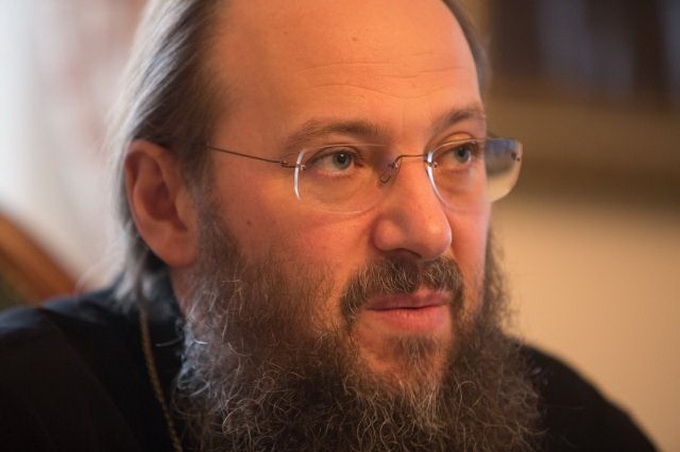
Metropolitan Anthony, Chancellor of the Ukrainian Orthodox Church
Read also
The Weeping Queen of Blachernae
On the night of the Feast of the Protection, only two people witnessed the miracle in the Church of Blachernae. Everyone else prayed and saw nothing. Yet they, too, received grace.
Deadly spiral of human hatred
The tragedy of Lebanon's civil war lays bare how dehumanization and fear can turn human beings into monsters.
Woe to expectant mothers – or to those of little faith?
God commanded one prophet not to have children, yet told his people in exile to bear sons and daughters. What does this apparent contradiction tell us today?
The help God never asked for
Uzzah wanted only to keep the Ark of the Covenant from falling into the dust. Why did this well-intentioned act cost him his life, and who was really responsible for his death?
Freedom begins when there's nothing left to take
Fear of persecutors takes root in our attachment to possessions. We turn to St. Basil the Great to understand why the prefect's threats held no power over him.
The bride in the window frame
The author of the earliest account of St. Thecla’s life was defrocked. Yet it was his book that preserved the only ancient description of the Apostle Paul’s appearance.