Met Kallistos: Tomos for Ukrainian schismatics is Pat Bartholomew’s mistake
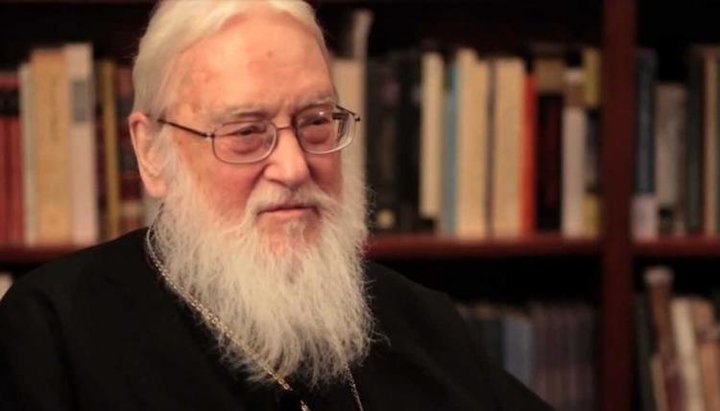
Professor of Theology, Metropolitan Kallistos (Ware)
Ukraine has belonged to the Russian Church, and this is a historical fact. Such a point of view was voiced by the well-known patrologist and theologian, the honorary chairman of the International Institute of Athos Heritage, a bishop of the Constantinople Patriarchate, Metropolitan Kallistos (Ware) in the program “Theologian’s Word”.
“Though I am a metropolitan of the Ecumenical Patriarchate, I am not at all happy about the position taken by Patriarch Bartholomew. With all due respect to my Patriarch, I am bound to say that I agree with the view expressed by the Patriarchate of Moscow that Ukraine belongs to the Russian Church. After all, the Metropolis of Kiev by an agreement of 1676 [1686—OC] was transferred from the omophorion of the Ecumenical Patriarchate to that of the Patriarchate of Moscow. So, for 330 years Ukraine has been part of the Russian Church,” said the representative of the Constantinople Church.
Met. Kallistos then objects to the unilateral character of such actions—here specifically the abolishing of the 1686 documents, and adds: “This is a fact of history that Ukraine has belonged to the Russian Church.”
He also notes that giving autocephaly to Philaret Denisenko and Makary Maletich, the leaders of the “Kiev Patriarchate” and the “Ukrainian Autocephalous Orthodox Church” respectively, whom Met. Kallistos calls “schismatic bishops,” is a mistake.
However, Met. Kallistos also cannot agree with the Russian Church’s response to Constantinople’s actions: “At the same time, I am troubled by the actions of the Patriarch of Moscow, Patriarch Kirill and the Russian Church. I am disturbed that they have broken off communion with Constantinople. I believe this discussion of the position in Ukraine needs to be considered in the spirit of brotherly love without any breaking of communion. So, in that way I cannot agree entirely with either side. And I do pray that somehow there may be a reconciliation.”
And again, in harmony with so many other voices from around the Orthodox world, Met. Kallistos suggests that the proper course of action is to call a pan-Orthodox meeting of the primates—not just of Constantinople and Moscow, he specifies—and perhaps even an extension of the 2016 Council of Crete.
Metropolitan Kallistos (Ware) of Dioklia is a professor of theology at Oxford University, head of the board of directors of the Institute for Orthodox Christian Studies in Cambridge, and an honorary doctor of the Church's postgraduate and doctoral studies named after Saints Cyril and Methodius. His most famous book, “The Orthodox Church”, which first saw the light in 1963, was reprinted several times in different languages.
Read also
SBU told Phanar many UOC bishops would join OCU in 2018, report says
According to a Phanar representative’s account, Ukrainian security services told the Constantinople delegation that many UOC representatives were prepared to attend the OCU’s “Unification Council.” In the end, only two did.
Catholic cardinal visits Ukrainian POWs during trip to Russia
During three days of consultations in Moscow, Cardinal Matteo Zuppi discussed prospects for ending the war in Ukraine.
Ukrainians help restore Serbian Orthodox church in Paris
Orthodox Ukrainians have become regular parishioners of St. Sava Church in Paris and have taken part in its restoration.
Bulgarian Church clergy and laity oppose Phanar head’s visit
More than 2,000 clergy and laity have called for the Ecumenical Patriarch’s visit to be canceled, citing disagreement with his actions and concerns that the visit could legitimize schism.
Unknown intruders break down doors at two UOC churches in Sloviansk
Archbishop Paisiy said OCU activists are suspected of breaking into the churches in Sloviansk, and police have launched an investigation.
Sviatohirsk Lavra prays for murdered monk on 40th day after death
The brethren of the Sviatohirsk Lavra held a memorial service for murdered Monk Varsonofiy, calling on the faithful to pray for the newly departed monk.