Ukraine’s Government restores the state body for religious affairs
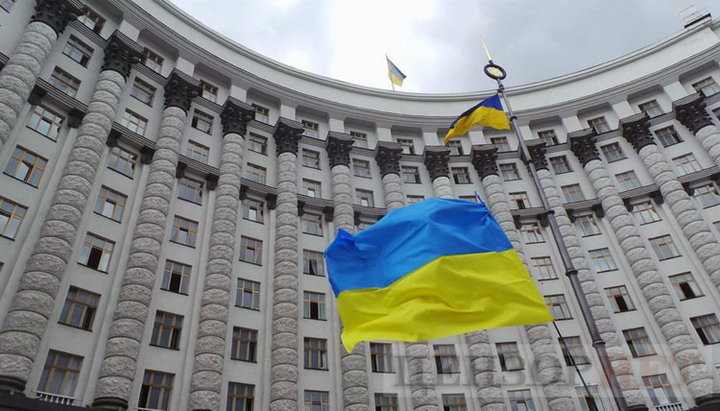
The Cabinet of Ministers of Ukraine. Photo: Priamyi
On June 12, 2019, the Cabinet of Ministers of Ukraine approved a draft resolution “On the formation of the State Service of Ukraine for Ethnopolitics and Freedom of Conscience,” reports the official Government portal.
The new executive body will deal with issues of religion, ethnic relations and the protection of the rights of national minorities.
The Cabinet will guide and coordinate the activities of the new structure through the Minister of Culture.
"The Public Service will be able to more quickly carry out all the necessary registration procedures, resolve conflict situations in interfaith and interethnic relations, ensure observance of human rights,” the Government portal commented on the decision to form a new executive body.
The head of the Department for Religious Affairs and Nationalities of the Ministry of Culture of Ukraine Andrei Yurash published a comment on Facebook regarding the decision of the Cabinet of Ministers, in which he compared the formation of a state agency for religious affairs with the release "from the Babylonian captivity".
“I want to emphasize at this first opportunity a very constructive and informal position of the leadership of the Ministry of Culture of Ukraine, which felt that the “Babylonian captivity” of the government agency for nationalities and religions is the state that cannot last for long,” wrote Yurash. “That is why Minister Yevgeny Nishchuk and his first deputy Svetlana Fomenko decided not to listen to the melancholy songs of "slaves" like "On the rivers of Babylon" and release the Department, which over the past four years has demonstrated all possible options for ensuring state strategy in relation to national minorities and religious organizations."
The decision of the Government on the organization of a special body for religious affairs is considered by the official as “a complex, collective achievement in the name of Ukraine”.
We recall that the state structure regulating activities in the field of religion was first established in Ukraine in 1965 by Nikita Khrushchev – it was called the State Committee for Nationalities and Religions. The body existed until 2010, after which it was liquidated, and its powers were transferred to the Ministry of Culture.
Yurash expressed the intention of the Cabinet of Ministers to restore this structure back in May 2019. In his opinion, the public service for the freedom of conscience is the guarantor of real religious freedom. Yurash also said at the time that in December 2013, the Council of Europe adopted a special resolution recommending that the Ukrainian government resume the activity of a special central body of executive power for religious affairs.
Read also
Khust Eparchy honors memory of St. Job of Uholka
A Liturgy is served in Mala Uholka, a birthplace of St. Job of Uholka, on the saint's feast day.
UOC parish in Cologne donates ultrasound machine to Kharkiv region hospital
In Cologne, UOC believers raised funds for an ultrasound machine for the Kehychivka district hospital in the Kharkiv region.
Shevchuk tells Pope Leo of Ukraine's preparations for "another harsh winter"
The head of the UGCC expressed "special gratitude" to the Pope for his phone calls with Putin and Zelensky.
Berlin hierarch comments on Phanar document published by UOJ-USA
Metropolitan Mark called the information about the 2018 "Unification Council" alarming if confirmed, and expressed hope that Patriarch Bartholomew will reconsider his position.
UOC marks Synaxis of All Saints of Volyn Land at Lutsk cathedral
Metropolitan Serhiy of Ternopil and Kremenets led the Liturgy on the feast day of the Lutsk cathedral of All Saints of the Volyn Land.
SBU detains OCU cleric who organized draft evader's escape for money
In Transcarpathia, law enforcement officers detained a clergyman of the OCU who arranged for a draft evader to be smuggled into Slovakia for $15,000.