UOC bishop: Anathema is not a curse but a fact of separation from the Church
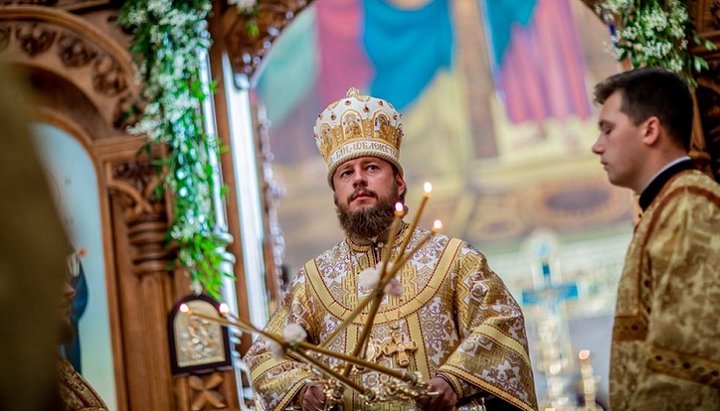
Bishop Victor (Kotsaba). Photo: Facebook
The love of God does not depend on a person's mood or emotional experiences, but on their relationship to the practical observance of God's commandments. This was stated by Bishop Victor (Kotsaba) in his personal blog on the website "Ya-korrespondent".
The hierarch recalled the words of the Apostle Paul regarding the excommunication from the Church of anyone who does not love the Savior of the world: “If anyone does not love the Lord Jesus Christ, let him be accursed. O Lord, come! The grace of our Lord Jesus Christ be with you. My love be with you all in Christ Jesus. Amen” (1 Cor. 16:22-24).
“Anathema is not a curse, but a statement of the fact of a person's separation from the Church,” he emphasized. “In other words, anathema is a testimony that a person no longer belongs to the Orthodox Church. Anathema is more a lament and sorrow for the one who has fallen away than anything else. At the same time, anathema is the most terrible thing that can happen to a Christian because the one who falls under anathema is no longer part of the Body of Christ. The chief apostle Paul states that a lack of love for God is already evidence of falling away from Him.”
According to the hierarch, the question of what it means to love God was answered by the Lord Jesus Christ Himself.
“Addressing His disciples, and us along with them, He says: 'He who has My commandments and keeps them, it is he who loves Me; and he who loves Me will be loved by My Father, and I will love him and manifest Myself to him' (John 14:21). These words of Christ should be understood as a kind of instruction for action. Thus, love for God is a practical act, not merely a theoretical one. The Savior’s words clearly speak to the active side of understanding love. Love, therefore, consists of concrete actions, in this case the observance of God's commandments,” Bishop Victor explained.
Unfortunately, he noted, the vast majority of modern people perceive the term "love" from an emotional standpoint, “preferring to 'feel' love rather than 'experience' it. Hence, the absence of a certain psycho-emotional state is taken for a lack of love.”
“However, Christ clearly indicates that one can love God only when one follows His instructions. Our love for the Creator does not depend on mood, feelings, or personal emotional experiences, but solely on how we relate to the practical observance of God's commandments. We must not only feel love but also reproduce and express it. Only in this case will it be genuine. And only in this way will our love lead us to unity with our Creator,” concluded the UOC hierarch.
Earlier, Bishop Victor (Kotsaba) shared insights on overcoming spiritual pain.
Read also
Court hearings in case on Kyiv Metropolis liquidation postponed
The court hearing in the Kyiv Metropolis case has been postponed indefinitely due to the consideration of an appeal in the Supreme Court.
Activist outside courthouse: Ukrainians' dream is to behead UOC hierarchs
The organizer of provocations against believers and clergy recorded a video about what he says is every Ukrainian's dream.
Conference dedicated to Orthodox family held in Odesa Eparchy
In Odesa, conference participants discussed the spiritual and moral foundations of the family and developed a program for a practical course and family projects.
OCU explains why folklore events should be held in church, not in culture house
OCU representatives in Cherkasy explained why they held a concert and a talk about wedding traditions in the seized cathedral.
UOC hierarch celebrates Liturgy at relics of St. Nicholas in Bari
Archbishop Ambrose of Zghurivka, UOC clergy serving in Italy, and KDAiS students prayed at the myrrh-streaming relics of St. Nicholas the Wonderworker in Bari.
Police pledge increased security at UOC Kyiv Metropolia court hearing
UOC lawyers secured additional police presence following repeated provocations and direct pressure on the legal team outside the courthouse.