Phanar’s head: Russians call Filaret a schismatic but people love him
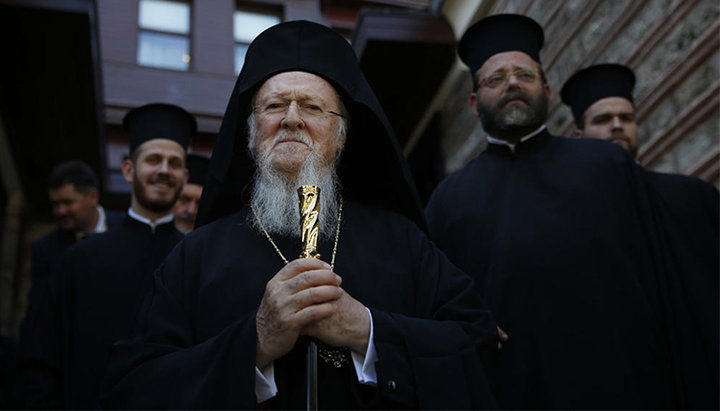
Patriarch Bartholomew of Constantinople. Photo: kurir.rs
The Russians unjustly call the head of the UOC-KP Filaret Denisenko the self-proclaimed metropolitan, in fact, he is a person who is very loved and respected, Patriarch Bartholomew of Constantinople said in an interview with the online outlet Kurir.rs.
According to the Phanar’s head, Filaret was deposed only because he asked for autocephaly.
“When Ukraine became an independent state in 1991, Ukrainian priests and bishops immediately appealed to the Russians with a request for autocephaly. The Russians refused them and said that they would never give it to them at all. Their response was the deposition of Metropolitan Filaret only because he asked for it,” said Patriarch Bartholomew.
He stressed that people really love the head of the UOC-KP.
“Metropolitan Filaret, whom the Russians call a self-proclaimed metropolitan, is a man whom people respect and love very much, even then he had a huge number of parishes, and the Russian side has not done anything in 30 years to heal the schism in Ukraine,” said the head of the Patriarchate of Constantinople.
We recall that on August 26, 1992, Patriarch Bartholomew in response to a letter from His Holiness Patriarch of Moscow and All Russia Alexy II regarding the deposition of Metropolitan Filaret of Kiev wrote: “Our Holy Great Church of Christ, recognizing the fullness of the competence of your Most Holy Russian Church on this issue, accepts the synodical decision on the above."
In 1993, the head of the Phanar told the Vice Prime Minister of Ukraine M. Zhulinsky that there was one canonical way to restore the unity of the Ukrainian Church – through the repentance of those who had fallen into schism. There could be no talk of unification on equal terms, because "today there is no such institution as the Kiev Patriarchate".
In 1997, Patriarch Bartholomew wrote to the Primate of the Russian Church on the occasion of imposing anathema on Philaret: “Having received notice of the decision, we informed the hierarchy of our Ecumenical See of it and asked them to further have no ecclesiastical communion with these persons.”
In September 2019, Filaret said that the Phanar’s head asked the President of Ukraine Vladimir Zelensky to expedite the liquidation of the UOC-KP. “When the new President Vladimir Alexandrovich Zelensky was visiting the Ecumenical Patriarch on July 7 (August 8, - Ed.) this year, the patriarch asked him to expedite the liquidation of the Kiev Patriarchate. That is, the Ecumenical Patriarch takes care of the destruction of the Kiev Patriarchate. ...> Thank God that the President answered with dignity: he will not interfere in church affairs, but treats all Churches equally, keeping the constitutional right of citizens to freedom of conscience and religion,” said the head of the UOC-KP.
Read also
MP urges to ease pressure on UOC for sake of peace
Oleksii Honcharenko proposed compromises on language, historical memory, and Church issues as part of efforts to achieve peace, saying those who wish to attend the “Russian Church” should be allowed to do so.
Court takes 17th-century church in Staryi Pochaiv from UOC community
A commercial court overturned a 2018 registrar’s decision and stripped the UOC’s Ternopil Eparchy of ownership of the 17th-century church.
Vinnytsia Eparchy honors Bar Icon of the Mother of God
Metropolitan Varsonofiy celebrated the Liturgy at the Bar Convent on the feast day of the wonderworking icon of the Mother of God.
Rada speaker discusses legalization of same-sex marriage in Rivne region
Ruslan Stefanchuk suggested that sponsors of separate bills to legalize same-sex marriage personally make their case to Ukrainians.
Jerusalem Patriarch rejects proposal to celebrate Christmas on December 25
The Jerusalem Patriarch rejected a proposal for a common Christmas celebration and reaffirmed the Church’s adherence to the Julian calendar.
SBU told Phanar many UOC bishops would join OCU in 2018, report says
According to a Phanar representative’s account, Ukrainian security services told the Constantinople delegation that many UOC representatives were prepared to attend the OCU’s “Unification Council.” In the end, only two did.