UOC Hierarch: Coronavirus is a patriotism test
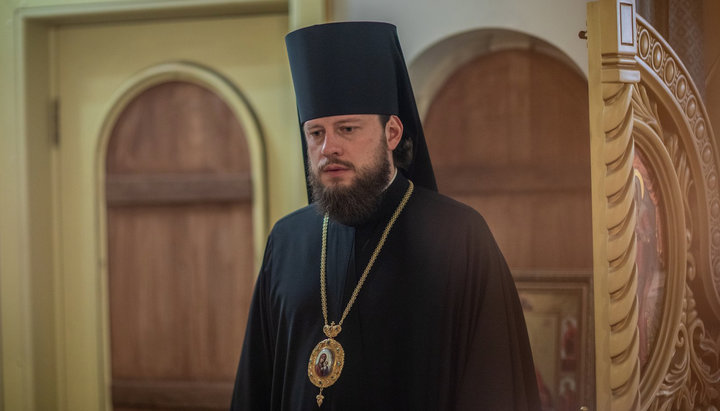
Vicar of the Kiev Metropolitanate, Bishop Victor (Kotsaba) of Baryshevka. Photo: Facebook
On February 20, 2020, the vicar of the Kiev Metropolis, Bishop Victor of Baryshevka, in his author’s blog on the pages of “I-Korrespondent” online publication, said that the aggressive reaction of some Ukrainians to the evacuation of our citizens from China has nothing to do with patriotism or Christianity.
Vladyka recalled that for the past six years we have been living under constant calls for patriotism and the need for unity of the country. However, "at the same time, many of us did not even try to think about what these words really mean."
According to Bishop Victor, “patriotism is not singing a hymn or wearing an embroidered shirt. It is not even a language or national traditions. This is love for one's homeland.”
“The Greek term ‘πατρίς’ means ‘homeland’, while the word ‘πατριώτης’ refers to a compatriot. Thus, to be a patriot means to love your homeland and your compatriots. From the point of view of Christianity, this social feeling is enhanced by a moral attitude – to love God and your neighbor,” the hierarch explained.
He emphasized that “a healthy, normal vision of patriotism among Christians is manifested by the fact that a Christian ranks the public good above his personal one, that the interests of the Church, country, people and family (as a small Church) prevail over egocentrism and one’s own interests. The Christian no longer lives for himself; he lives for God and his neighbor."
At the same time, says the hierarch, “today we too often witness how selfishness and the desire to protect ourselves personally prevail not only over patriotic but also over universal human values.”
According to him, "it is obvious that the reaction of a certain part of Ukrainian society to the evacuation of our fellow citizens from China is completely unhealthy."
“Instead of providing them with a comfortable stay in the fourteen-day quarantine facility, people who undoubtedly consider themselves patriots take to the streets, block the movement of vehicles and create public social tension. Such actions cause only pain and distress!”, the hierarch said.
Bishop Victor expressed the hope that all those features that have been inherent in our people for centuries – “mercy, sensitivity to other’s grief, the ability to empathize and help one’s neighbor” will be manifested in Ukrainians and urged to take an example from saints who “would find the inner strength to think not only about themselves if they were in a similar situation.”
Earlier, the UOJ wrote that in the opinion of Bishop Victor, the idea in which the interests of the nation are placed above God and His Church is destructive at its core.
Read also
SBU names UOC priest’s wife a suspect in Cherkasy region
The SBU accused Matushka Kateryna Prykotenko of “spreading enemy propaganda” through correspondence with parishioners.
UGCC cleric calls Russian Orthodox literature dangerous for clergy
While examining the causes of divisions within the UGCC, Yustyn Boiko concluded that Russian Orthodox literature had influenced Greek Catholic clergy.
UOC will play major role in achieving peace, says Vadym Novynskyi
UOC Protodeacon Vadym Novynskyi believes the Church will help bring about reconciliation within Ukrainian society after the war ends.
Catholic media outraged by forcible conscription of Uniate cleric
The Vatican’s Apostolic Nunciature has demanded the return of a forcibly mobilized Greek Catholic cleric.
Rivne court fines man for criticizing parish's "transfer" to OCU
A resident of the Rivne region was convicted over Facebook posts criticizing the “transfer” of a religious community in the village of Butove to the OCU.
Novynskyi: I quoted the Gospel to Zelensky on first day of war
The former Ukrainian MP said he advised Davyd Arakhamia to begin negotiations with Russia in the first days of the full-scale war and later spoke with Volodymyr Zelensky.