Difference between believers' and non-believers' behaviour in crisis
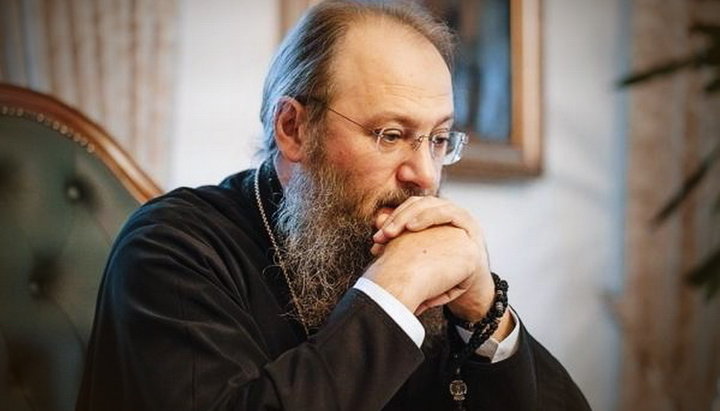
Metropolitan Anthony (Pakanich). Photo: religions.unian.net
Believers have the main treasure of the universe – faith in the Lord Jesus Christ. They know that God Almighty is stronger than all worldly rulers, stronger than all worldly cataclysms and problems. Without His will, nothing happens in this world. Therefore, the believer in any situation seeks to trust God and rely on Him completely.
Does it mean that those who trust in God must be inactive? Of course not. Trust in God is not switching off brains but, on the contrary, their switching on. The Lord commanded His disciples to be wise as serpents and harmless as doves. What does it mean? The serpent protects its life, has the instinct and wisdom of self-preservation but can cause harm to others. The dove is harmless but careless.
The Lord combined both and commanded us to reasonably and sensibly combine the instinct of self-preservation with harmlessness, not to be harmful like serpents and careless like doves, to stand guard over our well-being and safety, without anger and hatred for the abusers, and even pray for them. There is no use in wisdom if it doesn’t go side by side with harmlessness.
The scourge of our time is haste. And many problems stem precisely from the fact that we are in a hurry, we cannot endure. We are in a hurry to make decisions, to draw conclusions, to respond to offenders, but this is where the chain of most of our problems and sins begins. “Rescue me, Lord, from evildoers….They make their tongues as sharp as a serpent’s; the poison of vipers is on their lips” (Psalm 140: 3). In this prayer, we ask God to help us not to hurry to say an unnecessary word, to make a hasty decision. We ask God: “Lord, help us keep silent and thereby preserve our peace of mind!”
It is very important that we do not panic under any circumstances, do not rush to spread rumors, carefully check the information received and not say stupid things. The more balanced our conclusions are, the closer they will be to the truth.
Read also
Prayer commemorations instead of loving embraces
At every Orthodox wedding, the choir sings a hymn to the martyrs. For families separated by war, these words carry a special meaning.
Honest atheism vs. spiritual hypocrisy
The 70th anniversary of Albert Camus’s Nobel Prize recalls an uncompromising challenge to Christianity. An honest unbeliever brings theology back to the mystery of the Cross.
The valley of trouble and the gateway of hope
One soldier buried an expensive cloak and some gold beneath his tent. Because of this, all Israel lost a battle. Why did one man’s sin bring disaster upon an entire nation?
From love spells to bishop's throne
Antioch’s most powerful sorcerer sent demons against a devout young Christian woman three times – and failed every time. In the end, a demon himself revealed the truth that led to his conversion.
The Weeping Queen of Blachernae
On the night of the Feast of the Protection, only two people witnessed the miracle in the Church of Blachernae. Everyone else prayed and saw nothing. Yet they, too, received grace.
Deadly spiral of human hatred
The tragedy of Lebanon's civil war lays bare how dehumanization and fear can turn human beings into monsters.