President’s Office: 70% of citizens support “Easter at Home” project
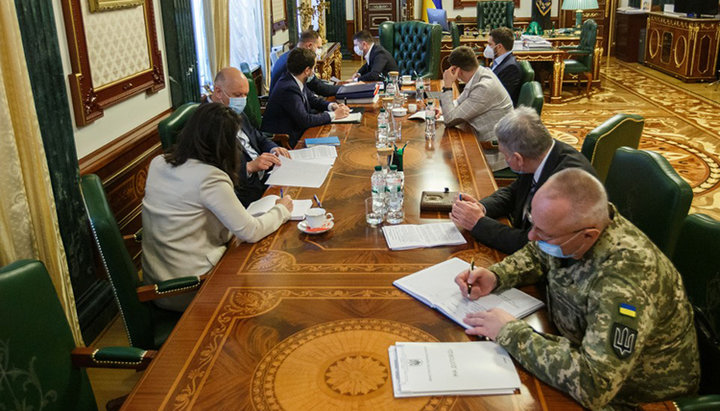
A meeting on combating coronavirus at the President’s Office. Photo: president.gov.ua
On April 9, 2020, the Office of the President of Ukraine Vladimir Zelensky stated that 70% of citizens support the “Easter at Home” project, which includes video broadcasts of Easter services, and only 3% plan to go to church.
“It is great that Ukrainians are so responsible, and most citizens are aware of the high risks of the epidemic. After all, the peak is still ahead. Therefore, every effort should be made to prevent even 3% of believers from taking the risk,” the official website of the head of State cites Vladimir Zelensky.
The meeting participants also discussed the initiative of the Minister of Infrastructure Vladislav Krikliy, who suggested to the OCU and UGCC that “Ukrposhta” take orders for the free delivery of consecrated Paskha to help people celebrate Easter at home.
Earlier, the President said that Ukraine would do everything so that everyone can celebrate Easter at home.
Read also
Medieval сhurch сrumbles as Culture Ministry сites missing agreement
The 14th–15th-century St. Nicholas Church in Chesnyky, Ivano-Frankivsk Region, is falling into disrepair.
Poland сondemns Lviv Regional Council's decision to declare 2007 year of UPA
Polish Prime Minister Donald Tusk says the Lviv Regional Council's decision to dedicate 2027 to the UPA and Roman Shukhevych is harmful to Ukraine.
OCU seeks court recognition of ownership of seized Cherkasy cathedral
The Cherkasy Regional Commercial Court will hear an OCU lawsuit seeking ownership of St. Michael's Cathedral, which was seized from UOC believers.
Lithuanian bishop: Ukraine is no model for believers' rights
Vicar of Vilnius Diocese voices concern over attempts to import Ukraine's religious conflict into Lithuania.
Hundreds of believers honor St. Alexis of Carpatho-Russia in Khust Eparchy
At the St. Nicholas Monastery in the village of Iza-Karputlash, Metropolitan Mark of Khust led a festive liturgy, concelebrated by six metropolitans, five archbishops and three bishops.
Court upholds UOC parish appeal in Voloshky over OCU switch dispute
The Northern Commercial Court of Appeal has upheld the appeal of the St. Nicholas parish of the UOC in the village of Voloshky, Volyn region, in a dispute over a transfer to the OCU.