Proposals to ensure religious rights in quarantine submitted to government
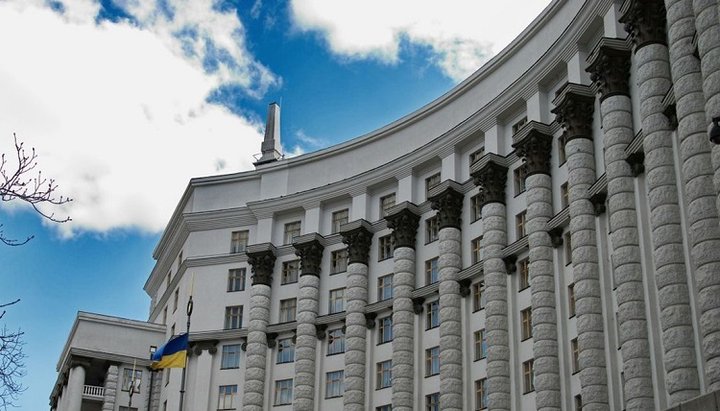
The building of the Cabinet of Ministers of Ukraine. Photo: thumbor.my.ua
The Cabinet of Ministers of Ukraine received a number of proposals aimed at ensuring freedom of religion in the conditions of coronavirus quarantine. The proposals were formulated following an online meeting of the participants of the Round Table, jointly organized by the Institute of Religious Freedom and the Centre for Civil Liberties, reports ReligiousFreedom.in.ua.
The meeting was attended by religious leaders of different denominations of Ukraine, the leadership of the Kharkiv Human Rights Group and the Ukrainian Helsinki Human Rights Union.
Human rights activists explained to the participants of the discussion the legal aspects of quarantine restrictions and gave a number of practical recommendations on how to protect the rights of believers violated by police actions that do not comply with the law.
Following the discussion, the participants in the Round Table on Religious Freedom in Ukraine made the following proposals to the Ukrainian government:
- When organizing services during the quarantine period, follow the recommendations to avoid crowding in churches and other premises of religious organizations published on April 8 by the All-Ukrainian Council of Churches and Religious Organizations (i.e. up to 10 people are allowed to be in a church or other premises of a religious organization, 1 person per 5 sq. m.);
- The requirement of self-isolation for people aged 60 and over does not apply to the clergy and people involved in organizing services, as well as to other working people of retirement age;
- Given the ban on access of priests to prisoners and convicts, introduced by the order of the Ministry of Justice of Ukraine, instruct the administration of pre-trial detention centres and penitentiary institutions, provide the possibility of television viewing of divine services and religious sermons, which are regularly aired by the Public Broadcaster on TV channels UA: PERSHIY and UA: CULTURE, as well as an option for prisoners and convicts to organize for them individual remote meetings with a chaplain priest via video link;
- Provide the opportunity to meet the religious needs of people in social welfare and palliative care institutions, including through access to them of chaplain priests or individual remote meetings with them via video link;
- Recommend that local authorities, together with religious figures and volunteers, organize places and procedures for providing free humanitarian aid to people in need, in particular providing food to people without a permanent residence, while observing sanitary and quarantine requirements and preventing crowding.
As reported earlier, the All-Ukrainian Council of Churches and Religious Organizations suggested the authorities ways to protect the rights of believers during the quarantine period.
Read also
Medieval сhurch сrumbles as Culture Ministry сites missing agreement
The 14th–15th-century St. Nicholas Church in Chesnyky, Ivano-Frankivsk Region, is falling into disrepair.
Poland сondemns Lviv Regional Council's decision to declare 2007 year of UPA
Polish Prime Minister Donald Tusk says the Lviv Regional Council's decision to dedicate 2027 to the UPA and Roman Shukhevych is harmful to Ukraine.
OCU seeks court recognition of ownership of seized Cherkasy cathedral
The Cherkasy Regional Commercial Court will hear an OCU lawsuit seeking ownership of St. Michael's Cathedral, which was seized from UOC believers.
Lithuanian bishop: Ukraine is no model for believers' rights
Vicar of Vilnius Diocese voices concern over attempts to import Ukraine's religious conflict into Lithuania.
Hundreds of believers honor St. Alexis of Carpatho-Russia in Khust Eparchy
At the St. Nicholas Monastery in the village of Iza-Karputlash, Metropolitan Mark of Khust led a festive liturgy, concelebrated by six metropolitans, five archbishops and three bishops.
Court upholds UOC parish appeal in Voloshky over OCU switch dispute
The Northern Commercial Court of Appeal has upheld the appeal of the St. Nicholas parish of the UOC in the village of Voloshky, Volyn region, in a dispute over a transfer to the OCU.