Chief lawyer: COVID-19 doesn’t justify actions of Dnipro and Konotop mayors
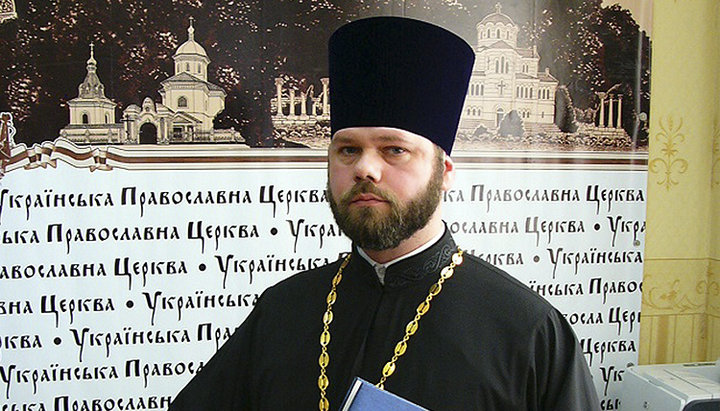
Протоиерей Александр Бахов. Фото: pravlife.org
The coronavirus does not justify the actions of Dnipro mayor Boris Filatov and Konotop mayor Artem Seminikhin, who declared their intentions to dig roads around the churches of the Ukrainian Orthodox Church, noted Archpriest Alexander Bakhov, head of the UOC Law Department.
“Believers need to understand the requirements of the quarantine. But this does not allow officials, mayors or other civil servants to break the law, threaten or in any way prevent believers from exercising the right to freedom of religion,” Archpriest Alexander said in an interview with a UOJ correspondent.
The priest drew attention to the fact that worship in the churches of Ukraine is not prohibited, as there is no ban on the Sacraments. The churches only established a special regime of service with the mandatory observance of quarantine requirements. The decisions of the Commissions on technogenic and environmental safety and emergency situations in Dnipro and Konotop regarding restrictions on the freedom of movement of citizens can be exclusively advisory, the head of the Law Department added.
“The fact is that in the western regions on Palm Sunday, such commissions decided to impose a curfew. And in this regard, the National Police gave a notice on its website that these decisions are exclusively advisory,” Archpriest Alexander recalled.
The All-Ukrainian Council of Churches and Religious Organizations of Ukraine (AUCCRO) has concluded an agreement with the National Police according to which services with the observance of quarantine are not prohibited, the head of the Law Department added. According to him, restrictions on freedom of movement and freedom of religion can take place exclusively in a state of emergency. Attempts by officials to intimidate the clergy are caused by a reluctance to enter into confrontation with their future voters.
“Many such officials decided that they could intimidate the priest and threaten. But at the same time, tell me how many mayors have you seen at the temple? Mayors who would communicate with people explain to them the danger, the threat? Officials worry about future elections, and they cannot directly forbid believers from attending the temple,” the clergyman noted. “None of them went to the people. This is the same as going to the doctor and telling him: sign the paper that you will tell your patients that you will not treat them. It’s easier to threaten than to come to your voters, but believers are part of a city or a village.”
Separately, Archpriest Alexander commented on the leaflets, due to which the mayor of Konotop ordered to dig up the roads to a UOC temple.
“I don’t see anything illegal in these leaflets – they urge people to comply with quarantine requirements,” the head of the Law Department stressed. “In this situation, there are no violations. The whole problem is that people will still go to church. They will still look for where to consecrate Easter cakes and pray. It is better to control the process rather than prohibit and threaten so that people do not begin to go ‘underground’. People perceive threats and radical actions not as a fight against the virus, but as a fight against the Church.”
The clergyman also reminded Semenikhin that in Ukraine there are no “Moscow priests” or “Moscow Church”.
“I would like to tell him that in our country there is no Moscow Church. We have the Ukrainian Orthodox Church,” concluded Archpriest Alexander.
Earlier, the mayor of Dnipro threatened the Church to dig up roads to temples, after which the city communal workers really dug up the entrance to one of the churches, and later in the city they completely forbade people to leave their homes on Holy Saturday and at Easter.
On April 15, 2020, the Konotop mayor followed Filatov’s example and ordered to dig roads around the churches of the UOC, as well as cut off an electricity and water supply. The reason for this decision was leaflets in which believers were urged to strictly observe the mask regime, a safe 2-meter distance and enter a temple in two for a short prayer.
Read also
Upper Lavra court hearing postponed
The next court hearing in the Upper Lavra case has been scheduled for November 3.
UOC priest blesses ambulances at Kamianske medical center
A UOC priest in Kamianske blessed ambulances for a medical facility and wished its doctors God's help in their work.
Dumenko to German ambassador: Law targeting UOC also applies to other groups
Epifaniy Dumenko sought to defend Ukraine’s law restricting religious organizations during a meeting with the German ambassador.
Activists bused to court hearings in UOC cases, media say
A minibus has been spotted transporting protesters to and from courthouses where UOC cases are being heard.
Firefighters save historic UOC church from fire in Zakarpattia
A fire broke out at a UOC church in the Tiachiv district, damaging the altar and church furnishings.
Volyn Eparchy faithful collect six tons of aid for Sviatohirsk Lavra
Believers in Volyn collected food and warm clothing for people displaced by the war who have found shelter at Sviatohirsk Lavra.